
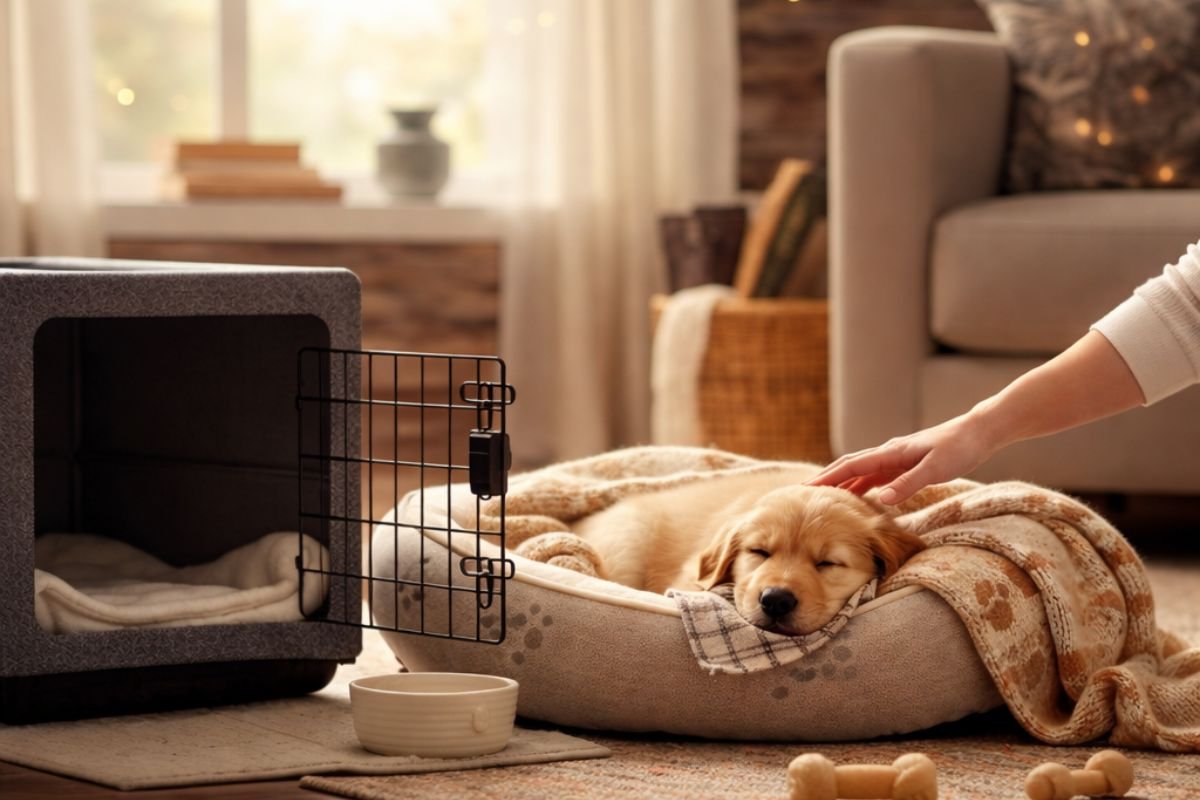
Choosing where your puppy should sleep matters from the first night. A new puppy needs a safe, quiet place that feels close enough for reassurance and clear enough to become part of their routine.
The best setup is simple: a secure sleep area, a calm bedtime pattern, and gradual changes once your puppy starts settling with more confidence.
Quick Take: What Helps Most the First Few Nights
- Most puppies settle better in your bedroom or close by during the first week.
- A crate, puppy pen, or safe bed area can all work if the space is secure.
- A final potty break and a calm routine make nights easier.
- Move the sleep area gradually once your puppy is resting well.
Puppy Sleep Guide: Setups and Nighttime Signs
| Situation | What it may mean | What to do |
|---|---|---|
| Your puppy cries when alone | They are adjusting to a new home | Keep them close and repeat the same bedtime routine |
| They move around often | They may need comfort or a potty break | Check temperature, comfort, and potty needs |
| They chew bedding | They may be overstimulated or exploring | Remove unsafe fabric and offer safe chew options |
| They sleep better near you | Your presence helps them feel secure | Keep the sleep area nearby at first |
| They wake at every sound | The space may be too exposed | Choose a quieter, more protected spot |

How to Set Up a Safe Puppy Sleep Area
Your puppy’s sleep space should do two things: help them feel secure and make nighttime easier to manage. A calm, predictable setup can reduce whining, accidents, chewing, and repeated wake-ups during the first few nights.
1. Choose a calm, nearby location
For the first night, your puppy should usually sleep near you. A crate beside your bed, a puppy pen in your room, or a safe bed area nearby can all work.
Choose a place that is:
- Quiet
- Easy to supervise
- Away from drafts
- Away from heavy foot traffic
- Free from loose or chewable items
Avoid placing your puppy far away from the family on day one. That can make the first nights harder.
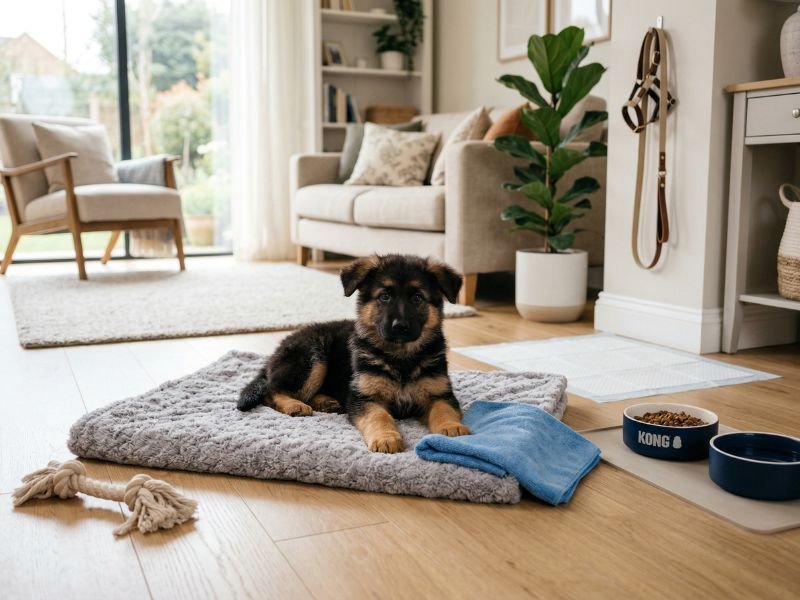
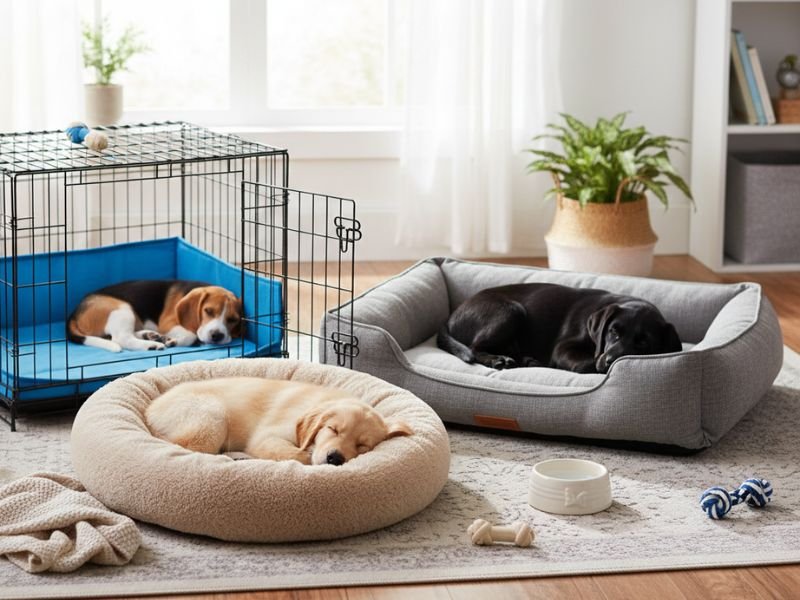
2. Decide between a crate, puppy pen, or bed
A crate can work well when it feels like a safe resting space. It should be large enough for your puppy to stand, turn around, and lie down comfortably.
A puppy pen gives more room while still keeping boundaries. It can be useful for puppies who need space but are not ready for full access to a room.
A dog bed works best only when the area is fully puppy-proofed. For very young puppies, a bed alone may offer too much freedom too soon.
3. Keep the space simple and safe
Remove cords, socks, shoes, small objects, houseplants, and loose fabric. Puppies explore with their mouths, especially when they are tired or unsettled.
Use a washable bed or blanket, keep the room comfortable, and avoid adding too many toys. The sleep area should feel calm, not exciting.
4. Create a short bedtime routine
A simple routine helps your puppy understand the rhythm of the night.
Use the same pattern each evening:
- Final potty break
- Lower energy in the room
- Calm voice and gentle movement
- Puppy goes to the same sleep area
- Night wakings stay quiet and brief
The message should stay consistent: nighttime is for rest.

Nighttime Adjustments: Crying, Potty Breaks, and Moving Rooms
Some crying during the first nights is normal. Your puppy is adjusting to a new place, new sounds, and a new routine.
Before changing the setup, check the basics:
- Do they need a potty break?
- Are they too hot or too cold?
- Is the sleep area comfortable?
- Are they too far away from you?
- Is there too much noise nearby?
If they need to go out, keep it calm. Take them to the potty area, praise gently, and return them to the same sleep space. Keep lights low and avoid play.
Once your puppy sleeps more calmly, move the crate, pen, or bed gradually toward the final location. Small changes every few nights usually work better than moving them suddenly.
Safety Notes and Common Mistakes
A puppy sleep setup should be safe, simple, and repeatable.
Avoid:
- Moving the bed or crate every night.
- Placing your puppy too far away too soon.
- Using the crate as punishment.
- Playing intensely before bed.
- Giving full house access too early.
- Choosing a noisy, cold, or busy area.
- Responding differently every time your puppy cries.
Contact your veterinarian if your puppy shows vomiting, diarrhea, heavy panting, trembling, unusual lethargy, or sudden behavior that feels different from normal adjustment.
Also review the setup if your puppy chews bedding intensely, wakes constantly, or shows strong distress every night.

FAQ
Should a puppy sleep in a crate?
A crate can be a good option when it is introduced positively. It should feel safe, comfortable, and never like punishment.
Should I let my puppy sleep in my bed?
For the first few days, a separate safe sleep area is usually more practical. Young puppies may wake often, have accidents, or move unpredictably.
Should I leave a light on for my puppy?
A soft night light can help some puppies during the first nights. Keep the room dim and calm.
Final Thoughts
The best place for a puppy to sleep is a safe, calm, and consistent space that helps them feel secure.
For the first few nights, keeping your puppy close usually makes bedtime easier. A crate, puppy pen, or safe bed area can all work when the setup is comfortable and predictable.
Start with closeness, repeat the routine, and make changes gradually. That simple structure helps your puppy rest better night after night.
External References
- American Kennel Club — How Much Do Puppies Sleep?
- American Kennel Club — Puppy Potty Training Schedule
- Humane World for Animals — How to Crate Train Your Dog or Puppy
- UC Davis Veterinary Medicine — Crate Training Your Puppy