
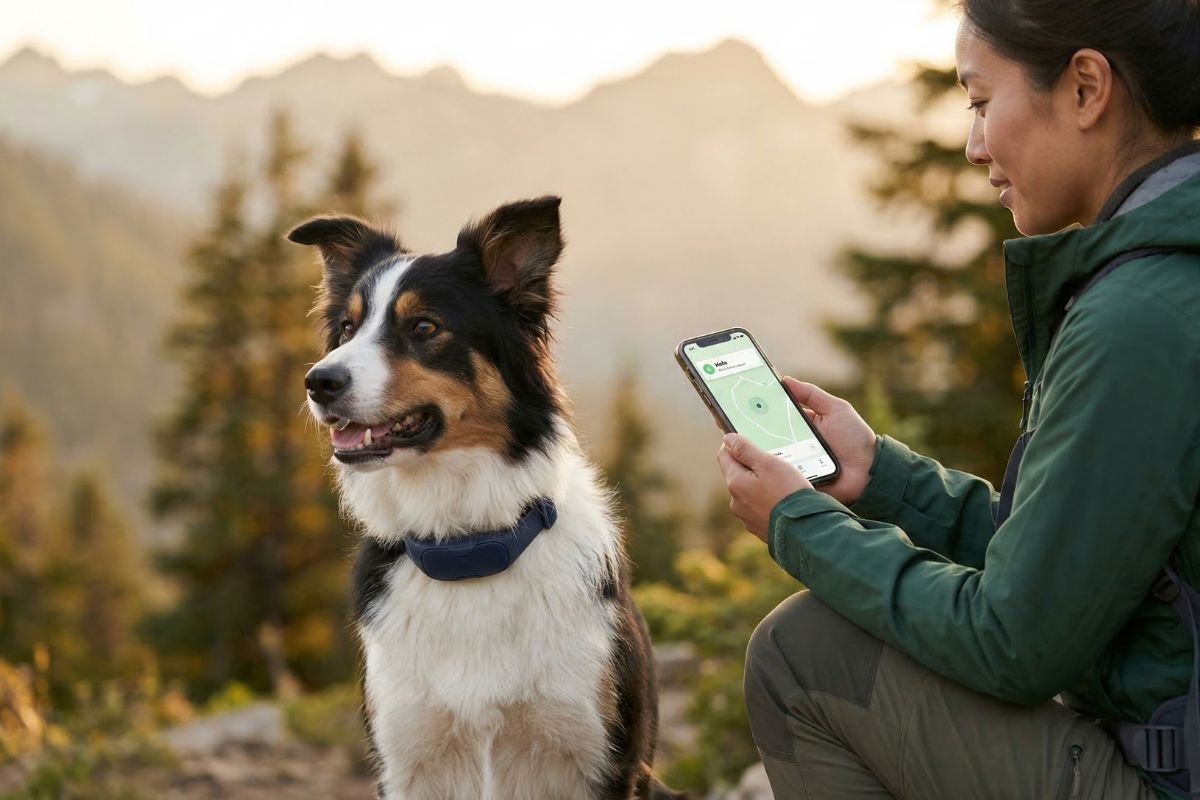
Smart technology for dogs now goes far beyond convenience. In Part 1 of this series, we explored practical connected accessories that can simplify everyday routines, including smart feeders, pet cameras, water fountains, and GPS devices.
In Part 2, we move into a more advanced layer of smart technology for dogs: tools designed to support health monitoring, location safety, mobility assessment, veterinary follow-up, and long-term wellness.
These devices do not replace veterinary care. Their real value comes from identifying useful trends, improving safety, and helping you share clearer, more consistent information with your veterinarian.
Quick Take: Where Connected Dog Technology Helps Most
- Smart collars and wearables track changes in activity, sleep, rest, and behavior over time.
- Cellular GPS trackers are the stronger choice for real-time location, escape alerts, and virtual safe zones.
- Veterinary telehealth supports follow-up between appointments, especially when you can share clear videos and updates.
- Video, gait analysis, and health apps make subtle changes easier to document and discuss.
Dog Technology Guide: Best Tool for Each Need
| Situation | What you need | Best starting point |
|---|---|---|
| Small changes in rest or activity | Continuous trends | Smart collar or wearable |
| A dog that may wander or escape | Tracking beyond Bluetooth range | Cellular GPS tracker |
| Recovery or ongoing monitoring | Better communication between visits | Veterinary telehealth |
| Mobility changes or unusual episodes | A visual record | Short, well-framed videos |
| Scattered health information | One clear timeline | Health app or shared record |
Five Smart Technologies Supporting Dog Health, Safety, and Wellness
Affiliate disclosure: Some links in this guide are affiliate links, which means BELPAW 🐾 may earn a commission if you buy through them, at no extra cost to you. As an Amazon Associate I earn from qualifying purchases.
Today’s most useful dog technology falls into five broad areas: wearables, cellular GPS trackers, veterinary telehealth, video-based monitoring, and health apps.
The goal is to choose technology that addresses a clear need, fits comfortably into your routine, and helps you make better decisions for your dog.
1. Wearables and smart collars: when small changes leave a pattern

Wearables are most valuable when they establish a baseline for your dog’s normal routine. By tracking activity, sleep, rest, and certain behaviors over time, they can make gradual changes easier to notice.
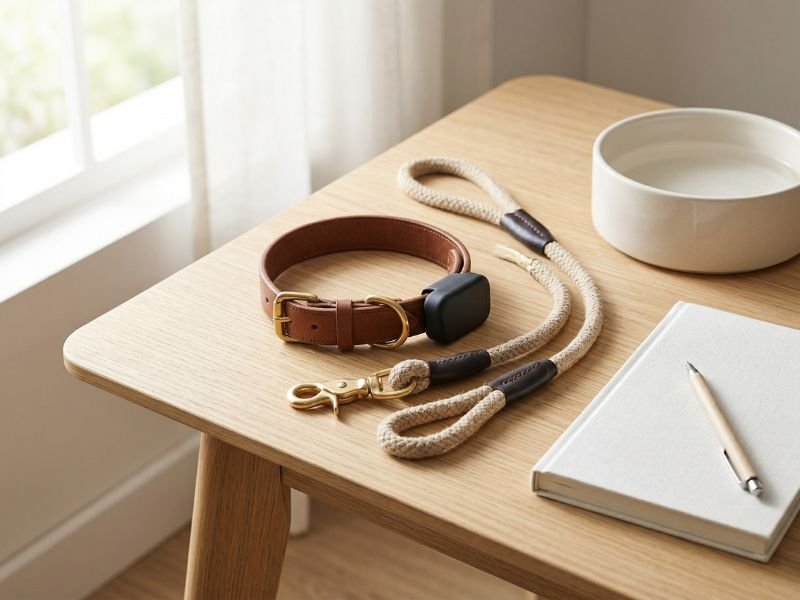
The Fi Series 3+ Smart Dog Collar is a useful example of this category. It combines GPS safety with ongoing health and behavior monitoring in a collar designed for continuous use.
Its value is not that it can diagnose a health condition. Instead, it can help owners recognize changes in patterns and decide whether they deserve closer observation or a conversation with their veterinarian.
What to check before choosing a wearable
- Comfort and fit: The collar or device should suit your dog’s size, coat, and daily activity.
- Information tracked: Look beyond the number of metrics and consider whether the data will be genuinely useful.
- App quality: Trends should be easy to understand rather than presented as isolated numbers.
- Battery life: Charging frequency needs to fit your normal routine.
- Subscription costs: Check what is included and whether ongoing membership is required.
- Privacy and data sharing: Understand how information is stored and whether it can be exported or shared.
2. Cellular GPS trackers and virtual fences: stronger protection outdoors
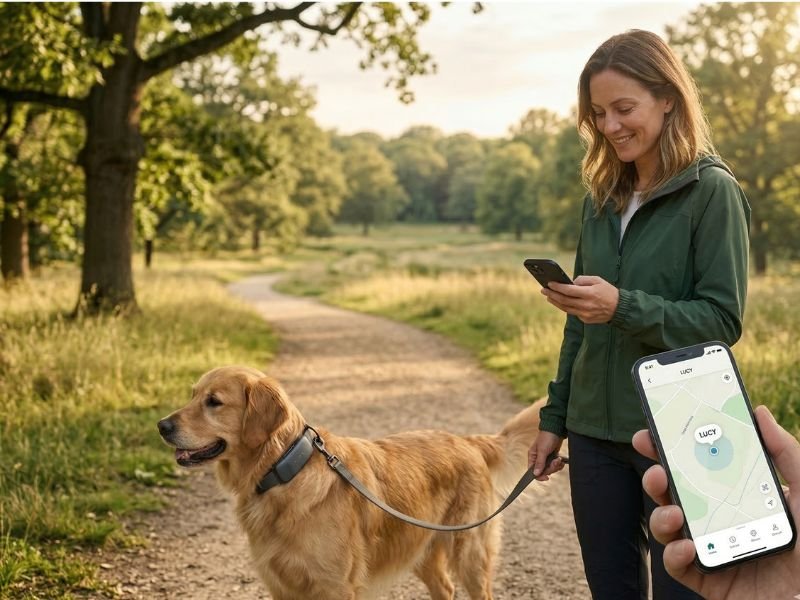
When the priority is knowing where your dog is, a cellular GPS tracker is generally more useful than a Bluetooth tag.
These trackers use GPS and a mobile network to send location information to an app. Depending on the model, they may also provide live tracking, virtual fences, escape notifications, route history, activity data, and basic wellness insights. Two useful examples:
- The Tractive Smart Dog GPS Tracker combines real-time location tracking and virtual fences with activity, sleep, and health monitoring. It fits this section as a GPS-first device with an increasingly advanced wellness layer.
- The PAJ Pet Finder 4G also offers real-time location, escape alerts, virtual fences, and connected monitoring. Within this article, it works best as an example of a tracker focused primarily on practical location safety and outdoor use.
What to check before choosing a GPS tracker
- Cellular coverage: Confirm that the tracker works reliably where you live, walk, and travel.
- Live tracking: Check how often the location updates during active tracking.
- Virtual fences: Alerts should arrive quickly when your dog leaves a designated safe area.
- Subscription: Review the monthly or annual cost and what each plan includes.
- Real-world battery life: Live tracking usually uses more power than standby mode.
- Size and weight: The device should not be uncomfortable or disproportionate for your dog.
- Attachment system: Make sure it stays securely fixed to the collar or harness.
- Water resistance: This matters for rain, swimming, mud, and active outdoor use.
- App stability: Location information and alerts need to be clear and dependable.
3. Veterinary telehealth: better continuity between visits
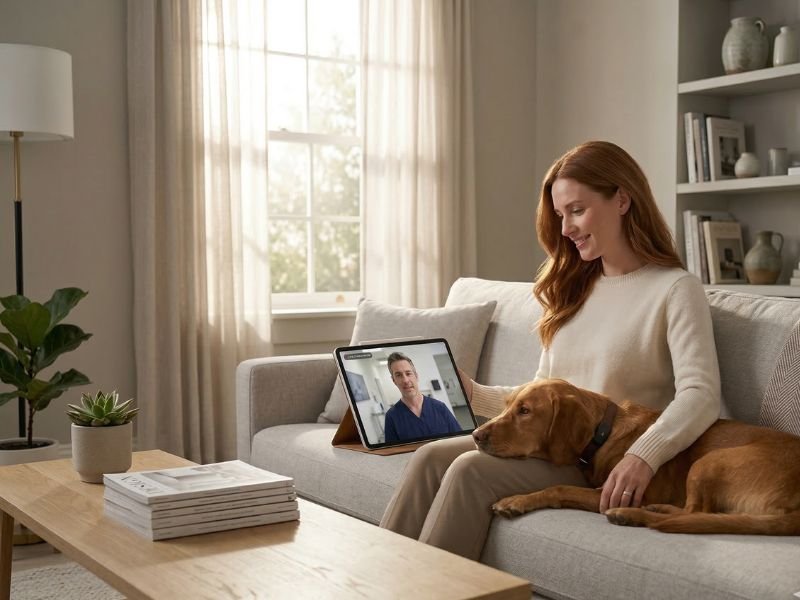
Veterinary telehealth can improve communication and follow-up between in-person appointments. It is particularly useful during recovery, medication changes, long-term monitoring, or when a veterinarian needs to review a specific episode.
You may be able to share:
- Videos of walking, breathing, resting, or unusual behavior
- Changes in appetite, drinking, or bathroom habits
- Medication records
- Weight or activity trends
- A clear timeline of symptoms
Telehealth is most valuable as a complement to hands-on veterinary care, not as a replacement for physical examination, testing, or emergency treatment.
In the United States, telemedicine requirements vary by state. Veterinary telemedicine commonly depends on an established veterinarian-client-patient relationship, or VCPR, although the precise rules are not identical across the country.
What to check before choosing a veterinary telehealth service
- Who provides the consultation: Confirm that you are communicating with a licensed veterinary professional.
- State availability: Check whether the service can legally provide the type of care you need in your state.
- Relationship with your regular veterinarian: Follow-up is often more useful when the provider already knows your dog.
- Scope of the service: Understand whether it offers general advice, triage, follow-up, or medical consultation.
- Record sharing: Information should be easy to add to your dog’s veterinary history.
- Privacy and security: Videos, medical information, and payment details should be handled securely.
- Emergency limitations: The service should clearly explain when immediate in-person care is required.
4. Video, home monitoring, and gait analysis: more objective observation

Video can help document what happens when you are away or capture changes that may not appear during a veterinary appointment.
A home camera may reveal restlessness, repeated waking, barking, pacing, scratching, difficulty settling, or changes in normal movement. Short smartphone videos can also help your veterinarian assess limping, stiffness, difficulty rising, or an unusual episode.
For mobility concerns, try recording your dog:
- Walking toward the camera
- Walking away from the camera
- Moving from both sides
- Rising from a resting position
- Using stairs, only when safe
- Walking at a natural pace on a level surface
Professional gait analysis goes further by using specialized equipment to measure movement and weight distribution. Home video cannot provide the same level of measurement, but it can create a useful visual record for comparison.
Three useful examples
The Furbo 360° Dog Camera provides a rotating 360-degree view, automatic dog tracking, two-way audio, night vision, and remote treat tossing. It is particularly relevant for owners who want dog-specific monitoring and alerts, although some advanced notification and recording features may require a subscription.
The eufy Pet Dog Camera D605 combines a 360-degree view with automatic pet tracking, two-way audio, treat dispensing, and local video storage. It may suit owners who want a broad view of the room and greater control over where recordings are stored.
The Petcube Bites 2 Lite offers 1080p video, night vision, two-way audio, sound and motion alerts, and remote treat dispensing. It is a practical option for checking in, speaking to your dog, and offering occasional rewards from a distance.
What to check before choosing a camera or monitoring setup
- Image quality: The video should remain clear enough to observe movement and behavior.
- Field of view: Make sure the camera covers the areas your dog uses most.
- Night vision: This is useful for monitoring sleep, nighttime movement, or restlessness.
- Motion and sound alerts: Notifications should be adjustable to avoid constant unnecessary alerts.
- Recording options: Check whether clips are stored locally, in the cloud, or only available live.
- Subscription costs: Some cameras charge separately for saved recordings or advanced alerts.
- Privacy and security: Use a strong password and review how video is stored and accessed.
- Camera placement: Position it where your dog is visible without creating blind spots or safety hazards.
5. Health apps and dashboards: keeping information organized
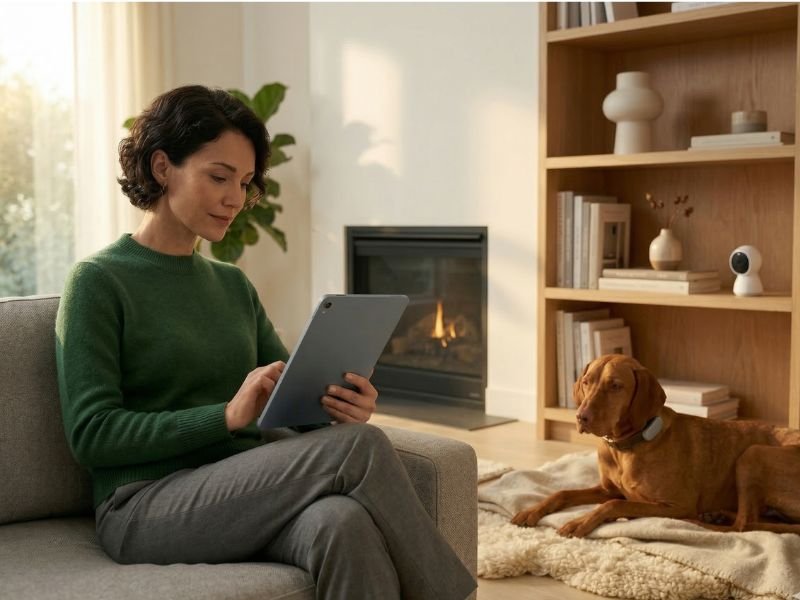
Health apps and digital dashboards can bring together information that would otherwise remain scattered across notes, messages, calendars, and different devices.
Depending on the platform, you may be able to record:
- Weight
- Medication
- Symptoms
- Veterinary appointments
- Activity and sleep
- Food and water intake
- Mobility changes
- Photos and videos
- Test results or treatment plans
The most useful app is not necessarily the one with the greatest number of features. It is the one you can update consistently and use to create a clear timeline. Several apps illustrate the different ways this technology can support dog care.
PetDesk is most useful when your veterinary clinic or another pet-care provider participates in its network. Depending on the provider, the app may allow owners to request appointments and medication refills, receive reminders, access records or laboratory results, and communicate more easily with the veterinary practice.
VitusVet focuses more strongly on keeping medical information accessible in one place. Owners can store vaccination and laboratory records, monitor weight and medication, record allergies or medical alerts, and keep details such as microchip and pet-insurance information available when needed.
11pets works well as a broader personal care organizer. It can track medication, appointments, weight, vital signs, activity, and important documents, with options for sharing health information with a veterinarian. This may be especially useful for households managing several pets or dogs with longer-term care routines.
What to check before choosing a health app
- Ease of use: Adding information should be quick enough to maintain regularly.
- Relevant data: Choose an app that records the information your dog actually needs.
- Trend views: Look for timelines and graphs that make gradual changes easier to identify.
- Sharing and export: You should be able to send useful information to your veterinary team.
- Medication reminders: These can be valuable for complex or long-term treatment plans.
- Multiple-pet support: Check whether each dog can have a separate, clearly organized profile.
- Device integration: Confirm whether the app connects with any wearable or tracker you already use.
- Privacy: Review how health information is stored and whether you can delete or download it.
BELPAW Check 🐾
Signs the technology is helping
- You understand your dog’s normal patterns more clearly.
- Alerts are relevant and timely.
- Information is easier to share with your veterinarian.
- The device fits comfortably into your routine.
Common mistakes
- Treating an alert as a diagnosis
- Choosing Bluetooth when remote live tracking is the goal
- Ignoring subscriptions, coverage, comfort, or battery life
- Collecting data without reviewing trends
- Allowing the device to replace daily observation
FAQ
Can a smart collar detect a disease?
It may flag changes in activity, sleep, vital signs, or behavior, but it cannot provide a complete diagnosis. Use the information as a reason to consult your veterinarian.
Is an AirTag good enough for tracking a dog?
It may help as a secondary recovery aid, but it is not equivalent to a dedicated cellular GPS tracker with live location, virtual safe zones, and escape alerts.
Do dog GPS trackers require a monthly fee?
Most cellular trackers do because the plan covers mobile-network connectivity and app services. Confirm current subscription terms before purchasing.
Can telehealth replace an in-person veterinary visit?
Usually not. It is most useful for follow-up, triage, progress reviews, and communication between appointments. Physical examinations, diagnostic testing, and urgent care still require an in-person visit.
Final Thoughts
- The best smart technology for dogs solves a specific problem without complicating daily care.
- Choose a wearable for routine trends, a cellular GPS tracker for location safety, telehealth for better follow-up, video or gait assessment for mobility concerns, and a health app for organized records.
- Use technology to notice patterns and communicate more clearly—not to replace professional judgment. The most useful system is the one that fits your dog comfortably and helps you take better action.
External References
- AAHA/AVMA — Telehealth Guidelines for Small-Animal Practice
- AAHA — Using Telehealth and Telemedicine Technologies
- Cornell University College of Veterinary Medicine — Sports Medicine and Rehabilitation
- Apple — AirTag and the Find My Network
Related Reads
- Best Orthopedic Dog Beds for Dogs
- Best Elevated Dog Beds
- Best Dog Beds for Large Dogs
- Best Dog Backpack Carriers for Small Dogs
- Portable Dog Water Bottle: What to Look For
- Best Portable Dog Water Bottles for Dogs
- 10 Best Dog Travel Accessories
- Dog Travel Accessories: Arrival Essentials
- Spring Dog Travel Essentials
- Best Interactive Dog Toys for Dogs
BELPAW Transparency 🐾
This article may include affiliate links. If you buy through them, BELPAW may earn a commission at no extra cost to you.