
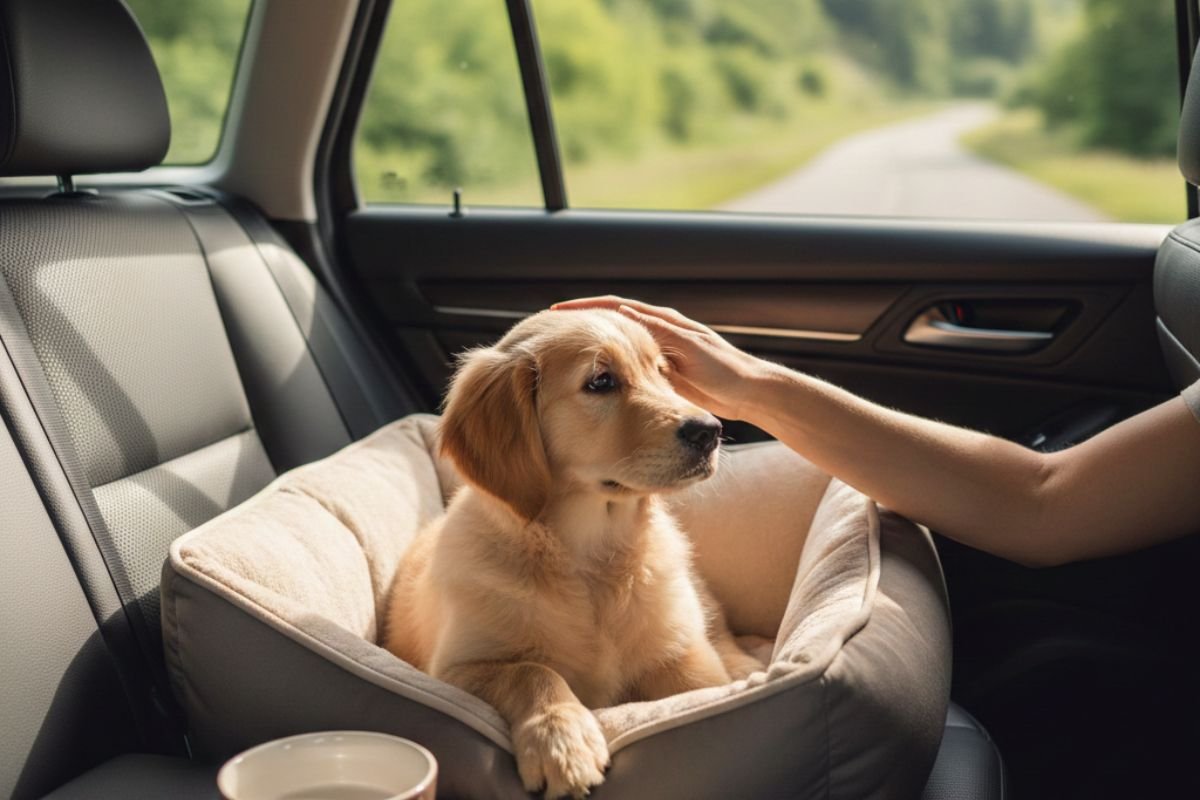
Your dog’s first car ride can shape how they feel about travel for months or even years. A calm, well-planned introduction helps reduce stress, motion sickness, hesitation, and future resistance to getting in the car.
The goal is simple: help your dog understand the car before expecting them to handle a full trip. That means starting with the car parked, adding the engine, trying very short rides, and slowly building confidence.
Quick Take: What Matters Before the First Real Ride
- Start several days before the first important trip, not the morning you need to leave.
- Choose one safe travel setup from the beginning: crate, car harness, carrier, or secure cargo area.
- Build the experience in stages: parked car, engine on, short drive, longer ride.
- Watch for signs like drooling, panting, freezing, whining, vomiting, or trying to escape.
Dog Car Ride Guide: Signs and First Steps
| Situation | What it may mean | Best first step |
|---|---|---|
| Your dog stops near the car | The car still feels unfamiliar | Practice calm approaches without getting in |
| Your dog gets in but wants out fast | The space feels unstable or stressful | Practice short stays with the car parked |
| Your dog reacts when the engine starts | Sound or vibration may be too much | Run very short engine-on sessions |
| Your dog drools or vomits quickly | Possible motion sickness | Keep rides shorter and ask your vet if it repeats |
| Your dog improves after short rides | The training is working | Increase duration gradually |
How to Prepare Your Dog for Their First Car Ride
1. Make the car feel familiar first
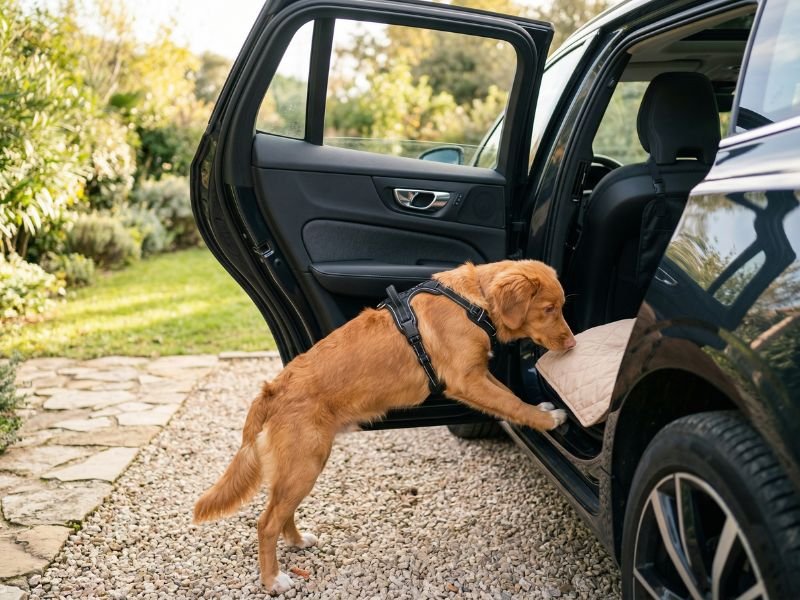
Start before there is any pressure to travel. Walk your dog near the car, let them sniff around, and keep the mood calm.
Then open the doors and allow them to look inside without asking too much too soon. For some dogs, simply standing near the open car calmly is already progress.
Keep these first sessions short. End before your dog becomes overwhelmed. The early goal is recognition, not performance.
2. Choose the travel setup early
Your dog should learn one clear routine from the start.
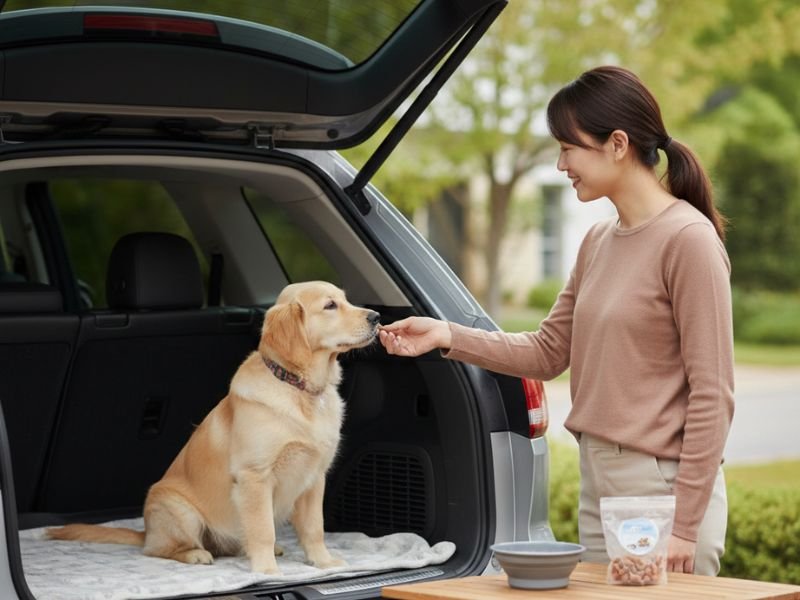
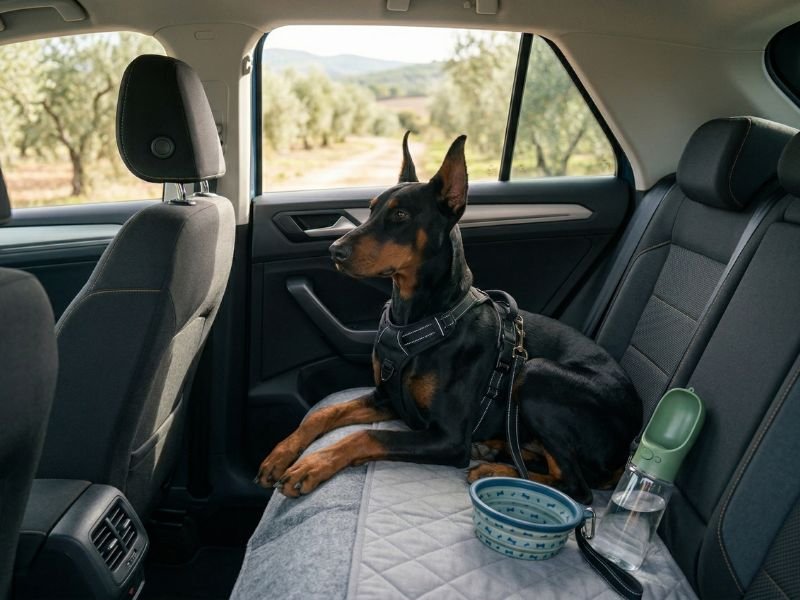
Small dogs often do well in a secure carrier or travel crate. Medium dogs may travel with a proper car safety harness. Larger dogs may use a secured cargo area with good ventilation, a non-slip surface, and a barrier or crate depending on the vehicle.
Avoid changing the setup every time. Consistency helps your dog understand where they belong in the car and what is expected.
3. Practice with the car parked
Before adding movement, help your dog settle in their travel space while the car is completely still.
Ask them to get in, stay briefly, and get out again. Keep your voice calm and avoid turning the moment into a high-energy event.
A familiar blanket can help. It adds scent, comfort, and stability, especially for dogs who feel unsure on smooth car seats or cargo floors.
4. Add the engine before adding motion
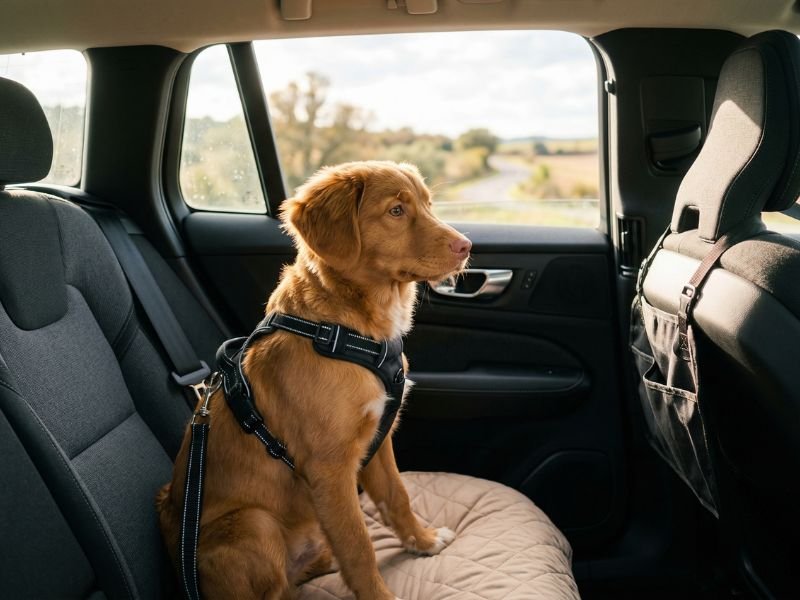
Once your dog can stay calmly in the parked car, turn the engine on for a few seconds.
Watch closely. Some dogs react more to the vibration and sound than to the actual movement. If your dog pants, freezes, whines, or tries to leave, keep this stage very short and repeat it over several days.
The aim is not to push through. It is to make the engine part of a predictable routine.
5. Start with very short drives
The first ride should be almost too easy.
Drive around the block or to the end of the street and back. Keep the route quiet, avoid sharp turns, and skip loud music.
If that goes well, increase gradually: 2 minutes, 5 minutes, 10 minutes, then 15–20 minutes. A clean short ride is more valuable than a longer ride that ends with stress or vomiting.
Adjust Food, Timing, and Comfort
Travel is easier when the context is well managed.
Avoid a large meal right before the ride if your dog tends to get carsick. Keep the car cool and well ventilated. Bring water, a leash, poop bags, a towel, and a familiar blanket.
Choose a simple first destination. A quiet park, a friend’s driveway, or a short walk in a familiar area is better than a busy vet visit, loud event, or long road trip.
The destination matters because dogs learn patterns. If every car ride leads to something stressful, the car can become stressful too.
Safety Notes and Common Mistakes
Good preparation includes both comfort and safety:
- Keep your dog secured, not loose in the car.
- Avoid the front passenger seat, especially where airbags are present.
- Do not let your dog hang their head out of the window while driving.
- Never leave your dog unattended in a parked car.
Common mistakes to avoid:
- Making the first ride too long.
- Waiting until the day of travel to introduce the car.
- Switching between crate, harness, back seat, and cargo area.
Real calm usually looks soft: relaxed body, normal breathing, ability to settle, and a smooth recovery after the ride.
When to Slow Down or Call Your Vet
Some signs mean the process is moving too quickly. Others may point to motion sickness.
Slow down if your dog shows:
- Heavy drooling
- Sudden panting
- Trembling
- Repeated whining
- Refusing to approach the car
- Trying to escape the travel setup
Call your veterinarian if your dog vomits repeatedly, drools intensely during very short rides, seems unwell after travel, or becomes more distressed with each attempt.
Motion sickness is common in many dogs, especially young dogs, and your vet can help you decide whether training alone is enough or whether medical support may be needed.

FAQ
How long does it take for a dog to get used to the car?
It depends on the dog. Some improve within a few days, while others need several weeks. Dogs with previous bad experiences, anxiety, or motion sickness usually need a slower plan.
Is a crate or car harness better?
It depends on your dog’s size, your car, and what your dog tolerates best. The safest option is a secure, well-fitted setup that keeps your dog contained and stable during sudden stops.
Should I feed my dog before the first ride?
Avoid a large meal right before travel, especially if your dog is prone to nausea. For dogs with repeated vomiting or heavy drooling, ask your veterinarian for tailored advice.
Final Thoughts
Preparing your dog for their first car ride works best when the process is calm, gradual, and consistent. Start with the parked car, choose one safe travel setup, add the engine slowly, and keep the first rides short. Your dog does not need a perfect first trip. They need a manageable one that helps them trust the car a little more each time.
External References
- American Veterinary Medical Association — Traveling With Your Dog or Cat
- Cornell Riney Canine Health Center — Traveling Safely With Your Dog
- Center for Pet Safety — CPS Certified Products
- MSD Veterinary Manual — Motion Sickness in Dogs