
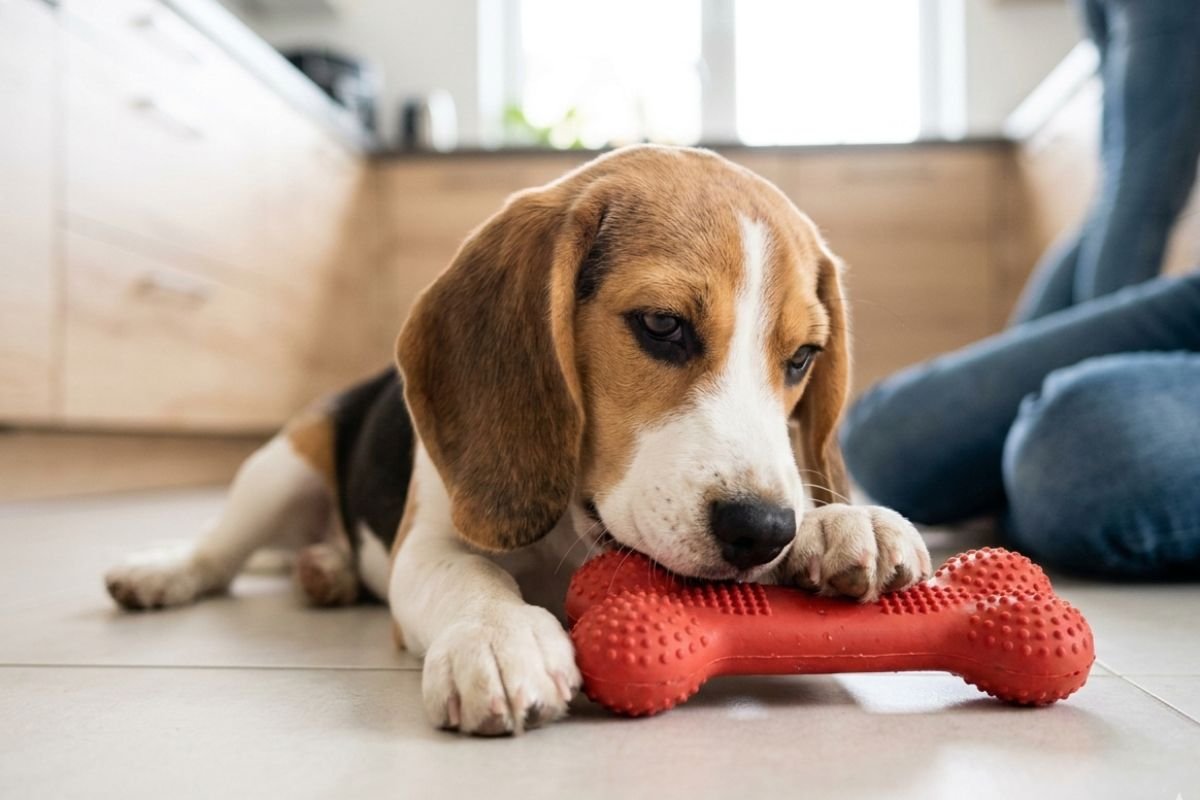
Puppy chewing is a normal part of early development. Puppies explore with their mouths, manage teething discomfort, play, release energy, and learn what belongs in their world.
The goal is to guide that natural chewing toward safe, appropriate choices before your puppy builds habits around furniture, shoes, cords, rugs, or hands.
This guide explains how to stop puppy chewing at home with a simple structure: prepare the environment, offer better chew options, redirect calmly, and create enough rest so your puppy can actually learn.
Quick Take: What Helps Most When Your Puppy Chews Everything
- Chewing is normal in puppies, especially during teething and early exploration.
- The fastest progress usually comes from puppy-proofing first, not correcting every mistake after it happens.
- Safe chew toys should be easy to find, interesting to use, and suitable for your puppy’s age and bite strength.
- If your puppy swallows objects, injures their mouth, or chews mainly when left alone, ask your veterinarian for guidance.
Puppy Chewing Guide: What It Usually Means and What to Do
| Situation | What it may mean | Best first step |
|---|---|---|
| Chewing furniture legs or corners | Teething, curiosity, or lack of a better option | Limit access and offer a safer chew |
| Biting hands during play | Overexcitement or poorly directed play | Pause briefly and redirect to a toy |
| Going after cords, shoes, or remotes | Too many tempting objects available | Puppy-proof the room |
| Chewing more in the evening | Tiredness or overstimulation | Create a calmer routine and nap breaks |
| Chewing when left alone | Stress, frustration, or poor alone-time setup | Use a safe area and review the context |
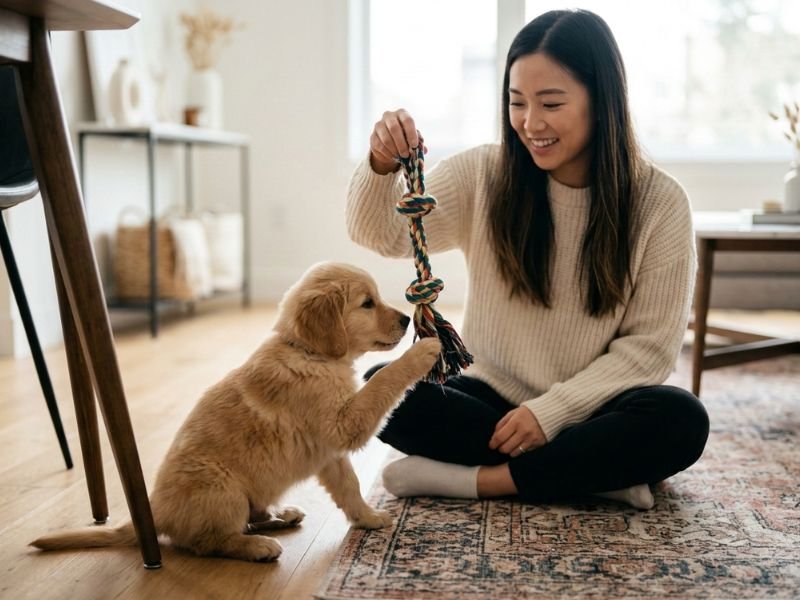
How to Stop Puppy Chewing at Home
1. Puppy-proof the rooms your dog uses most
Start with the space your puppy actually lives in: the living room, kitchen, hallway, sleeping area, or home office. A puppy surrounded by shoes, cables, laundry, and low furniture corners will make mistakes because the environment is doing too much of the teaching.
Remove or block access to the highest-risk items first:
- Electrical cords and chargers
- Shoes, bags, and loose clothing
- Remote controls and small household objects
- Rugs, textiles, and plants that may be unsafe
Use baby gates, closed doors, or a puppy pen when you cannot supervise closely. This is a temporary management tool, not a long-term punishment. It helps your puppy practice better choices while reducing the chances of chewing something dangerous or valuable.
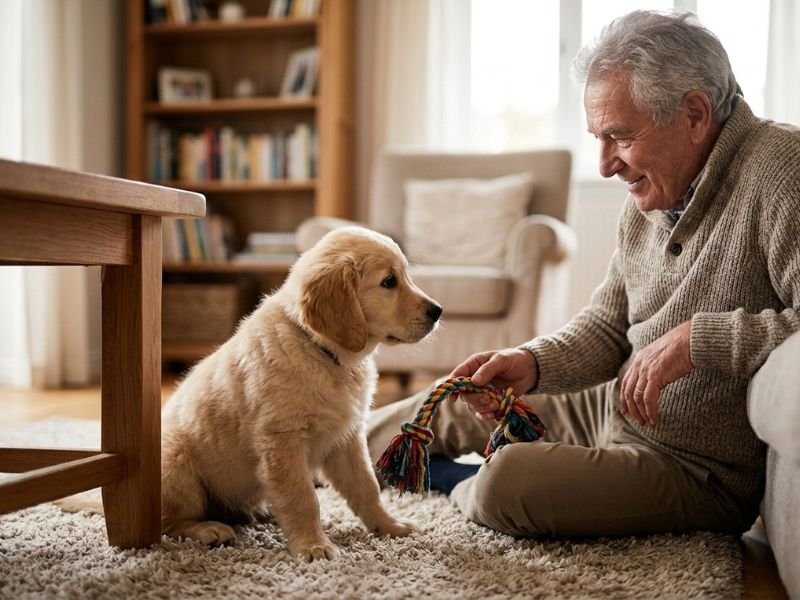
2. Choose chew toys that are safe and worth choosing
A chew toy has to compete with chair legs, socks, and shoes. That means it should feel satisfying, be easy to access, and match your puppy’s size, mouth, and chewing strength.
Good options may include:
- Soft rubber puppy chew toys
- Flexible teething toys
- Food-stuffable toys for calm chewing sessions
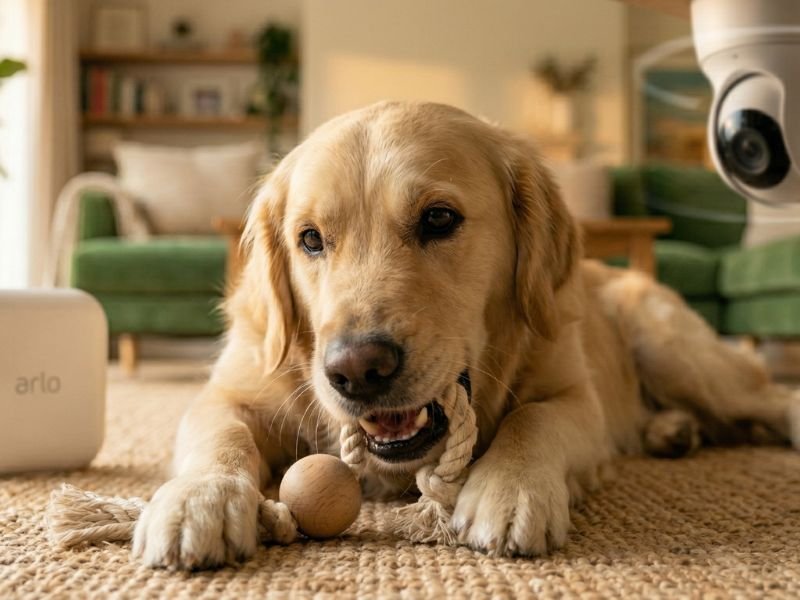
- Supervised rope toys for gentle play
Avoid very hard objects for young puppies, especially anything that could damage teeth or break into sharp pieces. Check toys regularly and remove them as soon as they start to split, fray, or lose small parts.
A small rotation works better than leaving everything out all the time. Keep a few chew toys available and swap them every few days so they stay interesting.
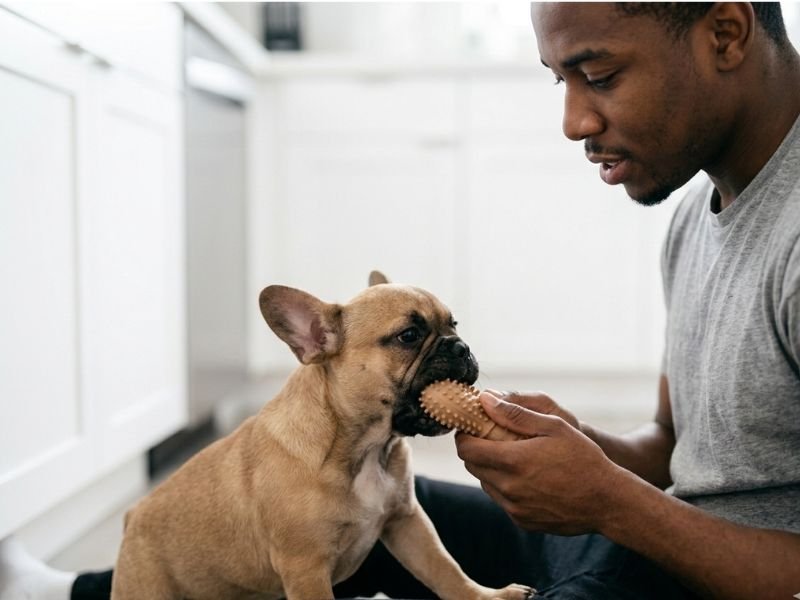
3. Redirect calmly before chewing escalates
When your puppy starts moving toward something inappropriate, step in early. Waiting until the chewing is intense makes the situation harder to interrupt and more exciting for the puppy.
Use a simple sequence:
- Interrupt calmly with a short cue.
- Move the object away or guide your puppy away from it.
- Offer a safe chew toy immediately.
- Praise softly when your puppy chooses the toy.
This teaches your puppy what to do instead. Repeating “no” without giving an alternative usually creates confusion, especially in young puppies that are still learning the rules of the home.
If your puppy bites hands, sleeves, or pant legs during play, pause the game briefly and offer a toy they can grab instead. Hands should not become part of the game. Toys continue the interaction; biting skin or clothes ends it.
4. Build a routine with play, sniffing, chewing, and rest
Chewing is not always a sign of extra energy. Many puppies chew more when they are tired, overstimulated, or unable to settle.
A balanced routine should include short bursts of activity, gentle training, sniffing games, supervised chew time, and real naps in a quiet area. Puppies need more rest than many people expect, and lack of sleep can make biting and chewing worse.
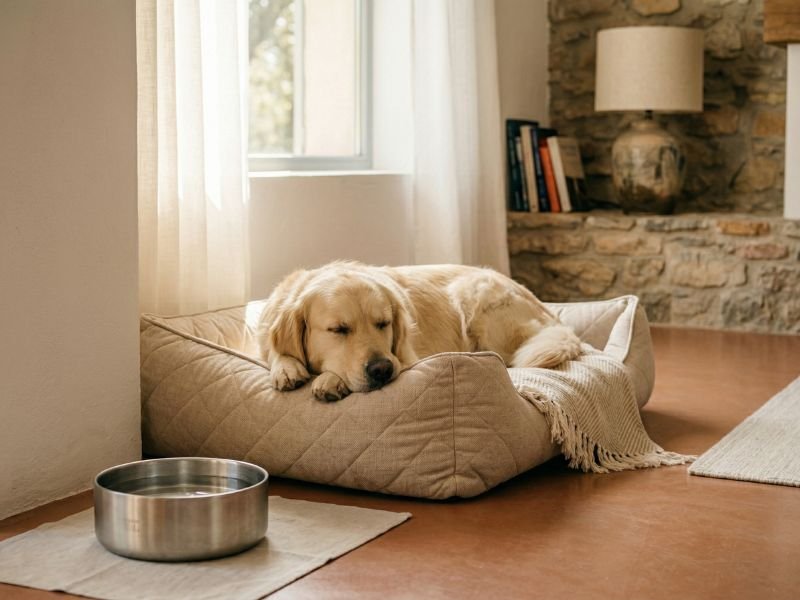
Evening chewing is especially common. Instead of adding more intense play late in the day, try lowering stimulation: dimmer activity, a safe chew, a calm area, and a predictable bedtime rhythm.
BELPAW Check🐾
Signs You Shouldn’t Ignore
Some chewing needs closer attention because it can involve safety, pain, or stress.
- Your puppy tries to swallow pieces of toys, fabric, plastic, or wood.
- You notice bleeding, swelling, broken teeth, or mouth discomfort.
- Chewing becomes very intense and difficult to redirect.
- Your puppy chews doors, exits, or windows mainly when left alone.
If your puppy may have swallowed something, contact your veterinarian. Household objects can cause digestive problems, especially when they include plastic, fabric, string, foam, or sharp edges.
Common Mistakes
Most chewing problems become harder when the puppy has too many chances to repeat the wrong behavior.
- Leaving shoes, cords, laundry, or small objects within reach.
- Giving old shoes or socks as chew items, then expecting your puppy to know the difference.
- Correcting the puppy without offering a better option.
- Using too much excitement when the puppy is already overstimulated.
The clearer the setup, the faster the learning. Puppies do best when the environment, the routine, and the human response all point toward the same behavior.
Smart Tips
Small adjustments can make the home feel easier for your puppy to understand.
- Place chew toys in the rooms where chewing usually starts.
- Reward quickly when your puppy chooses the right item.
- Use short sniffing games to lower evening excitement.
- Review the pattern weekly: what your puppy chews, when it happens, and which alternative works best.
This makes the process more precise. You are not guessing; you are reading the behavior and improving the setup.
FAQ
Is it normal for puppies to chew everything?
Yes, within limits. Puppies chew to explore, play, relieve teething discomfort, and interact with their environment. The key is to guide that need toward safe chew toys while reducing access to unsafe or valuable household items.
When does puppy chewing usually improve?
It often improves as teething progresses and the puppy matures, especially with consistent supervision and redirection. Many puppies become easier to manage once their adult teeth are in, but habits depend heavily on the home setup and daily routine.
Should I scold my puppy for chewing furniture?
A calm interruption can help, but scolding alone does not teach the right behavior. The better response is to interrupt, remove access, offer a safe chew, and reward your puppy when they choose it.
Final Thoughts
Learning how to stop puppy chewing starts with making the right choice easier than the wrong one. A safer home setup, better chew options, calm redirection, and enough rest can turn a chaotic stage into a much more manageable routine.
Your puppy is learning how to live in a human home. With structure, patience, and consistency, chewing becomes safer, more predictable, and much easier to guide.
External References
- ASPCA — Destructive Chewing
- VCA Animal Hospitals — Teeth, Teething and Chewing in Puppies
- ASPCA — Separation Anxiety