

How often should a puppy eat?. The answer changes quickly during the first year because puppies grow fast, their digestion is still developing, and their ability to go several hours between meals changes as they mature.
A good feeding routine helps spread energy more evenly, reduce overeating, support better stools, and make the daily portion easier to measure. The right schedule depends on your puppy’s age, breed size, food, appetite, and digestive tolerance.
Quick Take: The Puppy Feeding Rhythm That Usually Works
- From 8 to 12 weeks, many puppies do best with 4 small meals a day.
- From 3 to 6 months, most puppies can move to 3 meals a day if digestion is stable.
- From 6 to 12 months, many puppies can transition toward 2 meals a day.
- Measure the total daily amount first, then divide it between meals.
Puppy Feeding Guide: Age, Meals, and What to Adjust
| Puppy age or situation | Typical meals per day | What to adjust |
|---|---|---|
| 8–12 weeks | 4 meals | Keep meals small and evenly spaced |
| 3–6 months | 3 meals | Reduce frequency if stools and energy are stable |
| 6–12 months | 2 meals | Transition gradually and monitor appetite |
| Toy or very small breeds | Often 3 meals for longer | Watch for low energy or trouble fasting |
| Large-breed puppies | 2–3 measured meals | Support steady growth without overfeeding |
This table is a practical starting point. Your puppy’s food label, breed size, body condition, and veterinarian’s advice should guide the final amount.

How to Feed a Puppy by Age
1. Feed 4 smaller meals from 8 to 12 weeks
At this stage, many puppies handle food better when the daily amount is split into 4 smaller meals. This helps avoid large portions that may be harder for a young puppy to digest.
A simple rhythm could be breakfast, lunch, late afternoon, and dinner. The exact timing does not need to be perfect, but the routine should be consistent enough for your puppy to settle into it.
This stage is also a good time to weigh the daily portion with a kitchen scale. Measuring by eye can easily lead to overfeeding or underfeeding, especially with small puppies.
2. Move toward 3 meals between 3 and 6 months
Between 3 and 6 months, many puppies can move to 3 meals a day. This usually works well when stools are normal, energy is steady, and your puppy is growing at a healthy pace.
Do not remove a meal suddenly. Take the portion from the meal you are removing and divide it between the remaining meals over several days. This makes the transition easier on digestion and appetite.
If your puppy seems unsettled, becomes overly hungry, or develops soft stools, hold the 3-meal routine for longer before making another change.
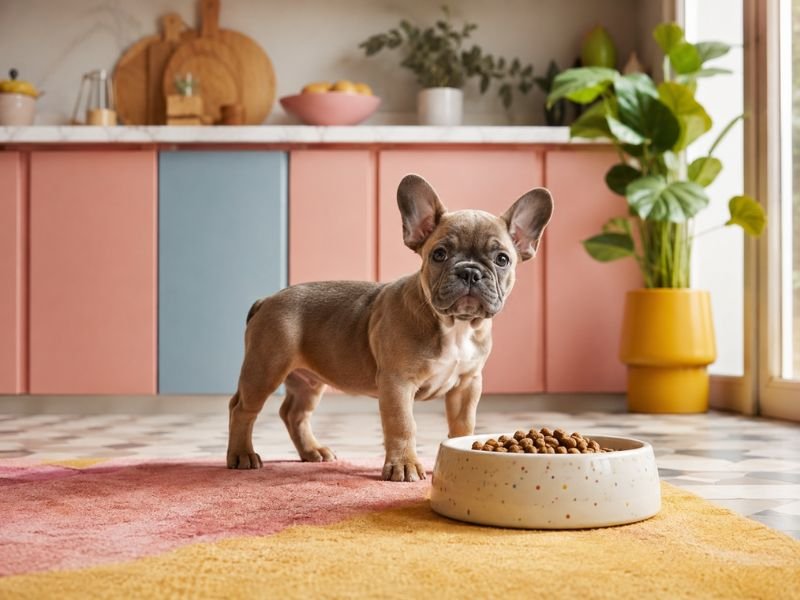
3. Transition to 2 meals from around 6 months if your puppy is ready
Around 6 months, many puppies can begin moving toward 2 meals a day. This is closer to an adult feeding routine and often works well for puppies with stable digestion and healthy body condition.
A morning and evening schedule is usually enough for many dogs at this stage. Smaller breeds, very active puppies, or sensitive puppies may benefit from staying on 3 meals for longer.
The best sign is not the number on the calendar alone. Your puppy should be growing steadily, eating calmly, and maintaining normal stools before you reduce feeding frequency.
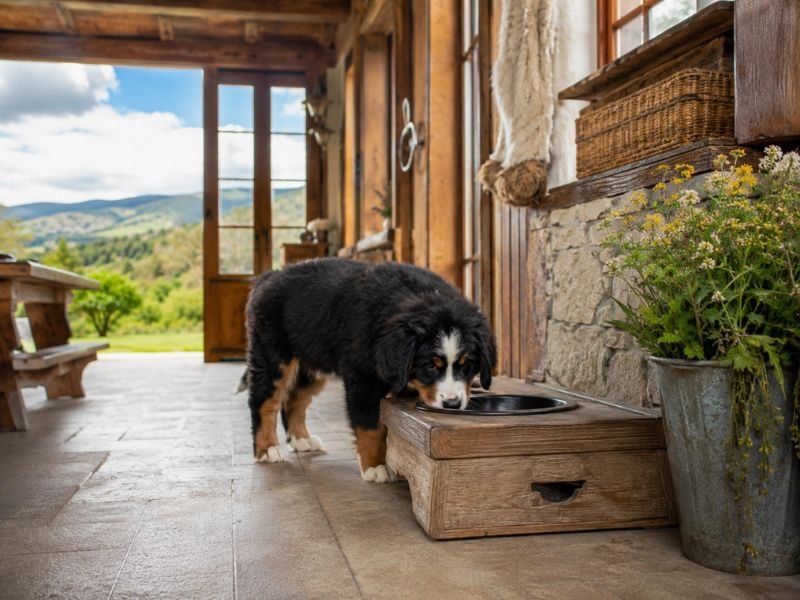
4. Adjust by size, food, and body condition
Breed size matters. Toy and small-breed puppies may need more frequent meals for longer, while large-breed puppies need careful portion control to support steady growth.
Choose a food formulated for puppy growth or for your puppy’s specific size category when appropriate. Always follow the feeding guide as a starting point, then adjust based on weight, body condition, stools, and your veterinarian’s advice.
Treats also count. If you use food for training, set aside part of the daily ration before meals so the total intake stays controlled.

BELPAW Check🐾
A puppy feeding routine should feel simple, measured, and easy to repeat. This block helps you notice when the schedule needs adjusting and avoid the feeding habits that most often create problems.
Signs You Shouldn’t Ignore
- Diarrhea lasting more than 24–48 hours may point to overfeeding, a sudden food change, parasites, or poor tolerance.
- Repeated vomiting needs attention, especially with tiredness, refusing food, or unusual behavior.
- Weight loss or uneven growth may mean the portion, food, or digestion needs veterinary review.
- A swollen or painful belly should be taken seriously, especially if your puppy seems restless or weak.
Common Feeding Mistakes
- Leaving food available all day without measuring the daily amount.
- Changing puppy food too suddenly.
- Giving treats without subtracting them from the total daily portion.
- Moving from 4 meals to 2 meals too quickly.
Smart Tips
- Weigh the full daily portion for one week and track stools, appetite, and energy.
- Use a slow feeder or snuffle mat if your puppy eats too fast.
- Keep feeding times reasonably consistent on weekdays and weekends.
- Recheck the food label when your puppy changes weight, age stage, or food type.
FAQ
How many times a day should an 8-week-old puppy eat?
An 8-week-old puppy often does best with 4 small meals a day. This keeps meals easier to digest and helps distribute energy more evenly through the day.
When can a puppy go from 3 meals to 2?
Many puppies can move from 3 meals to 2 meals around 6 months, as long as they have stable digestion, healthy growth, and good energy. Smaller breeds may need 3 meals for longer.
What if my puppy always seems hungry?
First, check the total daily portion, the food label, and how many treats your puppy is getting. If your puppy has normal weight, good energy, and normal stools, it may be excitement or food motivation. If hunger comes with weight loss, diarrhea, or anxiety, ask your veterinarian.
Final Thoughts
A good puppy feeding schedule should be easy to measure, easy to repeat, and flexible enough to match your puppy’s growth. Start with a simple age-based rhythm: 4 meals, then 3, then 2 as your puppy matures. Adjust slowly, watch body condition and stools, and keep treats within the daily amount. A calm routine gives your puppy steadier energy and gives you better control from the first months.
External References
- VCA Animal Hospitals — Feeding Growing Puppies
- AAFCO — Selecting the Right Pet Food
- WSAVA — Global Nutrition Guidelines
- WSAVA — Body Condition Score for Dogs