
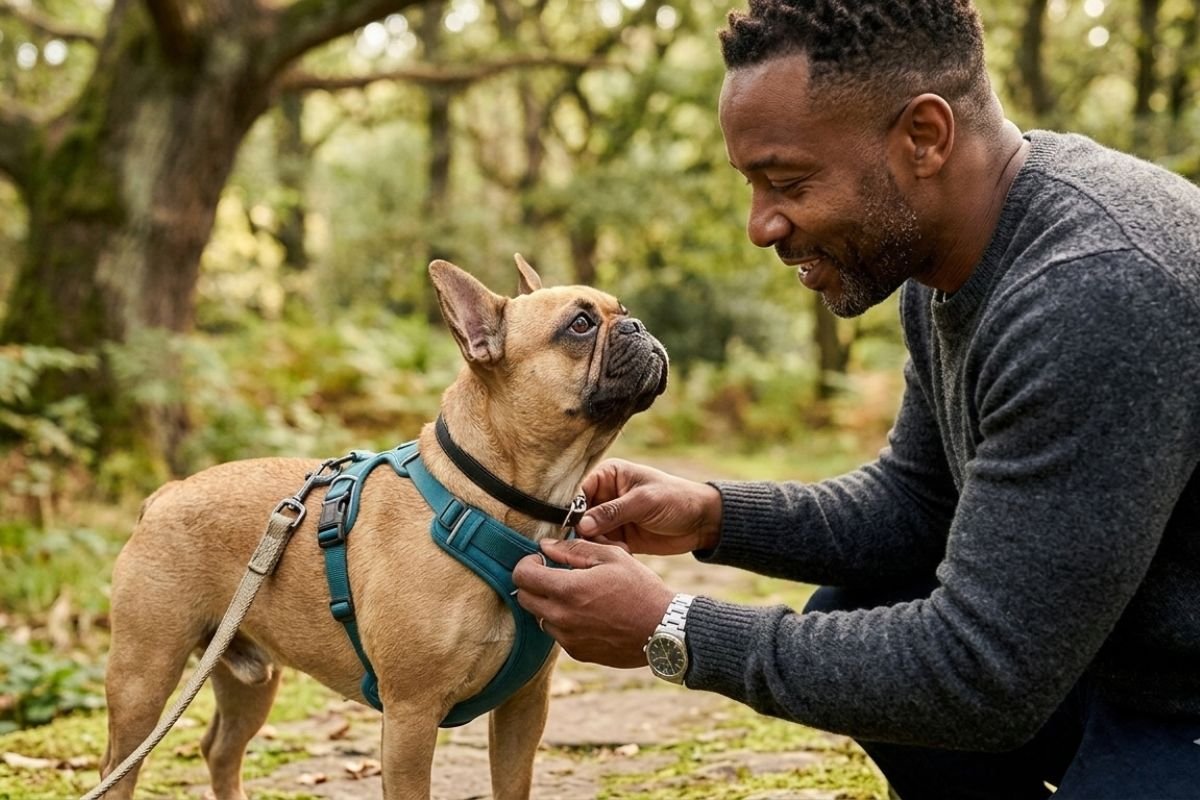
Choosing between a dog harness vs collar affects comfort, control, and safety on everyday walks. The right option depends on how your dog moves, how much they pull, their age, their body shape, and whether they show any signs of throat or neck sensitivity.
For many dogs, a well-fitted harness is the better main walking point because it helps reduce direct pressure on the neck. A collar can still be useful for ID tags and calm walks, especially when your dog walks without constant tension on the leash.
Quick Take: What Matters Before Your Next Walk
- A well-fitted harness is often better for dogs that pull, cough, lunge, or need more stable control.
- A flat collar can work well for calm dogs and is useful for ID tags.
- Measure both neck and chest before buying; size charts vary by brand.
- Check the fit in motion, not only while your dog is standing still.
Dog Walking Gear Guide: Harness, Collar, or Both?
| Situation | What it may mean | Best first choice |
|---|---|---|
| Your dog pulls hard | Pressure builds quickly during walks | Use a secure harness as the main attachment point |
| Your dog coughs or gags on leash | The neck may be under too much pressure | Avoid using the collar as the main walking point |
| Your dog walks calmly | There is little leash tension | A flat collar may be enough for relaxed walks |
| Your dog is a puppy | Size and behavior change quickly | Use a lightweight adjustable harness |
| Your dog backs out of gear | Escape risk is higher | Choose a more secure harness and check the fit carefully |
| Your dog has breathing or neck issues | Extra pressure can be uncomfortable | Ask your vet and avoid neck tension |
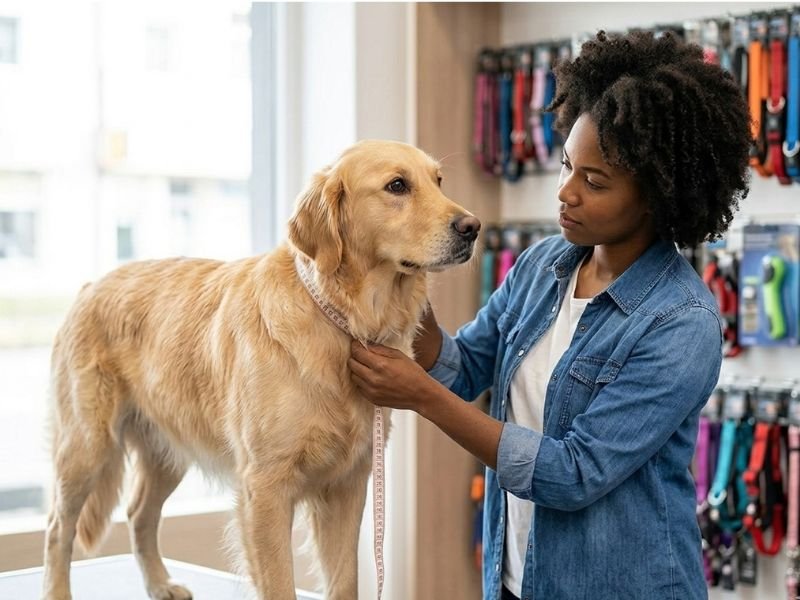
How to Choose Between a Dog Harness and Collar
1. Watch How Your Dog Actually Walks
Start with your dog’s real behavior, not only their size or breed. A calm dog that walks with a loose leash may do well with a flat collar. A dog that pulls, lunges, coughs, or suddenly changes direction usually needs more stable support.
A harness can help distribute pressure across the body instead of concentrating it around the neck. This is especially useful for young dogs, strong pullers, small breeds, and dogs with known throat or breathing sensitivity.
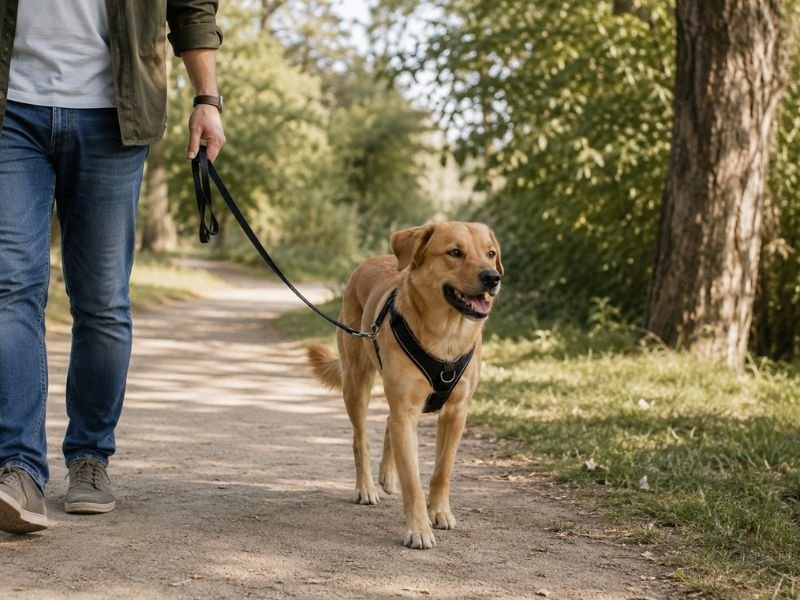
2. Match the Gear to Its Job
A collar is useful for identification, quick supervised outings, and dogs that already walk politely. It should sit comfortably around the neck and should not be used to create repeated pressure if your dog pulls.
A harness is usually the better main walking tool when you need control without direct neck pressure. Look for a design that sits securely around the chest and shoulders without rubbing behind the front legs.
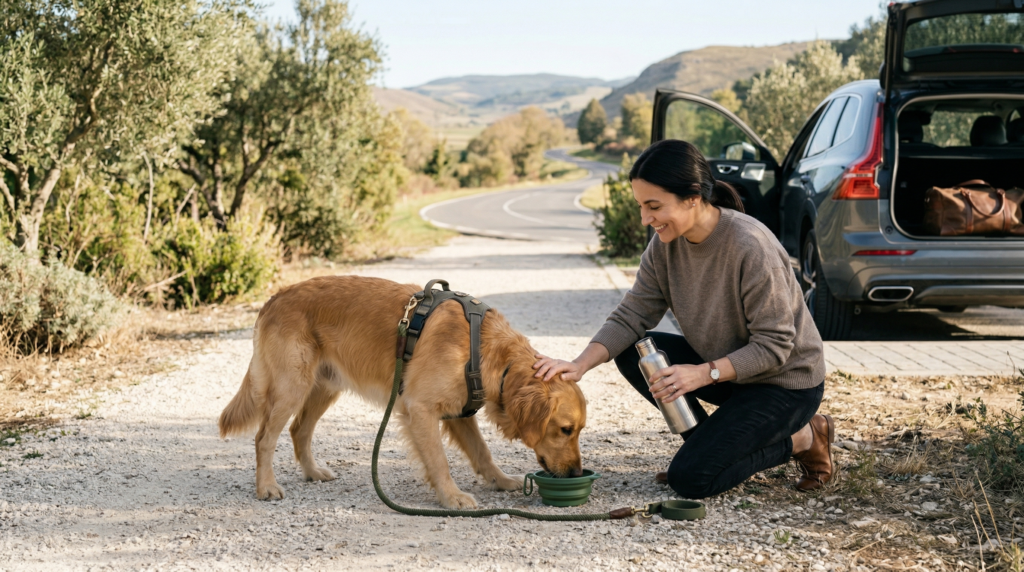
For dogs that may slip out of equipment, using both a collar and harness can add safety, especially while training or walking in busy places. The goal is stability, not extra tension.
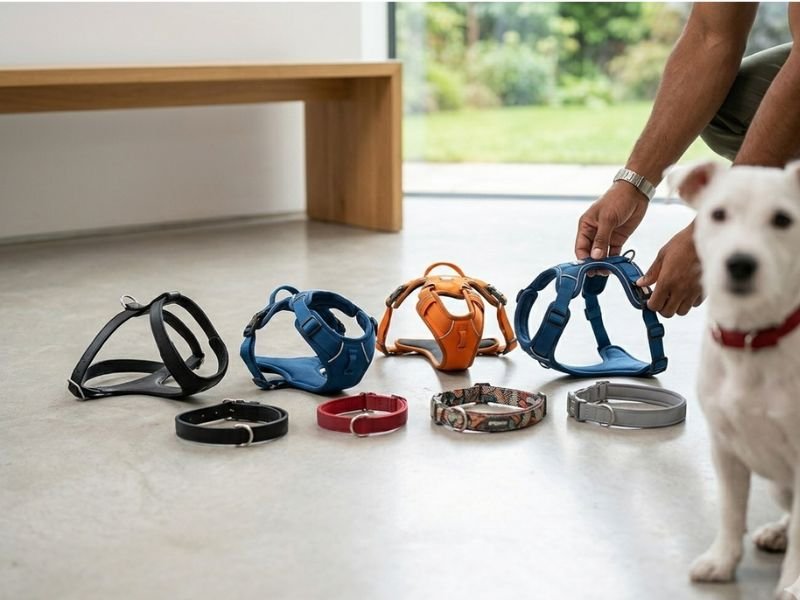
3. Measure Before You Buy
Do not choose size by breed name alone. Two dogs of the same breed can have very different chest depth, neck shape, and body proportions.
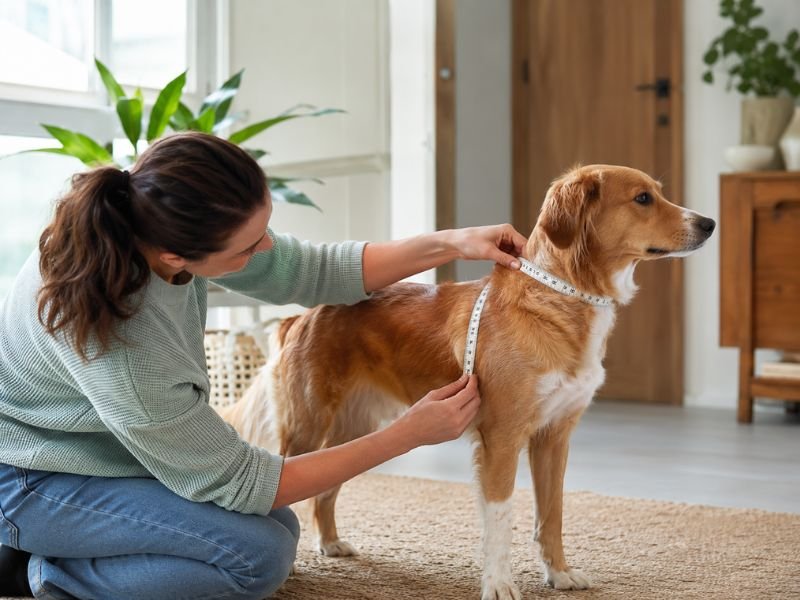
Measure your dog while they are standing naturally:
| Measurement | How to take it | Common mistake |
|---|---|---|
| Neck | Around the lower part of the neck | Measuring too high near the head |
| Chest girth | Around the widest part of the ribcage | Leaving too much loose space |
| Front chest | If required by the harness design | Ignoring it and causing shoulder or armpit rubbing |
If your dog is between sizes, check the brand’s guidance and prioritize a fit that keeps the harness stable without restricting movement. For puppies, repeat measurements often because growth can change the fit quickly.
How to Check the Fit Before Leaving Home
1. Test the Harness Indoors First
Let your dog wear the harness at home for a few minutes before using it outside. Offer calm praise or small rewards so the gear feels normal, not stressful.
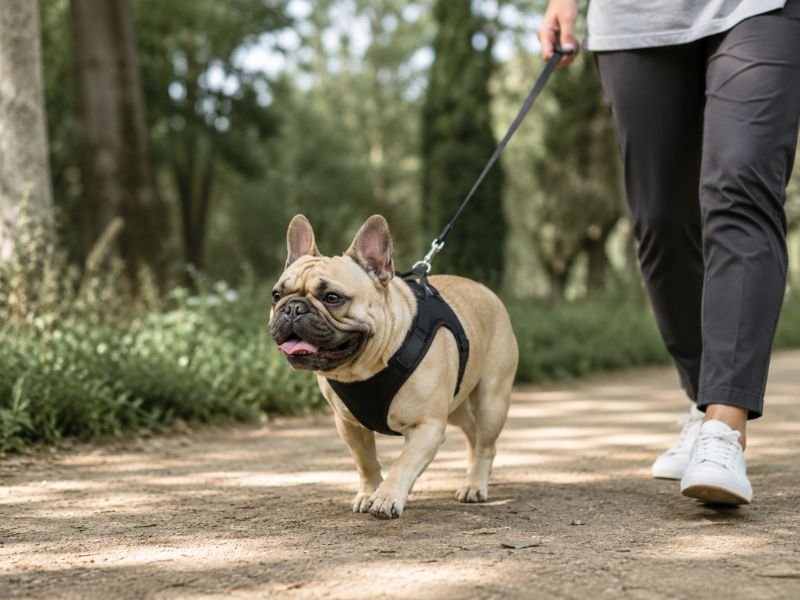
The harness should feel firm but comfortable. It should not swing, twist, or slide dramatically when your dog turns.
2. Check the Main Pressure Points
Look carefully around the armpits, shoulders, chest, and neck opening. The harness should not pinch, dig in, or sit directly against the throat.
Your dog should be able to walk, sit, turn, and lower their head naturally. If their movement looks stiff, short, or uncomfortable, the design or size may not be right.
3. Add Gentle Leash Tension
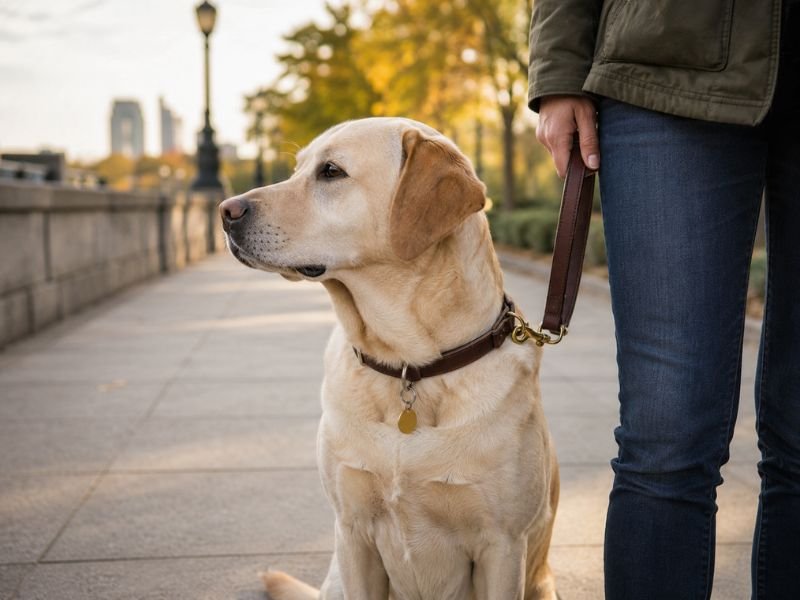
Clip the leash and apply light pressure. The harness should stay stable on the body. If it rotates sharply, rides up toward the throat, or allows your dog to pull one leg out, adjust it before walking.
For a collar, check that it is secure enough to hold ID tags and stay in place, but not tight enough to press into the neck.
4. Watch the First Few Minutes Outside
Many fit problems only appear once your dog starts moving. Watch for scratching, shaking, freezing, rubbing, coughing, or trying to back out of the gear.
A good fit should become almost invisible during the walk: your dog moves normally, breathes comfortably, and the equipment stays in place.
BELPAW Check 🐾
Signs You Shouldn’t Ignore
- Coughing or gagging during walks can mean the collar or leash pressure is uncomfortable. If it happens often, speak with your vet.
- Red marks, hair loss, or rubbing around the chest or armpits suggest the harness may be too tight, too loose, or poorly shaped for your dog.
- Backing out of the harness is a safety risk. Escapist dogs need more secure equipment and careful fitting before walking near roads or busy areas.
Common Mistakes
- Choosing by weight alone can lead to a poor fit. Chest shape matters as much as size.
- Leaving the harness too loose can make escapes more likely. Over-tightening can cause rubbing and restrict natural movement.
- Using a collar as the main control point for a strong puller can create repeated neck pressure and make walks more uncomfortable.
Smart Tips
- Try new gear at home before the first real walk.
- Check buckles, stitching, clips, and straps regularly.
- For long-haired dogs, measure over the coat as your dog normally wears it on walks.
- Recheck fit after grooming, weight changes, or growth spurts.
FAQ
Is a harness better than a collar for dogs?
A harness is often better as the main walking attachment for dogs that pull, cough, lunge, or need more body control. A collar can still be useful for ID tags and calm walks with little leash tension.
Are collars bad for all dogs?
No. A flat collar is not automatically bad. The problem is repeated or strong pressure on the neck, especially if the dog pulls, coughs, or has respiratory or neck sensitivity.
How do I know if a dog harness fits correctly?
A good harness should stay stable, allow natural movement, and avoid rubbing the armpits, shoulders, chest, or neck. If it twists, leaves marks, restricts movement, or lets your dog slip out, the fit needs adjusting.
Final Thoughts
The safest choice is the one that matches your dog’s body, walking style, and comfort.
For dogs that pull, cough, are still learning, or have sensitive necks, a well-fitted harness is usually the smarter main walking tool. For calm dogs, a flat collar can work well for identification and relaxed walks.
Measure carefully, test the fit indoors, and watch how your dog moves outside. Good walking gear should support the walk without getting in the way.
External References
- VCA Animal Hospitals — Collar and Harness Options for Dogs
- VCA Animal Hospitals — Tracheal Collapse in Dogs
- Humane Society of the United States — Which Type of Dog Collar Is Best for Your Dog?
- American Kennel Club — The Importance of a Well-Fitting Dog Harness
Related Reads
- How to Stop Your Dog Barking When Left Alone
- How to Teach Your Dog Not to Pull on the Leash
- Best No-Pull Dog Harnesses
- Best Air Purifiers for Homes with Dogs
- Best Vacuums for Dog Hair
- When Can Puppies Go for Walks?
- How Often Should a Puppy Eat?
- How to Stop Puppy Chewing at Home
- Best Puppy Playpens
- Best Puppy Beds