
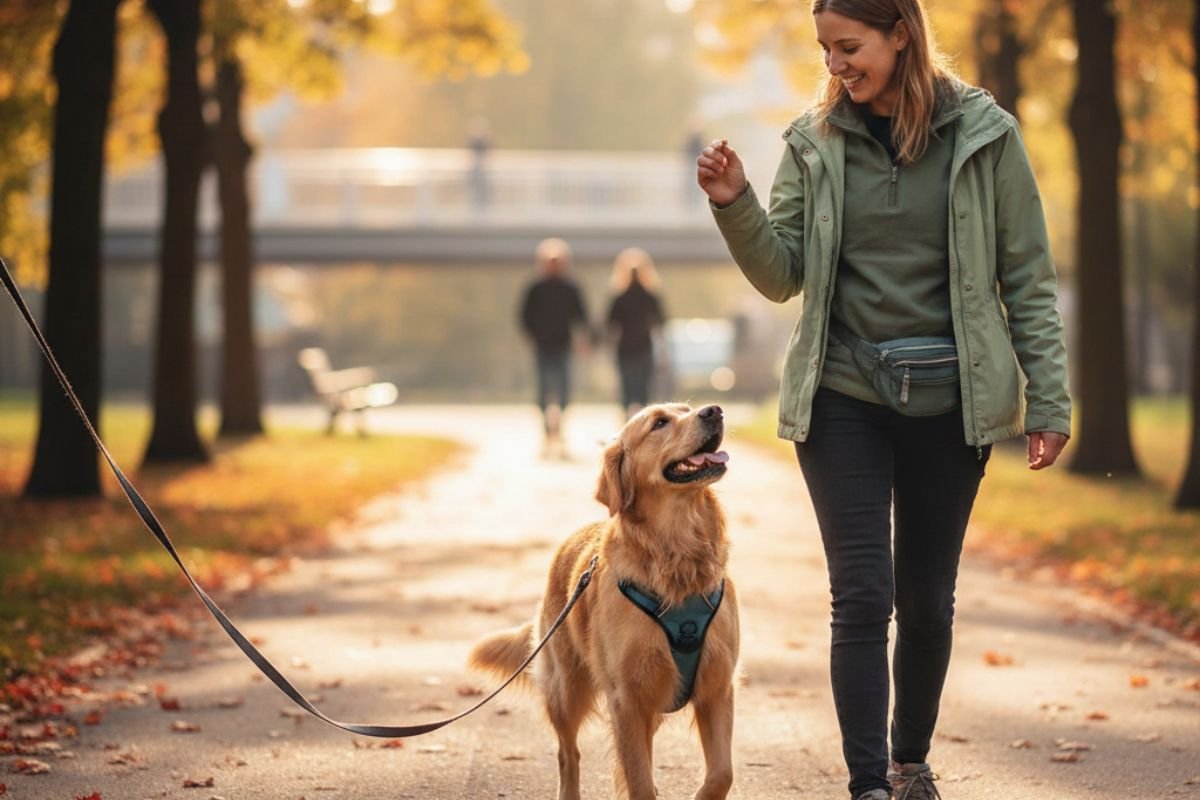
Learning how to teach a dog not to pull on leash makes daily walks safer, calmer, and more enjoyable for both of you. Pulling usually happens because it works: your dog moves faster, reaches a smell, greets someone, or gets closer to something exciting when the leash becomes tight.
The goal is loose-leash walking, not forcing your dog to stay glued to your leg for the entire walk. A good walk still gives your dog room to sniff, explore, and move naturally. The difference is simple: a loose leash keeps the walk moving; a tight leash pauses the walk or changes direction.
Quick Take: What Makes Loose-Leash Walking Work
- Start in easy places first: inside the home, hallway, driveway, yard, or a quiet street.
- Reward your dog quickly when the leash stays soft and relaxed, even for just a few steps.
- Use a fixed leash and a comfortable, well-fitted harness or collar that gives you control without constant pressure.
- Add distractions slowly, especially around dogs, bikes, people, traffic, or exciting smells.
Leash Pulling Guide: What It Means and What to Do
| Situation | What It May Mean | Best First Step |
|---|---|---|
| Your dog pulls as soon as you leave home | Too much excitement at the start | Practice 1–2 minutes of calm before walking out |
| Your dog pulls toward smells | Sniffing is driving the walk | Ask for a few loose-leash steps, then release to sniff |
| Your dog keeps pulling when you stop | The rule is not clear yet | Turn calmly and reward when your dog follows |
| Your dog pulls toward dogs or people | The distraction is too hard | Increase distance before practicing |
| Your dog walks well at first, then gets worse | Fatigue, frustration, or overstimulation | Shorten the walk and focus on quality |
How to Teach Your Dog Not to Pull on the Leash
1. Start where your dog can succeed
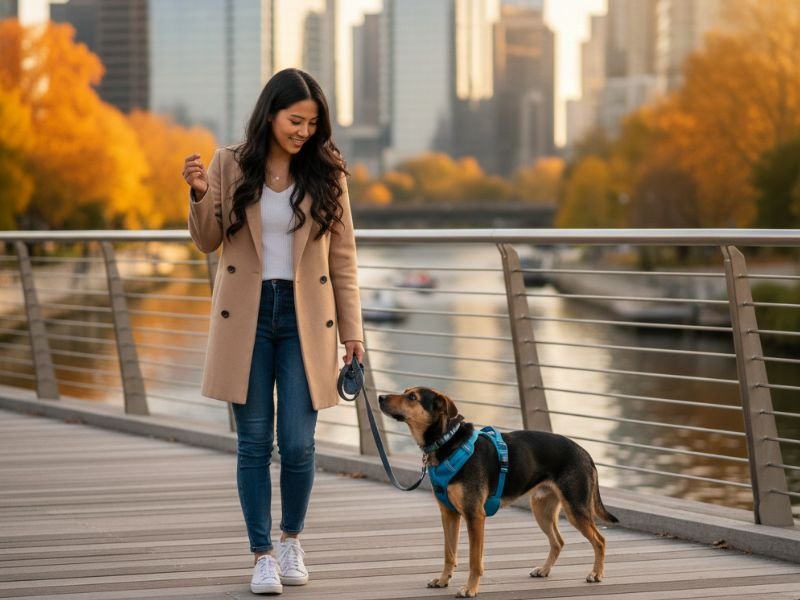
Loose-leash walking is much easier when your dog can think clearly. Begin in a place with low distractions, even if that means practicing indoors for the first few sessions.
Walk a few steps. If the leash stays loose, mark the behavior with a calm “yes” or “good,” then reward. At the start, reward often. You are helping your dog understand that staying connected to you makes the walk continue.
Keep sessions short: 2 to 5 minutes is enough. The point is not distance. The point is teaching the pattern.
2. Choose equipment that supports training
The right gear will not train your dog for you, but it can make learning easier and safer.
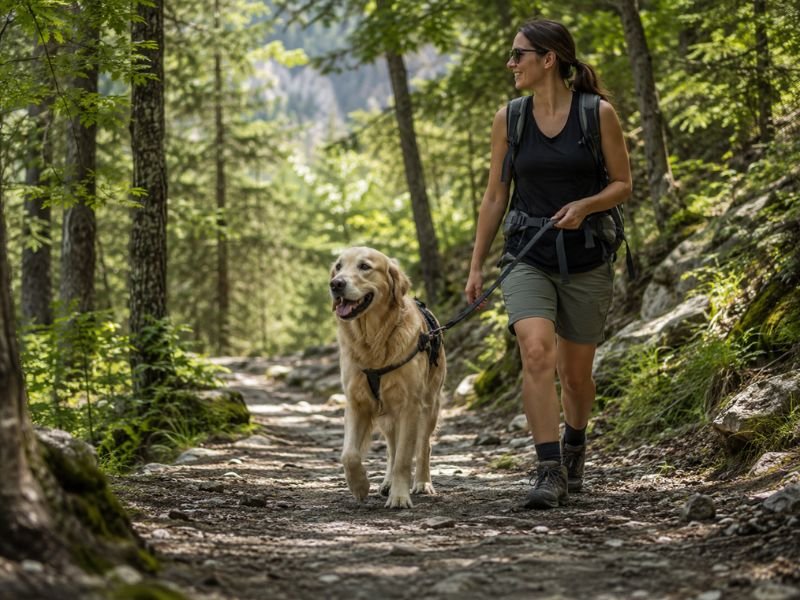
A fixed leash gives clearer feedback than a retractable leash. For most dogs, a 4–6 foot leash works well for training in neighborhoods or busier areas. A longer leash can be useful in open, safe spaces, but it should still be fixed-length.
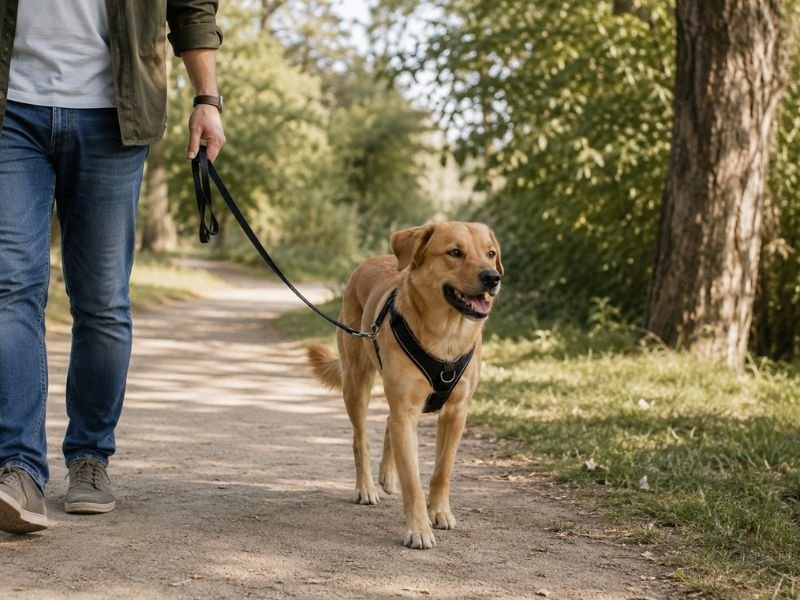
For dogs that pull hard, a comfortable Y-shaped harness can reduce pressure on the neck and allow better shoulder movement. If you use a collar, it should be properly fitted and suitable for a dog that is not coughing, choking, or lunging into pressure.
Avoid training loose-leash walking with a retractable leash. It often teaches the opposite lesson: pulling creates more distance.
3. Teach the loose-leash rule
Use one simple rule every time you practice:
Loose leash = the walk moves forward.
Tight leash = the walk pauses or changes direction.
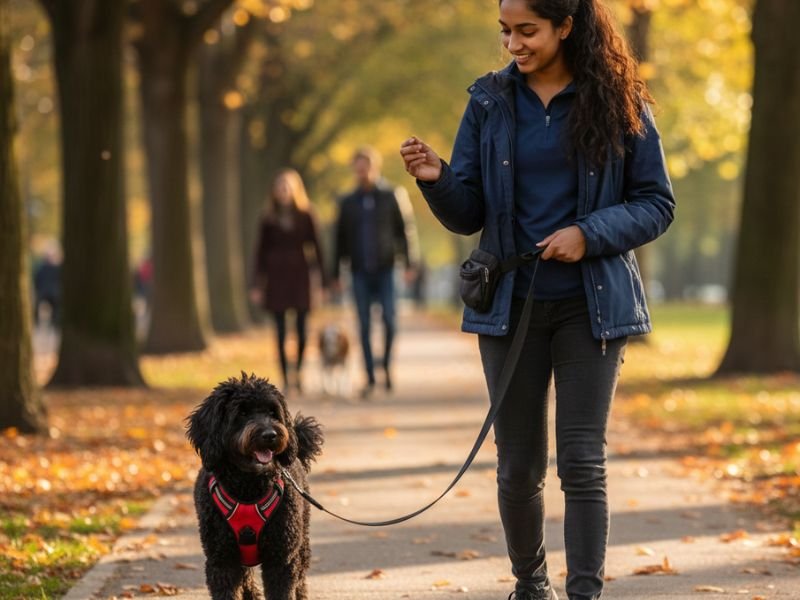
When your dog begins to pull, slow down first. If the leash goes fully tight, stop walking. Wait quietly. The moment your dog looks back, steps toward you, or releases the pressure, mark it and move forward again.
If your dog stays at the end of the leash pulling toward something, turn around calmly and walk the other way. Reward as soon as your dog follows and the leash softens.
This is not a punishment. It is clear information: pulling does not create access. A relaxed leash does.
4. Use sniffing as a reward
For many dogs, sniffing is more valuable than a treat. That can work in your favor.
Ask for a few steps with a loose leash, then release your dog to sniff a tree, grass patch, or interesting corner. This turns the environment into part of the reward system.
You can use a simple cue such as “go sniff” after your dog walks nicely for a short stretch. Over time, your dog learns that staying connected to you does not remove freedom — it creates better access to it.
This is especially helpful for dogs who pull toward smells, bushes, or familiar neighborhood spots.

5. Add distractions slowly
Many dogs can walk well on a quiet street but pull hard near dogs, children, bikes, squirrels, traffic, or cafés. That does not mean the training has failed. It means the environment became too difficult.
Work at a distance where your dog can still respond. If your dog is already lunging, barking, freezing, or dragging you forward, you are too close for good learning.
Move farther away, reward calm looking, and practice a few loose-leash steps before trying to get closer. Distance is one of the most useful training tools you have.
BELPAW Check 🐾
Signs You Shouldn’t Ignore
- If your dog coughs, gags, wheezes, or seems uncomfortable when the leash tightens, review the equipment and speak with your veterinarian if it continues.
- If your dog lunges at dogs, people, bikes, or cars, treat it as more than simple pulling. Work with more distance and consider help from a qualified, reward-based trainer or veterinary behavior professional.
- If your dog freezes, becomes rigid, or refuses to move, reduce the pressure. Fear and overwhelm need a calmer plan, not more force.
Common Mistakes
- The most common mistake is allowing pulling sometimes and stopping it other times. Dogs learn fastest when the rule is consistent.
- Another mistake is starting in places that are too exciting. Busy sidewalks, dog parks, school exits, and crowded cafés are advanced training environments.
- A third mistake is walking too long once your dog is already frustrated. Short, successful sessions build better habits than long walks full of tension.
Smart Tips
- Reward before your dog pulls, while the leash is still relaxed.
- Walk at a steady, calm pace. Rushing often increases excitement.
- Use sniff breaks intentionally, not randomly.
- End the practice while your dog is still doing well.
FAQ
How long does it take to stop leash pulling?
It depends on your dog’s age, history, environment, and consistency. Some dogs improve within one or two weeks, but a reliable change usually takes several weeks of short, repeated practice.
Should I use a harness or collar for a dog that pulls?
For many dogs that pull, a well-fitted harness is more comfortable and safer than constant pressure on the neck. A collar may work for identification or dogs that already walk calmly, but it is not ideal for dogs that cough, choke, or lunge hard into the leash.
What should I do if my dog pulls toward other dogs?
Create more distance before your dog reacts. Reward calm attention from farther away, then practice a few easy loose-leash steps. If your dog is barking, lunging, or unable to respond, the other dog is too close for training to be productive.
Final Thoughts
Teaching a dog not to pull on the leash is built through clear rules, easy repetitions, and smart rewards.
Keep the message simple: loose leash makes the walk continue, tight leash pauses the walk, and calm connection gives your dog access to the world.
With short sessions, better timing, and the right environment, your dog can learn to walk with more control, comfort, and confidence.
External References
- American Kennel Club — How to Stop Your Dog From Pulling on the Leash
- VCA Animal Hospitals — Loose Leash Walking With Dogs
- American Veterinary Society of Animal Behavior — Position Statements
- UC Davis School of Veterinary Medicine — Loose Leash Walking
Related Reads
- How to Stop Your Dog Barking When Left Alone
- Dog Harness vs Collar: Which Is Better?
- Best No-Pull Dog Harnesses
- How to Get Rid of Dog Smell in Your House
- How to Clean Your House After Fleas on Dogs
- Best Flea Products for Your Home
- New Puppy Checklist: 10 Essentials to Start With
- Where Should a Puppy Sleep?
- How Often Should a Puppy Eat?
- Best Puppy Playpens
- Best Puppy Beds