
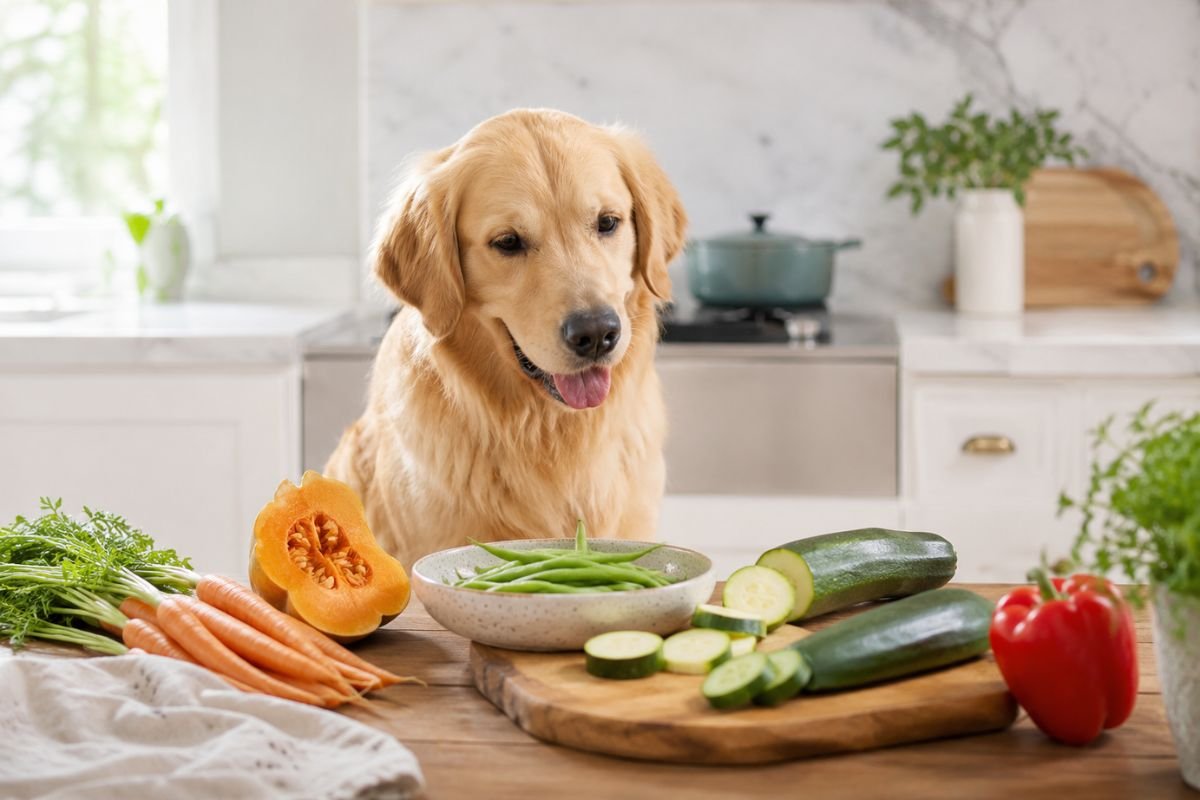
Knowing what vegetables dogs can eat helps you add small, healthy extras without disrupting your dog’s main diet. Many vegetables are safe for dogs, but the details matter: choose the right options, prepare them plainly, and keep portions small.
Vegetables can add fiber, texture, hydration, and variety. They work best as a light treat, a small meal topper, or an occasional extra — not as the foundation of your dog’s nutrition.
Quick Take: The Safest Way to Add Vegetables
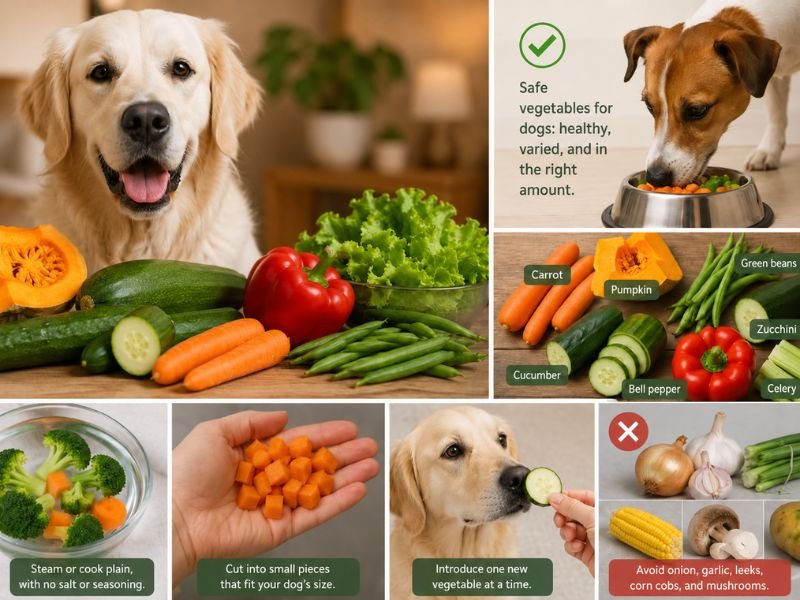
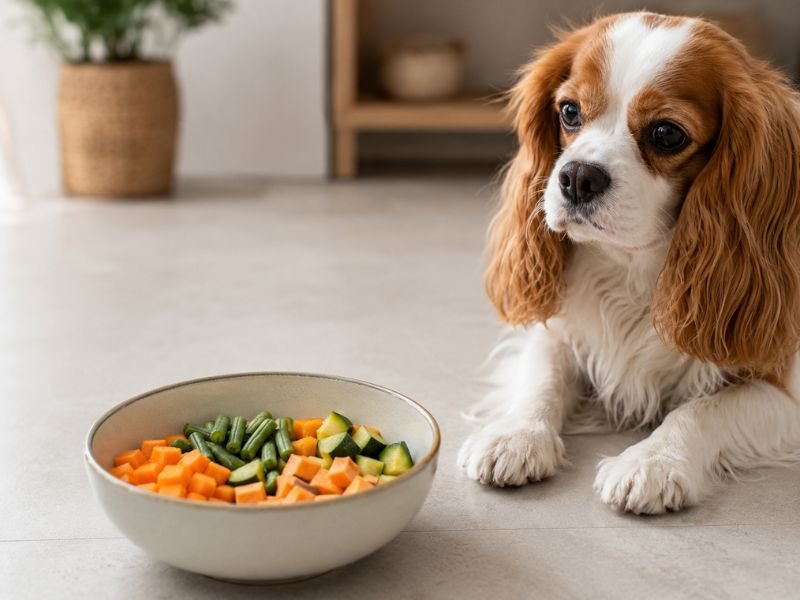
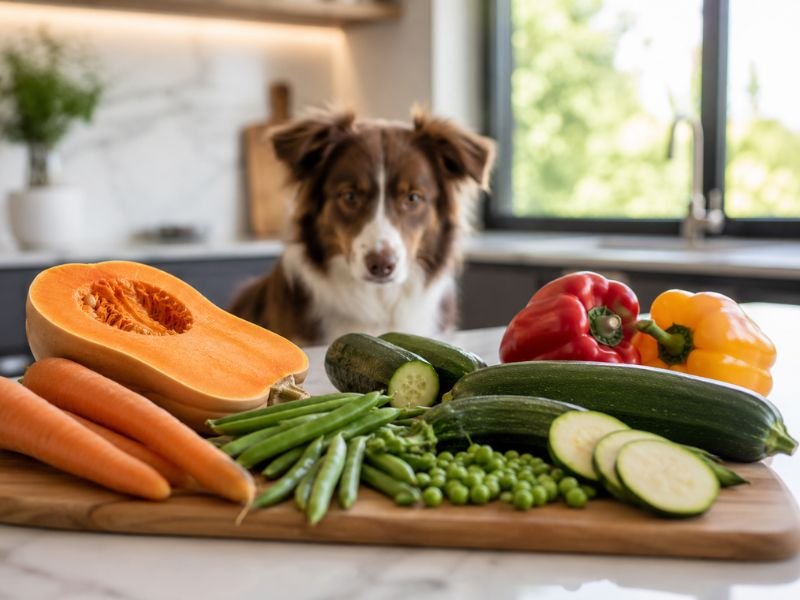
- Dogs can eat carrots, pumpkin, green beans, zucchini, cucumber, sweet potato, bell pepper, lettuce, celery, and peas when prepared correctly.
- Serve vegetables plain, with no salt, butter, oil, sauces, garlic, onion, or spices.
- Introduce one vegetable at a time and watch for vomiting, diarrhea, gas, or discomfort.
- Avoid onion, garlic, leeks, chives, corn cobs, wild mushrooms, green potatoes, and green tomato parts.
Dog Vegetable Guide: Safe Choices and Best Use
| Situation | Best choice | What to check |
|---|---|---|
| You want a low-calorie treat | Carrot, cucumber, green beans | Cut into small pieces |
| Your dog has a sensitive stomach | Plain cooked pumpkin or zucchini | Start with a very small amount |
| You want extra fiber | Pumpkin or green beans | Keep it occasional and controlled |
| Your dog eats too fast | Soft, small pieces | Avoid large chunks |
| You have a puppy | Tiny portions only | Keep the main diet stable |
| Your dog has a medical condition | Ask your vet first | Especially kidney, urinary, pancreatic, or digestive issues |
Vegetables should stay simple. The safest version is usually washed, plain, chopped, and served in a size your dog can chew comfortably.
Safe Vegetables Dogs Can Eat
- Carrots can be served raw in small pieces or cooked. They are easy to portion and work well as a crunchy treat.
- Pumpkin should be plain and cooked. In the U.S., plain canned pumpkin is also commonly used, but it should be 100% pumpkin, not pumpkin pie filling.
- Green beans are light and useful as a small topper. Serve them cooked or thawed, with no salt or seasoning.
- Zucchini is gentle and easy to mix into food when cooked or lightly steamed.
- Cucumber is fresh, hydrating, and low in calories. Peel it if your dog is sensitive, and cut it into manageable pieces.
- Sweet potato should always be cooked. It is more calorie-dense than cucumber or green beans, so use it in small amounts.
- Bell pepper can be offered raw or cooked, with seeds and stem removed. Small pieces are best.
- Lettuce is generally safe when washed, though it adds limited nutritional value.
- Celery can be crunchy, but it needs to be cut very small and stripped of tough strings when needed.
- Peas can be served cooked or thawed, with no salt. Use them as a small extra, not a major part of the meal.
- Corn kernels can also be offered if plain and cooked. Corn cobs should be avoided, because they can create a choking or intestinal blockage risk.
How to Add Vegetables to Your Dog’s Diet
1. Start with a simple option
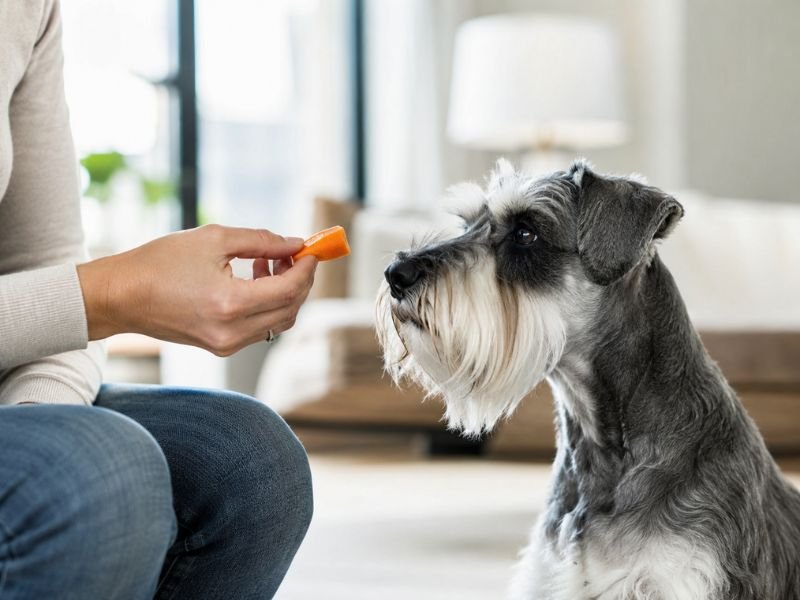
Begin with one easy vegetable, such as carrot, pumpkin, zucchini, or green beans. Offer a small amount the first time and avoid mixing several new foods at once.
This makes it much easier to tell whether your dog tolerates it well.
2. Prepare it without added ingredients
Cooked vegetables should be boiled, steamed, or baked without salt, oil, butter, sauces, or spices. Remove seeds, stems, tough strings, green parts, and anything hard to chew.
Human leftovers are often a problem because they may contain onion, garlic, salt, fat, or seasoning.
3. Keep portions small
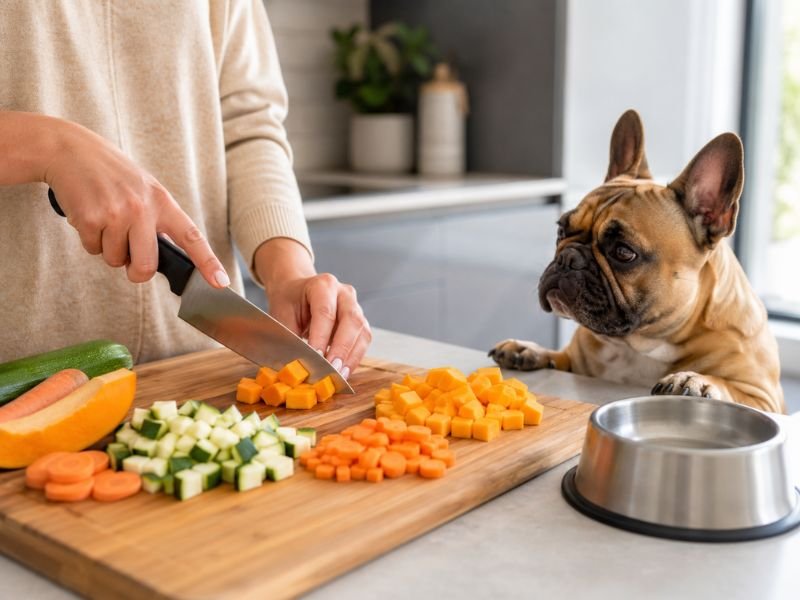
Vegetables are still extras. For most dogs, they should be a small part of the day, especially if the dog already eats a complete and balanced food.
For small dogs, even a few extra bites can matter. For dogs managing weight, digestion, or appetite, portion size matters as much as the vegetable itself.
4. Protect the main diet
If your dog eats a complete kibble, wet food, fresh food, or veterinary diet, vegetables should stay secondary. They can add variety, but they should not replace the nutrients your dog’s main food is designed to provide.
Vegetables to Use With More Care
- Some vegetables can be safe, but they are better used occasionally.
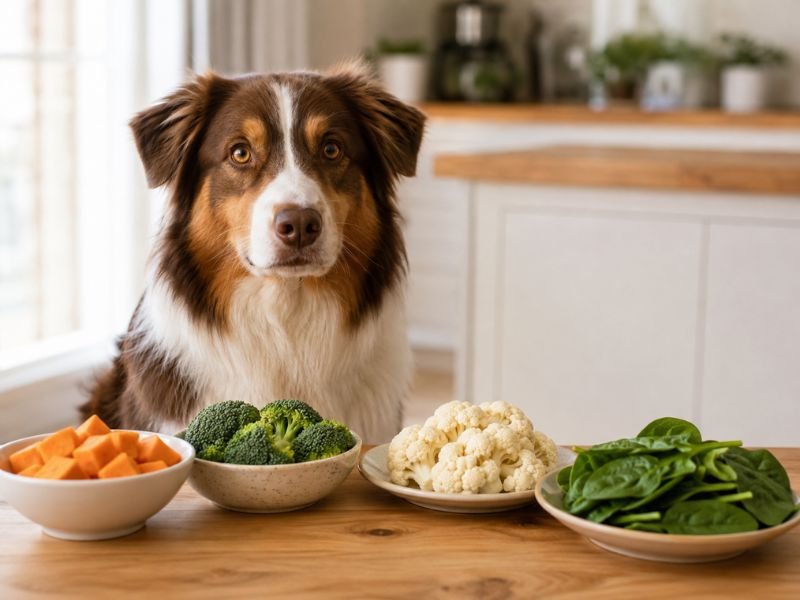
- Broccoli and cauliflower can be offered cooked and in small amounts. Too much may cause gas or digestive discomfort in some dogs.
- Spinach and Swiss chard should be occasional, especially for dogs with urinary, kidney, or diet-related health concerns.
- Beets, cooked white potato, and sweet potato are safe when prepared correctly, but they are denser than lighter vegetables. Use them as occasional add-ons rather than everyday treats.
- Ripe tomato can be offered very occasionally, with no leaves, stems, or green parts. Tomato is technically a fruit, but many dog owners search for it alongside vegetables, so it deserves a clear note here.
Vegetables and Plant Foods Dogs Should Avoid
Keep these out of your dog’s bowl:
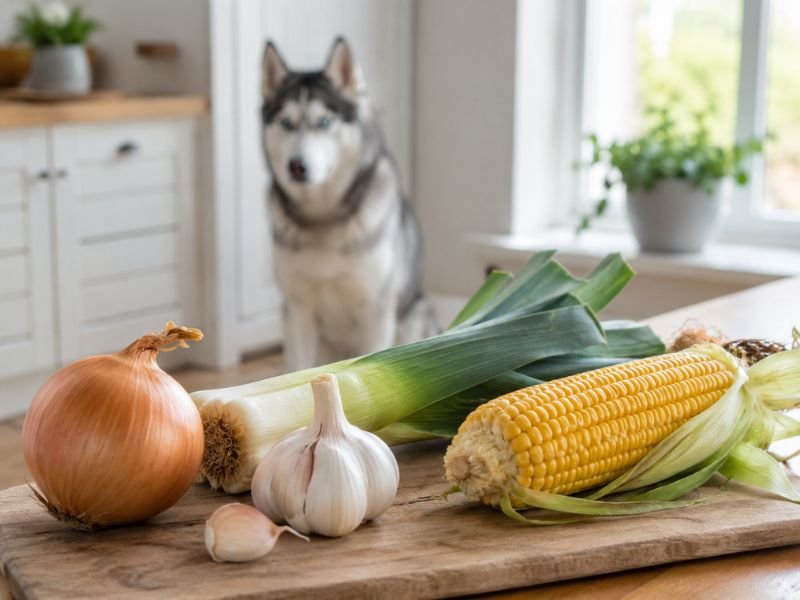
- Onion, garlic, leeks, and chives can damage red blood cells and cause serious problems.
- Raw, green, or sprouted potatoes should be avoided.
- Corn cobs are unsafe because of choking and blockage risk.
- Wild mushrooms should be avoided unless they are identified as safe with complete certainty.
Also avoid fried vegetables, seasoned vegetables, creamy soups, leftovers with sauces, vegetables cooked with butter, and anything prepared with garlic or onion powder.
BELPAW Check 🐾
Signs You Shouldn’t Ignore
- Vomiting, diarrhea, strong gas, or belly discomfort after a new vegetable means you should stop offering it and return to a stable diet.
- Pale gums, weakness, dark urine, or unusual tiredness after possible onion, garlic, leek, or chive exposure needs urgent veterinary advice.
Common Mistakes
- Adding several new vegetables on the same day makes it harder to identify what caused a reaction.
- Large chunks can be risky for dogs that eat fast. Vegetables should match your dog’s size, chewing style, and dental comfort.
Smart Tips
- Keep a short list of vegetables your dog tolerates well.
- Use soft textures for senior dogs, puppies, or dogs with dental sensitivity.
- Choose plain preparation every time. Simple is safer.
FAQ
What is the best vegetable to start with for dogs?
Carrot, plain cooked pumpkin, zucchini, and green beans are usually good starting points. They are easy to prepare, easy to portion, and generally simple to introduce.
Can dogs eat vegetables every day?
Some dogs can have small amounts of safe vegetables regularly, but they should remain a complement. Dogs with digestive, kidney, urinary, pancreatic, or veterinary diet needs should be checked with a veterinarian first.
Are raw or cooked vegetables better for dogs?
It depends on the vegetable. Carrot, cucumber, lettuce, and bell pepper can be served raw if washed and cut well. Pumpkin, sweet potato, white potato, green beans, broccoli, and cauliflower are usually better cooked and plain.
Final Thoughts
Safe vegetables can add freshness and variety to your dog’s routine when they are chosen carefully and served in small amounts.
Start with simple options like carrot, pumpkin, green beans, zucchini, and cucumber. Use denser vegetables, such as sweet potato or potato, more sparingly. Most importantly, avoid unsafe foods like onion, garlic, leeks, chives, corn cobs, and seasoned leftovers.
External References
- ASPCA — People Foods to Avoid Feeding Your Pets
- Merck Veterinary Manual — Garlic and Onion Toxicosis in Animals
- WSAVA — Feeding Treats to Your Dog
Related Reads
- How Many Calories Does a Dog Need per Day?
- What Fruits Can Dogs Eat?
- Best Natural Dog Treats for Dogs
- Best Dog Foods for Dogs with Sensitive Stomachs
- Dogfy Diet Review in Spain
- Best Dog Treats for Joint and Mobility Support
- Best Dog Treats for Skin and Coat Support
- Best Natural Dog Training Treats
- Best Long-Lasting Natural Dog Chews