

Knowing what fruits dogs can eat helps you offer small treats with more confidence. Some fruits can work well as an occasional reward, add freshness, and bring variety to your dog’s routine. Others need more caution, and a few should stay completely off the menu.
Fruit should never replace your dog’s main diet. It works best as a small extra, prepared correctly and offered in moderation. When portions, texture, and safety are handled well, fruit can fit nicely. When it is given without thinking, problems can appear: too much sugar, digestive upset, choking risks, or serious mistakes with fruits dogs should not eat.
Quick Take: What to Know Before Giving Fruit
- Fruit should be a small occasional treat, not a daily diet staple.
- Preparation matters: remove seeds, pits, rinds, stems, and hard parts.
- Start with one fruit at a time and watch your dog’s digestion.
- Avoid grapes, raisins, and any fruit you are unsure about.
Dog Fruit Guide: Safe Choices, Caution Foods, and Fruits to Avoid
| Category | Fruits | What to know |
|---|---|---|
| Good starter fruits | Apple, pear, watermelon, cantaloupe, strawberries, blueberries | Easy to portion and usually practical when properly prepared |
| Use in moderation | Banana, orange, mandarin, mango, pineapple, peach | Higher sugar, more acidity, or more preparation needed |
| Avoid or handle with extreme caution | Grapes, raisins, avocado, whole cherries, fruits with pits | Toxicity risk, choking risk, or digestive concerns |
How to Offer Fruit Safely
1. Use fruit as a treat, not a meal
- Fruit works best when it has a simple role: a small reward, a refreshing bite, or a way to add variety.
- It does not fix a poor diet, replace complete dog food, or need to become part of every day. For most dogs, fruit should stay within the treat portion of the diet, especially if the dog is prone to weight gain.
- Dogs with diabetes, obesity, pancreatitis, digestive sensitivity, or a veterinary diet need extra care. In those cases, ask your veterinarian before adding fruit regularly.
2. Choose simple fruits first
- Some fruits are easier to introduce because they are simple to prepare and easier to portion.
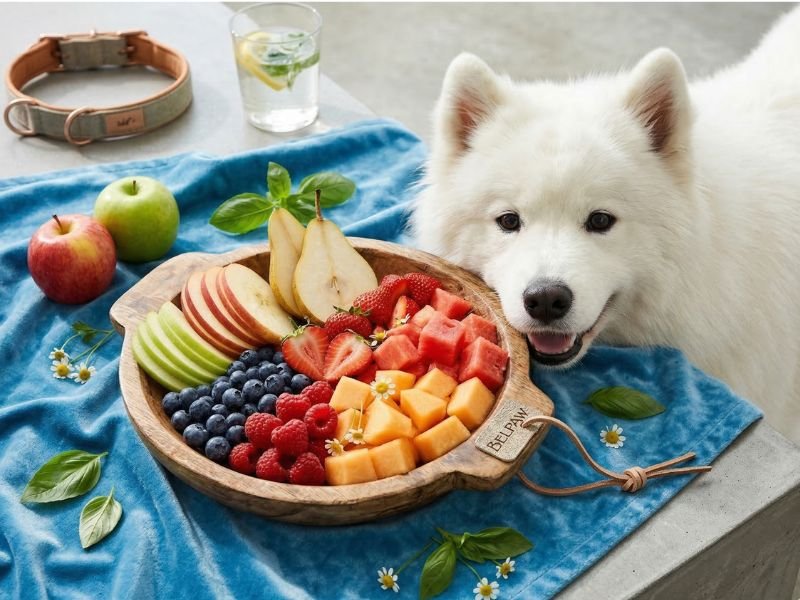
- Good first options include apple, pear, watermelon, cantaloupe, strawberries, and blueberries. These can be served in small pieces and are usually easy to manage when seeds, cores, and rinds are removed.
- Fruits like banana, mango, pineapple, orange, and mandarin can also fit occasionally, but they are sweeter, more acidic, or more likely to affect digestion in some dogs. Keep these portions smaller.
3. Prepare every piece properly
- Fruit safety depends as much on preparation as on the fruit itself.
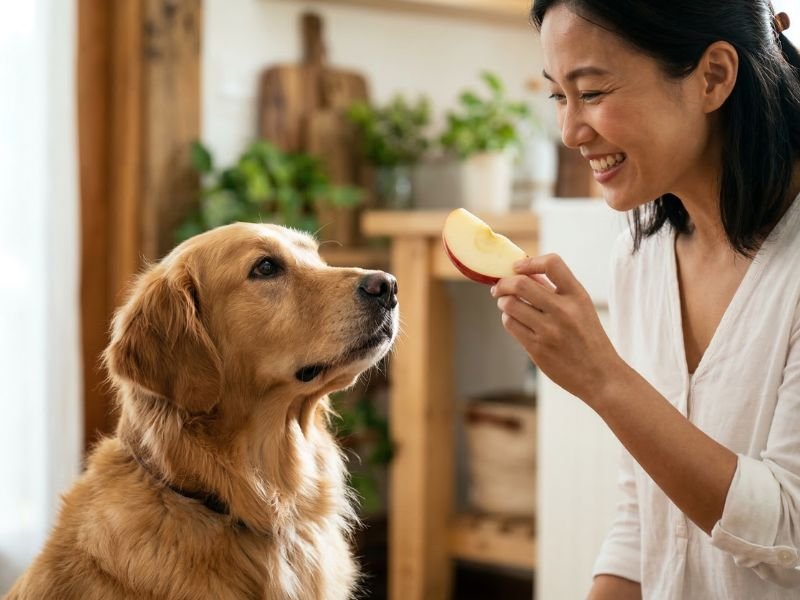
- Wash fruit well before serving it. Remove seeds, pits, stems, cores, thick skins, rinds, and hard pieces. Offer only the soft edible part, cut into pieces that match your dog’s size.
- For small dogs, senior dogs, puppies, or dogs that swallow quickly, pieces should be especially small. A fruit that is technically safe can still become a choking risk if the size or texture is wrong.
4. Watch your dog’s response
- Introduce one fruit at a time. This makes it easier to notice whether it suits your dog.
- Mild gas, soft stool, vomiting, itching, or discomfort after eating a new fruit means it should be removed.
- Some dogs tolerate fruit very well; others do better with fewer extras and a simpler routine.
Fruits Dogs Can Eat More Easily
- Apple can be a good option when served without the core or seeds. Cut it into thin, small pieces.
- Pear is similar: soft, simple, and easy to portion once the core and seeds are removed.
- Watermelon can be refreshing because of its water content, but it should be served without rind or seeds.
- Cantaloupe can work in small pieces, though its sweetness means portions should stay modest.
- Strawberries and blueberries are useful small treats, especially when offered fresh and plain.
Fruits to Give With More Moderation
- Banana is soft and easy to serve, but it is calorie-dense compared with many other fruits. Small pieces are enough.
- Orange and mandarin can be too acidic for some dogs. Remove peel, seeds, and white stringy parts, and offer only a small amount.
- Mango can be appealing, but the pit must be removed completely. Serve only the flesh.
- Pineapple should be fresh, plain, and served in very small pieces. Avoid sugary canned versions.
- Peach flesh can be given in tiny amounts, but the pit is a serious concern. Remove it completely and avoid canned peach in syrup.
Fruits Dogs Should Avoid
- Grapes and raisins should not be given to dogs. They have been linked to serious kidney injury, and even small amounts can be dangerous.
- Avocado is best avoided. The pit, skin, and high-fat flesh make it a poor choice for dogs.
- Cherries are not a practical fruit for dogs because of the pits, stems, and leaves. Whole cherries are especially risky.
- Fruits with large pits, hard seeds, thick rinds, or tough skins should be handled very carefully or skipped. The risk often outweighs the benefit.

BELPAW Check 🐾
Signs You Shouldn’t Ignore
- Soft stool, gas, vomiting, discomfort, or a sudden change in behavior after eating fruit means it is time to stop and reassess.
- If your dog eats grapes or raisins, contact a veterinarian or emergency clinic quickly. Do not wait to see if symptoms appear.
Common Mistakes
- The most common mistake is assuming natural means safe. Fruit still adds sugar, calories, and digestive work.
- Another frequent issue is offering fruit with seeds, pits, cores, or rind still attached. These parts can create choking, blockage, or toxicity risks.
Smart Tips
- Keep fruit pieces small, plain, and occasional.
- Choose simple fruits first, introduce only one at a time, and count fruit as part of your dog’s daily treat allowance.
FAQ
Can dogs eat fruit every day?
Some dogs can tolerate small amounts of certain fruits regularly, but fruit does not need to become a daily habit. It usually works better as an occasional treat within a balanced diet.
What is the best fruit to start with?
Apple or pear are often practical starter choices. Remove the core and seeds, then serve a few small pieces.
What should I do if my dog ate grapes or raisins?
Contact your veterinarian or an emergency veterinary clinic right away, even if the amount seems small. Fast action matters with grape and raisin ingestion.
Final Thoughts
Fruit can be a useful small treat when it is chosen carefully, prepared properly, and kept in proportion. Start with simple options like apple, pear, watermelon, cantaloupe, strawberries, or blueberries. Keep sweeter or more acidic fruits for occasional use. Avoid grapes, raisins, avocado, and fruits with unsafe pits or seeds. The best approach is simple: small portions, clean preparation, and no guessing with risky foods.
External References
- ASPCA — People Foods to Avoid Feeding Your Pets
- Merck Veterinary Manual — Grape, Raisin, and Tamarind Toxicosis in Dogs
- American Kennel Club — Fruits and Vegetables Dogs Can or Can’t Eat
- FDA — Paws Off Xylitol; It’s Dangerous for Dogs
Related Reads
- Best No-Pull Dog Harnesses
- How to Get Rid of Dog Smell in Your House
- How to Clean Your House After Fleas on Dogs
- Best Air Purifiers for Homes with Dogs
- Best Vacuums for Dog Hair
- Best Flea Products for Your Home
BELPAW Transparency 🐾
This article may include affiliate links. If you buy through them, BELPAW may earn a commission at no extra cost to you.