
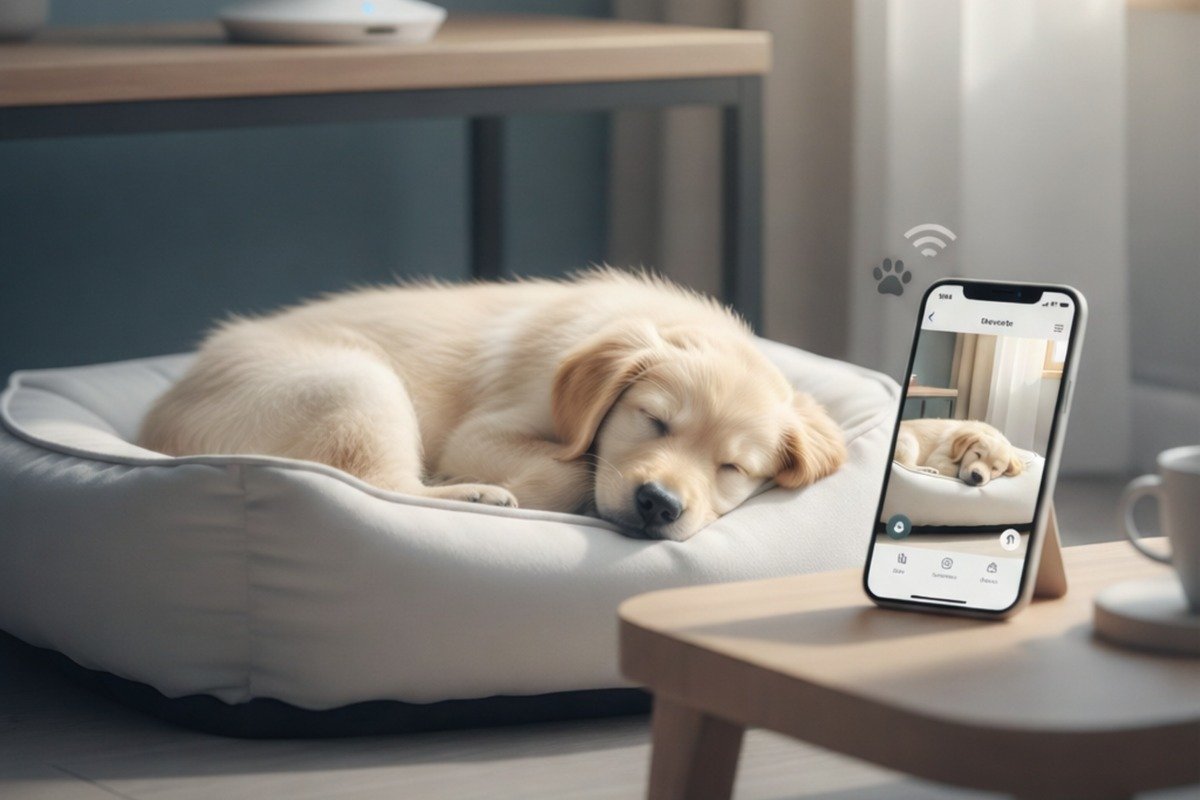
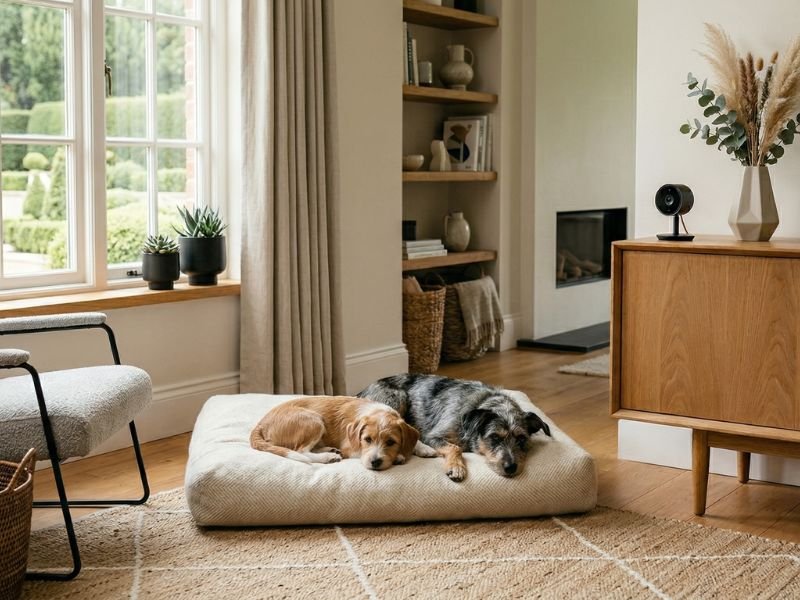
A dog camera can help you understand what happens at home when your dog is alone. It can show whether your dog sleeps, moves between rooms, reacts to noises, barks, waits near the door, or settles into a calm routine.
Its real value is observation, not constant checking. Used well, a dog camera can help you adjust routines, improve your dog’s environment, and notice behavior patterns with more clarity—especially with puppies, newly adopted dogs, senior dogs, or dogs who struggle with being left alone.
Quick Take: What a Dog Camera Helps You See
- A dog camera is most useful for tracking rest, movement, barking, and home routines.
- It works best when you use it with a clear purpose, not as a constant reassurance tool.
- Two-way audio may help some dogs, but it can make others more alert or frustrated.
- Privacy matters: use a strong password, update the app, and keep your Wi-Fi secure.
Dog Camera Guide: What You See and What It May Mean
| What you see | What it may mean | What to do |
|---|---|---|
| Your dog sleeps most of the time | Your dog is likely managing the absence well | Keep the routine stable and check only key moments |
| Your dog waits near the door | Your dog may be monitoring your return | Watch duration, posture, and stress level |
| Barking starts soon after you leave | There may be anxiety, outside noise, or exit anticipation | Look for timing, intensity, and triggers |
| Repetitive pacing | Your dog may be struggling to settle | Adjust the pre-leaving routine and home setup |
| Your dog gets more excited when you speak | Audio may increase expectation | Use the camera for observation first |
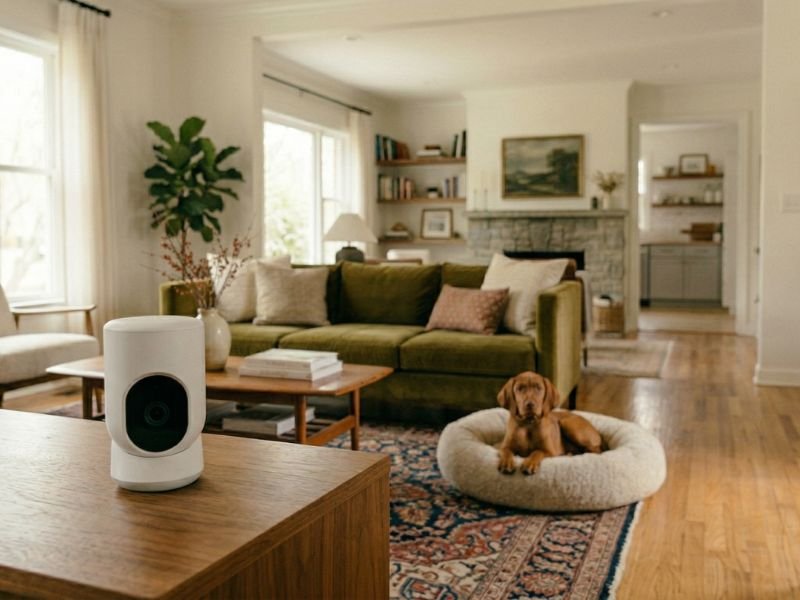
How to Use a Dog Camera Without Creating More Stress
1. Decide what you want to observe
Before setting up the camera, be clear about the question you want to answer.
If you want to check rest, place the camera where your dog usually sleeps. If you want to understand barking, use sound alerts with moderate sensitivity. If you want to see movement, cover the door, bed, and main walking path.
For dogs who may have separation-related stress, focus on when the behavior starts, how long it lasts, and whether your dog is able to recover.
2. Choose the features that actually matter
A simple camera may be enough for most homes. You do not always need a complicated device.
Look for:
- 1080p video to see posture, movement, and rest clearly.
- Night vision if your dog is alone in low light.
- Adjustable alerts so you are not overwhelmed by notifications.
- Pan-and-tilt view if your dog moves between several areas.
The best dog camera is the one that helps you understand your dog’s behavior without turning your phone into a constant source of worry.
3. Use it as part of a calm routine
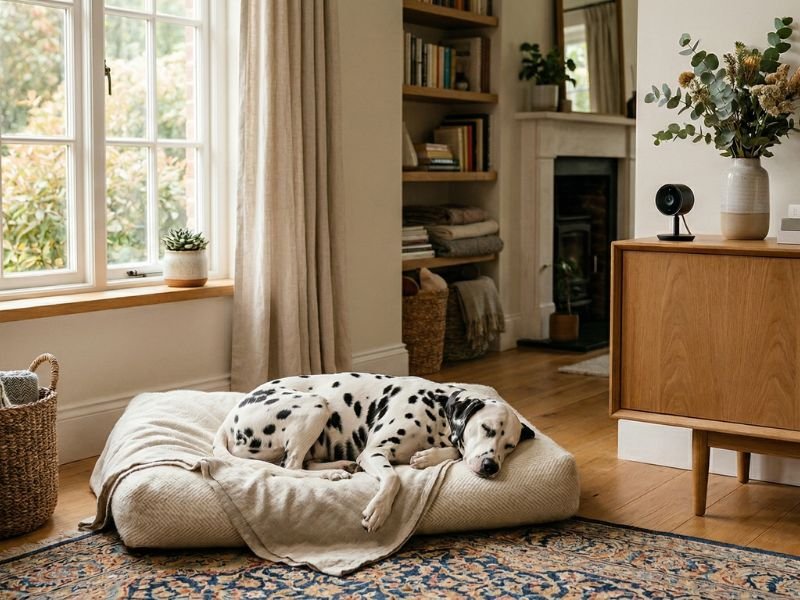
A camera works best when it supports a predictable daily rhythm.
Observe for several days before making conclusions. Review the most useful moments: the first few minutes after you leave, the first 30 minutes, and the period before you return.
Avoid talking through the camera repeatedly during one absence. For some dogs, hearing your voice can increase excitement because they expect you to come back immediately.
4. Strengthen the home setup before you rely on technology
A camera gives you information, but your dog’s comfort starts before you leave.
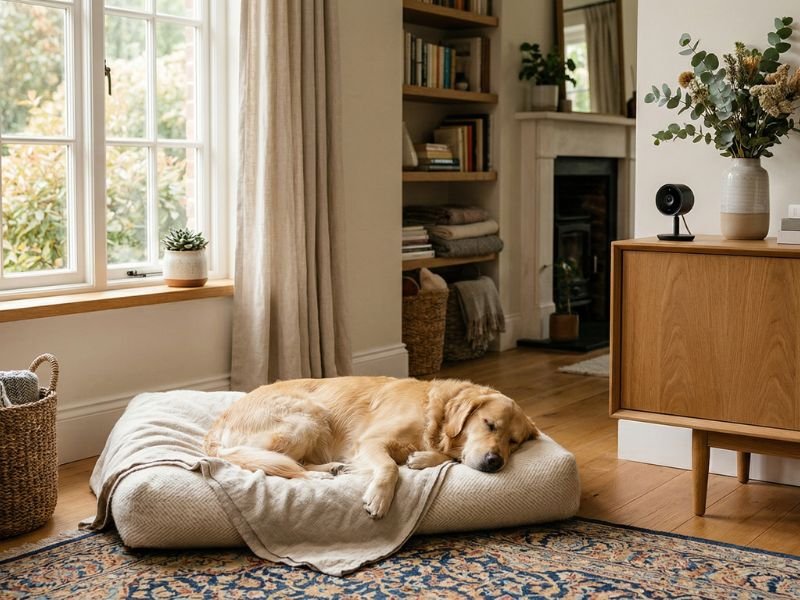
A well-planned walk, a clear resting area, and gentle enrichment can all help your dog settle more easily. Changes should be gradual, especially if your dog shows signs of stress.
If your dog cannot rest, barks persistently, pants, drools, scratches doors, or becomes destructive, the camera should be treated as useful evidence—not the full solution.
BELPAW Check 🐾
Signs You Shouldn’t Ignore
- Persistent barking can suggest real distress, especially if it happens every time your dog is left alone.
- Panting, drooling, or intense pacing may point to high emotional arousal.
- Scratching doors or trying to escape should not be dismissed as normal.
- Inability to rest is important. A dog who keeps moving for long periods may be struggling to settle.
- Refusing food or enrichment during alone time can mean your dog is too activated to engage.
Common Mistakes
- Checking the camera every few minutes can make you more anxious and less objective.
- Using the speaker before understanding your dog’s reaction can increase frustration.
- Treating one isolated bark as a major problem can lead to unnecessary worry.
- Ignoring repeated patterns because your dog seems “fine” when you return can delay useful changes.
- Buying a camera with too many features can also distract from the real goal: understanding your dog’s routine.
Smart Tips
- Test the camera for 24 hours before relying on alerts.
- Watch the full sequence, not just one dramatic moment.
- Place the camera where you can see your dog and part of the environment, not only the bed.
- If you use treats or toys before leaving, choose safe options that match your dog’s energy level.
- Use the camera to make better decisions, not to monitor your dog all day.
FAQ
Does a dog camera help when my dog stays home alone?
Yes, especially because it gives you real context. You can see whether your dog rests, reacts to sounds, waits near the door, or has difficulty settling.
Should I talk to my dog through the camera?
It depends on the dog. Some dogs may settle after hearing a familiar voice, but others become more alert or frustrated. Start by using the camera only for observation, then test audio briefly and carefully.
Where should I place a dog camera?
Place it where your dog spends most of their alone time. Ideally, the view should include the main resting area and part of the environment, such as the door, sofa, crate, bed, or hallway.
Final Thoughts
A dog camera is worth using when it helps you observe calmly and make better decisions.
Its value is not in checking constantly. It is in understanding your dog’s real routine: rest, movement, barking, triggers, and recovery.
Used with a stable routine, safe enrichment, privacy awareness, and a clear purpose, a dog camera can be a practical tool for improving your dog’s comfort at home.
External References
- ASPCA — Separation Anxiety
- ASPCApro — Preventing & Treating Separation Anxiety in Dogs
- FTC — How To Secure Your Home Security Cameras
- CISA — Securing the Internet of Things
Related Reads
- Best Orthopedic Dog Beds for Dogs
- Best Elevated Dog Beds
- Best Dog Beds for Large Dogs
- Best Dog Backpack Carriers for Small Dogs
- Portable Dog Water Bottle: What to Look For
- Best Portable Dog Water Bottles for Dogs
- 10 Best Dog Travel Accessories
- Dog Travel Accessories: Arrival Essentials
- Spring Dog Travel Essentials
- Best Interactive Dog Toys for Dogs
BELPAW Transparency 🐾
This article may include affiliate links. If you buy through them, BELPAW may earn a commission at no extra cost to you.