
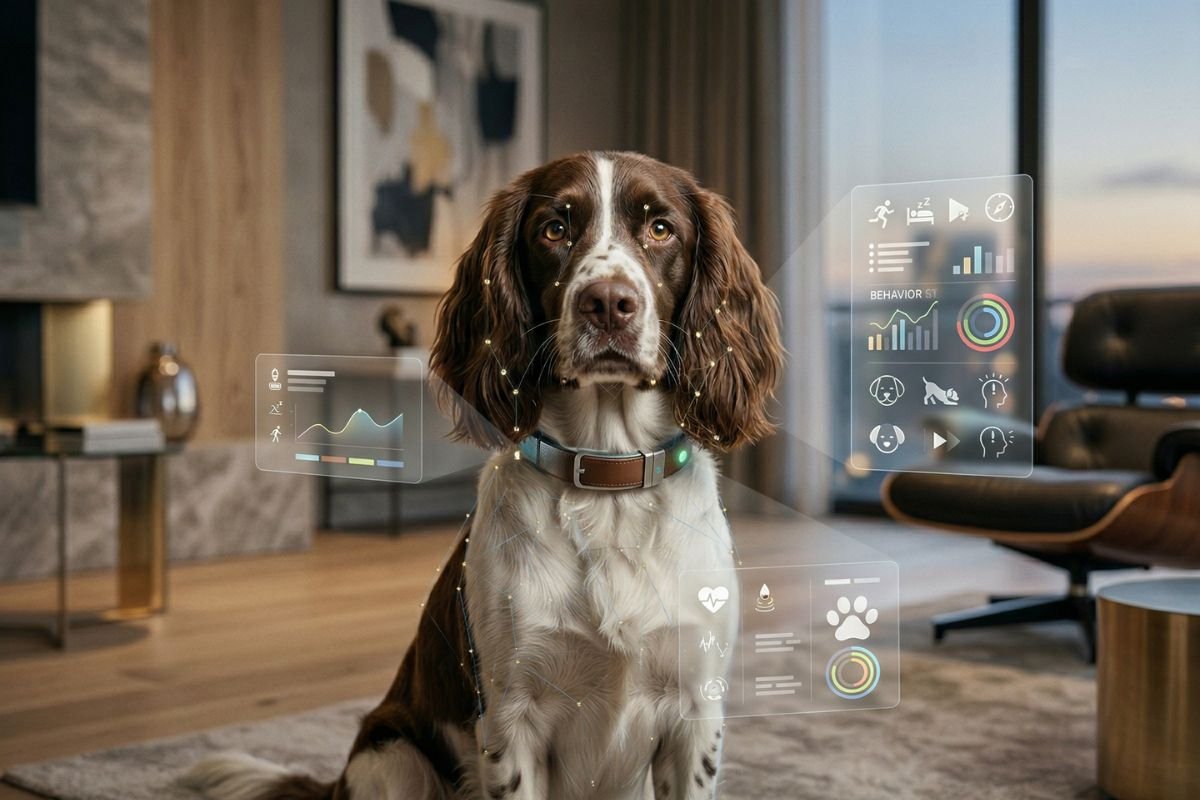
This is Part 3 of our series on technology that can improve life with your dog. In Part 1, we explored practical dog tech accessories for everyday routines. Part 2 focused on newer innovations in health, safety, and wellness. Now, we are looking at the next layer: artificial intelligence for dogs and the tools that already offer practical value at home, outdoors, and during health monitoring.
Artificial intelligence is making dog technology more useful by helping owners filter information, identify relevant events, and recognize changes over time. The best tools do not claim to understand everything about your dog. Instead, they organize data and highlight what may deserve your attention. These tools can add useful context to your dog’s routine, but they should support observation and veterinary care—not replace them.
Quick Take: Where AI Helps Dogs Most Right Now
- Smart pet cameras can flag barking, movement, people, pets, and selected behaviors.
- GPS and health trackers organize activity, sleep, barking, scratching, and vital-sign trends.
- Health-monitoring collars can add useful context for senior dogs, recovery, or chronic conditions.
- The best system provides clear alerts and readable trends, not the largest number of metrics.
AI Dog Technology Guide: Best Use and What to Check
| Your situation | Technology to consider | What matters most |
|---|---|---|
| You want to understand time spent home alone | AI pet camera | Useful alerts, video history, privacy |
| Your dog may wander or escape | Cellular GPS tracker | Live tracking, escape alerts, battery |
| You are watching routine changes | Health and activity wearable | Baselines, summaries, comfortable fit |
| Your dog needs closer follow-up | Advanced health collar | Vital signs, alerts, veterinary sharing |
| You have several pets | Multi-pet recognition | Accuracy, separate profiles, cost |
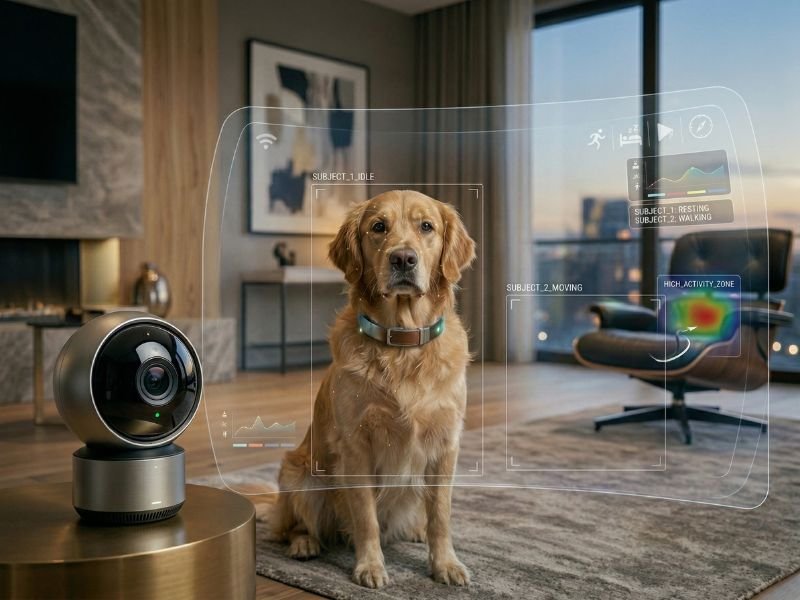
BELPAW Selection: Four AI-Powered Dog Technologies With Practical Value
Affiliate disclosure: Some links in this guide are affiliate links, which means BELPAW 🐾 may earn a commission if you buy through them, at no extra cost to you. As an Amazon Associate I earn from qualifying purchases.
1. Smart Pet Cameras: Find Relevant Moments at Home
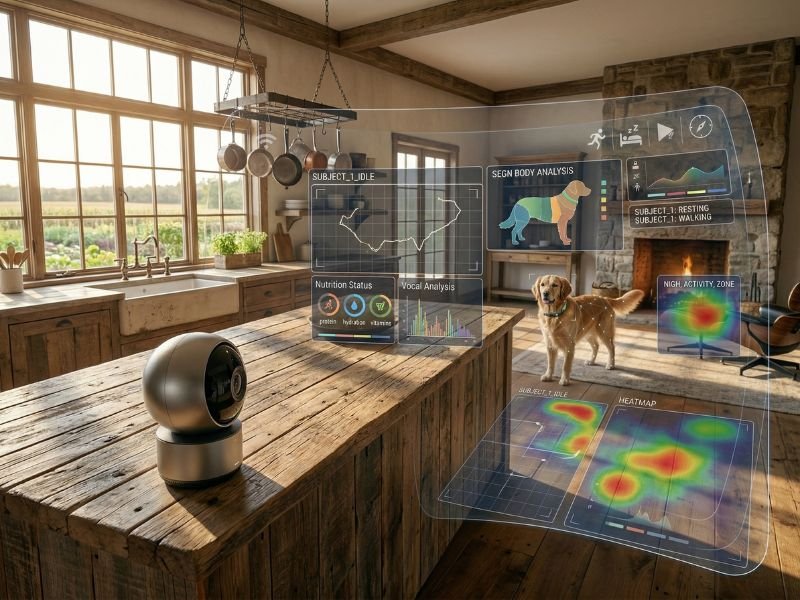
A standard camera lets you watch your dog. An AI pet camera goes further by identifying sounds, movement, people, pets, or selected behaviors.
This can help you find important moments without reviewing hours of video. It may be particularly useful for observing barking, pacing, difficulty settling, or reactions to sounds while your dog is home alone.
Before choosing one, check the quality of its alerts, video history, privacy controls, app reliability, and subscription requirements.
Petcube Cam 360
- The Petcube Cam 360 offers rotating room coverage, night vision, two-way audio, and smart alerts that can distinguish pets, people, barking, and meowing.
- It is a practical option when your dog moves around one main room and you want event-based notifications instead of continuous monitoring.
- Best for: General home monitoring with 360-degree coverage.
A 360° indoor pet camera with smart alerts, night vision, two-way audio, and app-based home monitoring.


Furbo 360° Dog Camera
- The Furbo 360° Dog Camera combines rotating coverage, two-way audio, treat tossing, and dog-specific alerts.
- Depending on the subscription plan, it may identify barking, crying, howling, chewing, vomiting, potty-related events, or selected home emergencies.
- Best for: Owners who want more detailed dog-focused alerts during longer absences.
A rotating dog camera with barking alerts, two-way audio, treat tossing, and advanced activity notifications.

2. Wearables to Combine Safety With Routine Data: GPS and Health Trackers
The main purpose of a GPS dog tracker remains location and outdoor safety. Some current trackers also monitor activity, sleep, barking, scratching, and selected health patterns.
The useful AI element is comparing recent behavior with your dog’s normal routine and highlighting changes that may deserve attention.
Before choosing one, check real-time tracking, cellular coverage, battery life, device weight, waterproofing, subscription cost, and the clarity of the app.
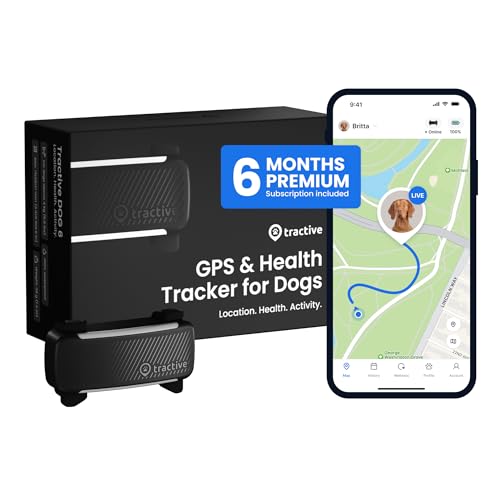
Tractive GPS Dog Tracker
- The Tractive GPS Dog Tracker combines live location, escape alerts, activity monitoring, sleep tracking, barking, scratching, and selected health trends.
- Its Health Alerts are designed to identify changes from your dog’s usual patterns. These alerts are not diagnoses, but they may provide useful context when speaking with your veterinarian.
- Best for: Dogs that may escape, outdoor adventures, and owners who want location and routine monitoring in one app.
Real-time GPS tracking with escape alerts, virtual fences, location history, and activity and sleep monitoring from one app. Subscription required.
3. Health-Monitoring Collars: Follow More Detailed Changes
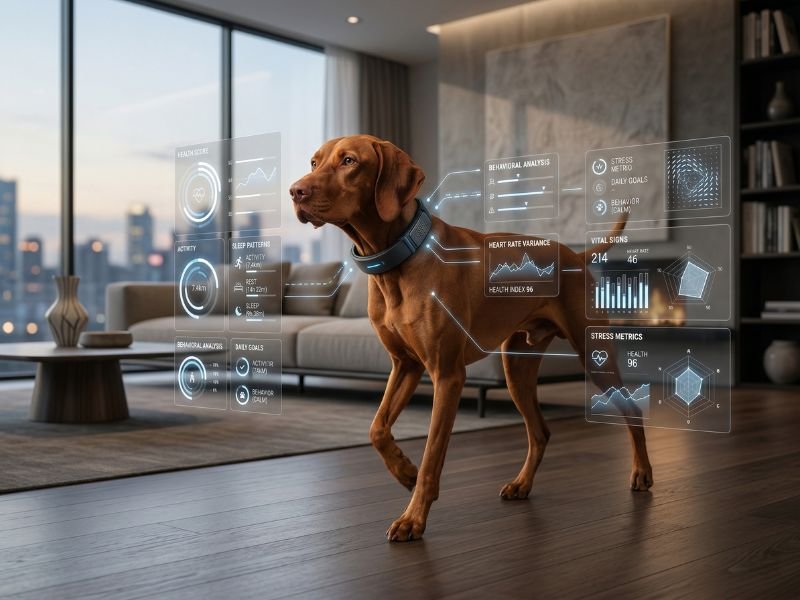
Advanced health-monitoring collars can track more than movement or distance. Depending on the system, they may monitor sleep, heart rate, respiratory rate, activity, behavior, and recovery trends.
This level of monitoring is not necessary for every healthy dog. It is more relevant for senior dogs, recovery after surgery, chronic conditions, or cases where gradual changes are difficult to observe.
The most important question is whether the information can be understood, reviewed regularly, and shared with a veterinarian when useful.
PetPace V3.0 Health Monitor
- The PetPace V3.0 monitors vital signs, activity, sleep, behavior, and GPS information. Its platform organizes this data into trends, wellness scores, and near-real-time alerts.
- It may also allow owners to share information with their veterinarian and access telemedicine support.
- Best for: Senior dogs, recovery, long-term health monitoring, and closer veterinary follow-up.
An advanced smart collar designed to track vital signs, activity, sleep, behavior, and long-term wellness trends.

4. Emerging AI Tools for Feeding, Hydration, and Multi-Pet Homes
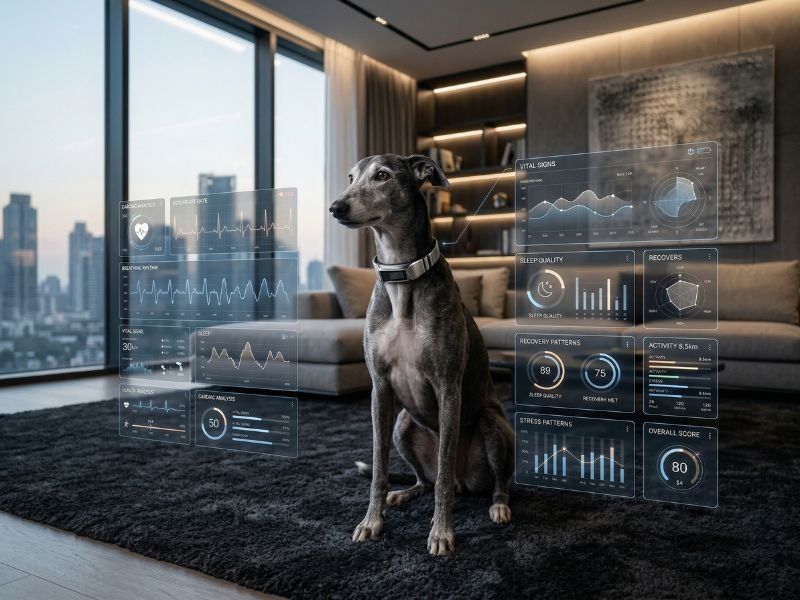
Artificial intelligence is also appearing in feeding, hydration, and individual pet recognition.
AI feeders with individual pet recognition
Some smart feeders now include cameras and facial-recognition systems designed to identify which pet is eating.
This can be especially useful in multi-pet households where you want to understand whether one dog is eating less, approaching the feeder more often, or accessing another pet’s meals.
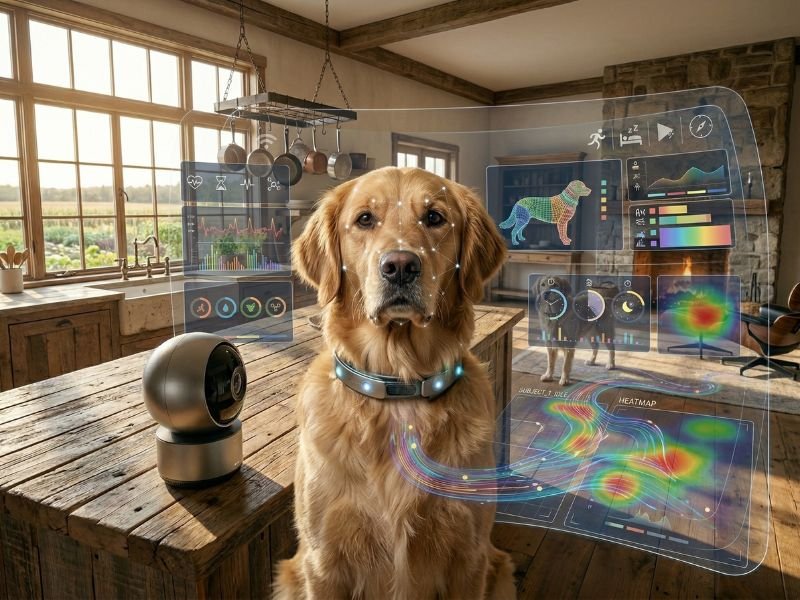
PETKIT, for example, offers camera-equipped feeders with AI functions and individual pet recognition. The value is not simply automatic feeding. It is the ability to organize feeding records more clearly for each pet.
Advanced smart feeder with dual hoppers, 1080p camera, app control, night vision, and two-way audio.

Before choosing one, check:
- How accurately it recognizes each pet
- Whether recognition requires a subscription
- How easy the feeder is to clean
- Whether the portion system suits your dog’s food
- What happens if Wi-Fi or the app stops working
Smart Fountains That Track Drinking Habits
Smart hydration technology can help owners review how much and how often their dog drinks without relying only on occasional observation.
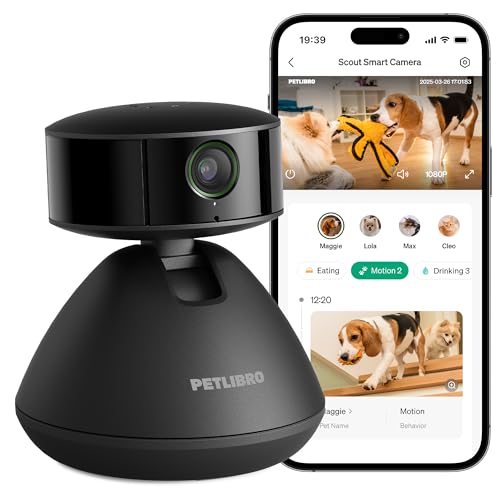
The PETLIBRO Smart Dog Water Fountain connects to an app that records water intake and drinking patterns over time. Its 3L tank, wide stainless steel tray, and quiet circulating flow are designed mainly for small and medium dogs.
The fountain does not recognize individual pets. In a multi-pet home, the app records the combined drinking activity around the fountain rather than creating separate profiles for each dog.
Best for: Small and medium dogs whose owners want app-based hydration tracking and clearer drinking trends.
A 3L smart water fountain for small and medium dogs with app-based hydration tracking, quiet filtered flow, and a stainless steel drinking tray.

Multi-pet cameras with automatic summaries
The PETKIT EVERSWEET Ultra uses an integrated AI camera and facial recognition to identify individual pets and organize their drinking records separately.
It can recognize up to 15 cats or dogs and track when each pet drinks, how often they visit, and how long they stay at the fountain. The app then organizes these patterns into individual pet profiles.
Because of its size and drinking area, it is best suited to cats and small dogs, rather than medium or large breeds.
Best for: Multi-pet homes with cats or small dogs that need individual hydration tracking.
A 5L smart fountain with an AI camera that recognizes individual cats and small dogs and tracks each pet’s drinking habits in the app.
Before paying for any extra AI feature, ask one practical question:
Will this information change what I do?
If the answer is no, the technology may add expense and notifications without meaningfully improving your dog’s care.
What AI Can and Cannot Tell You About Your Dog
AI can help identify patterns, deviations, and relevant events.
It may show that your dog is:
- Sleeping less than usual
- Barking more frequently
- Scratching more often
- Moving less
- Drinking at different times
- Showing a change in daily activity
What it cannot reliably explain is why that change occurred.
A tracker cannot diagnose pain, anxiety, arthritis, infection, or another medical condition. A camera cannot determine the cause of pacing, barking, or destructive behavior. Even systems that monitor vital signs cannot replace a physical examination or professional interpretation.
The most useful role of AI is to provide better observations.
A clear history of sleep, activity, barking, movement, or unusual events may help you explain a change more accurately to your veterinarian or a qualified behavior professional.
This can be particularly valuable for:
- Senior dogs
- Dogs recovering after surgery
- Dogs with chronic health conditions
- Dogs undergoing behavior treatment
- Dogs whose symptoms appear only at home
- Dogs experiencing gradual changes that are difficult to notice day by day
The technology becomes valuable when it helps you ask better questions and act earlier—not when it encourages you to diagnose the problem yourself.
BELPAW Check 🐾
Look for
- Clear, customizable alerts
- Trends shown over days or weeks
- An app that explains information simply
- Transparent privacy and subscription terms
- A comfortable device that suits daily use
- Data that can be shared when clinically useful
- Realistic information about limitations and accuracy
Avoid
- Treating an AI alert as a diagnosis
- Choosing a device only because it tracks more metrics
- Ignoring fit, charging, Wi-Fi, or cellular coverage
- Paying for features you are unlikely to review
- Reacting to every individual notification without looking for a pattern
- Using a camera as a substitute for routine, exercise, training, or professional support
FAQ
Can AI detect illness in a dog?
Not reliably in the clinical sense.
AI may identify a change from your dog’s usual pattern, such as reduced activity, altered sleep, increased scratching, or unusual vital-sign trends. This may prompt closer observation or a veterinary call, but it does not confirm an illness.
Can an AI pet camera help with separation anxiety?
A smart camera can help you observe when your dog’s behavior begins, how long it lasts, and which signs appear during an absence.
It may reveal pacing, vocalizing, waiting near the door, destructive behavior, or difficulty settling. This information can be useful when assessing the problem or following a behavior plan.
The camera itself does not treat separation anxiety. Routine changes, gradual training, environmental management, and professional support may still be needed.
Do AI dog devices require a subscription?
Many do.
Cellular GPS tracking usually requires a subscription because the device uses a mobile network. Cloud video storage, advanced alerts, AI recognition, health summaries, and longer histories may also depend on a paid plan.
Check the total annual cost, not only the purchase price of the device.
Final Thoughts
The best AI for dogs helps you notice information that might otherwise be missed.
- Choose a smart camera when you want clearer information about time spent home alone.
- Choose a GPS health tracker when outdoor safety is the main priority.
- Consider an advanced health collar when your dog genuinely needs closer follow-up.
- Explore feeding, hydration, and multi-pet recognition when the information has a clear practical purpose.
Across all three parts of this BELPAW technology series, the principle remains the same: useful technology should make daily care clearer, safer, or more consistent.
External References
- American Veterinary Medical Association — Veterinary Telehealth: The Basics
- AAHA — Using Telehealth and Telemedicine Technologies in Senior Care
Related Reads
- Best Orthopedic Dog Beds for Dogs
- Best Elevated Dog Beds
- Best Dog Beds for Large Dogs
- Best Dog Backpack Carriers for Small Dogs
- Portable Dog Water Bottle: What to Look For
- Best Portable Dog Water Bottles for Dogs
- 10 Best Dog Travel Accessories
- Dog Travel Accessories: Arrival Essentials
- Spring Dog Travel Essentials
- Best Interactive Dog Toys for Dogs
BELPAW Transparency 🐾
This article may include affiliate links. If you buy through them, BELPAW may earn a commission at no extra cost to you.