
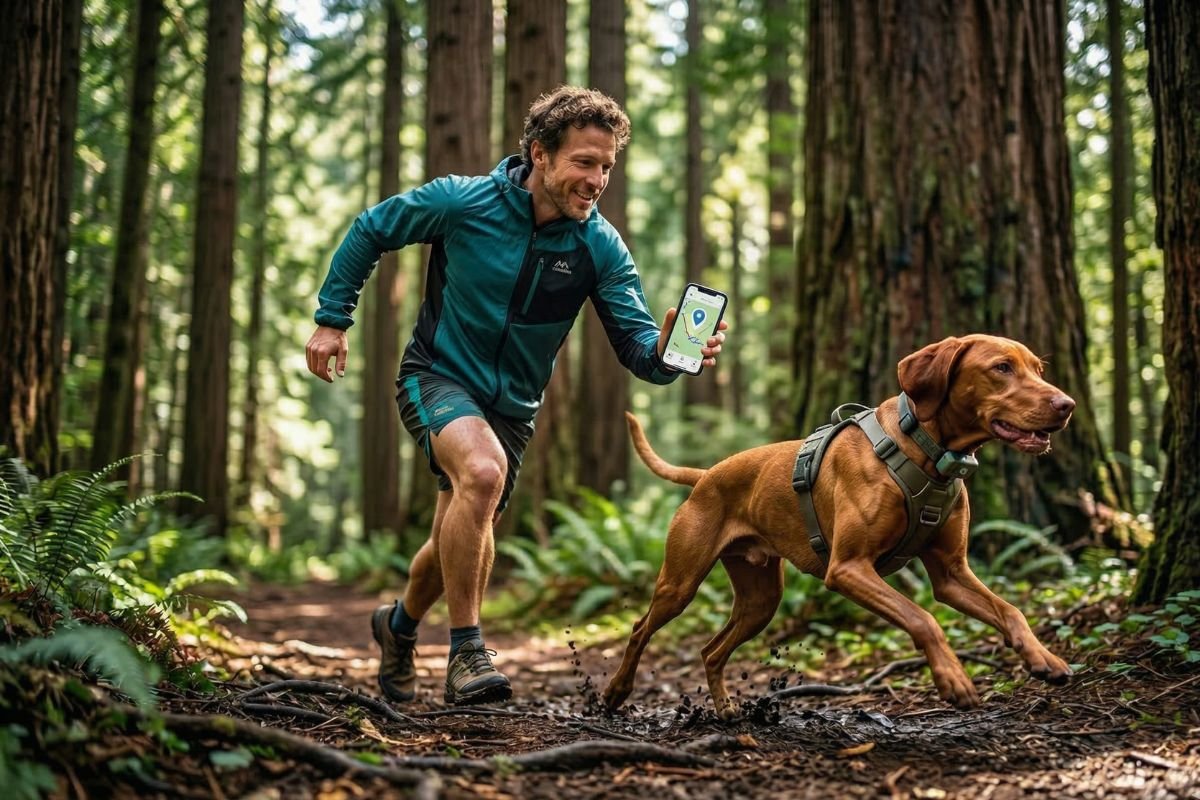
A dog GPS tracker can add an extra layer of safety when your dog is fast, curious, escape-prone, or spends time in open spaces. It lets you check your dog’s location from an app and, depending on the model, receive alerts if they leave a safe area.
The key is knowing what a GPS tracker can actually do, how it differs from a microchip or an item tracker, and when it makes sense for your routine. A good tracker should support better decisions, not replace training, secure fencing, updated ID, or responsible supervision.
Quick Take: When a Dog GPS Tracker Actually Helps
- A dog GPS tracker shows your dog’s location in an app and may include live tracking, escape alerts, route history, or activity data.
- A microchip identifies your dog, but it does not show real-time location.
- AirTag-style item trackers are designed for belongings, not for following a dog in motion.
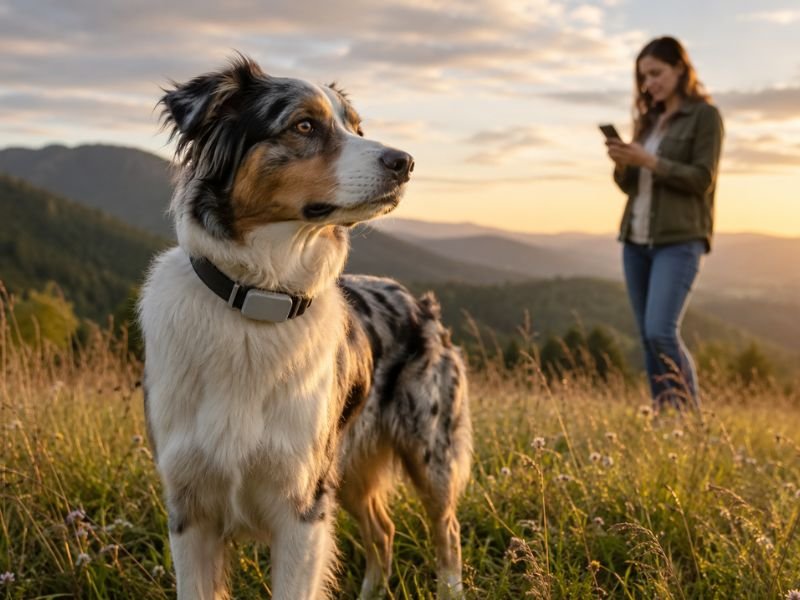
- GPS trackers are most useful for escape-prone dogs, yards, hikes, travel, boarding, sitters, and unfamiliar places.
Dog GPS Tracker Guide: Risk Level and Best First Step
| Situation | What it may mean | Best first step |
|---|---|---|
| Your dog has escaped before | There is a real loss-risk pattern | Choose a GPS tracker with safe-zone alerts and live tracking |
| You hike, camp, or travel | The environment changes often | Check coverage, battery life, and update speed |
| You already have a microchip | Identification and tracking are different tools | Keep the microchip updated and add GPS as extra protection |
| You are considering an AirTag | You may be tracking an item, not a moving pet | Decide whether you need real-time pet tracking |
| Your dog has a very controlled routine | Risk may be lower | Prioritize recall, ID tags, secure gates, and daily management first |
What a Dog GPS Tracker Does
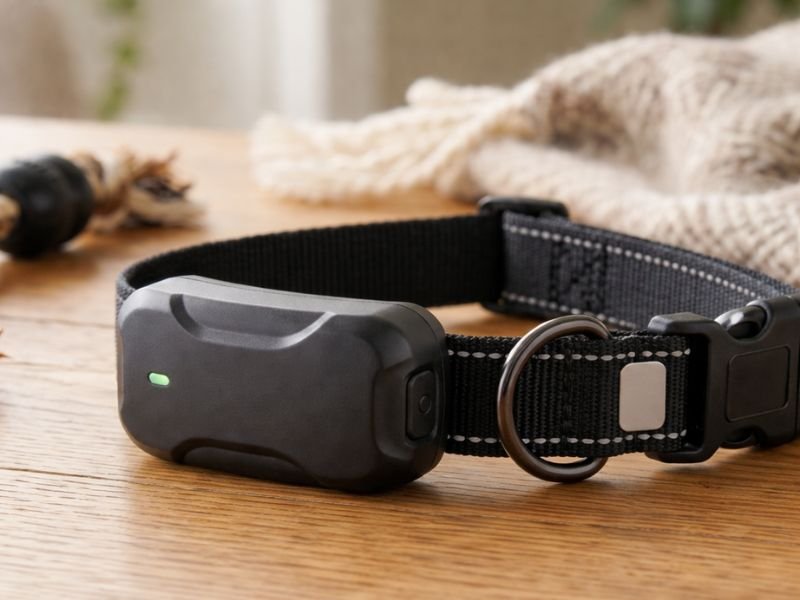
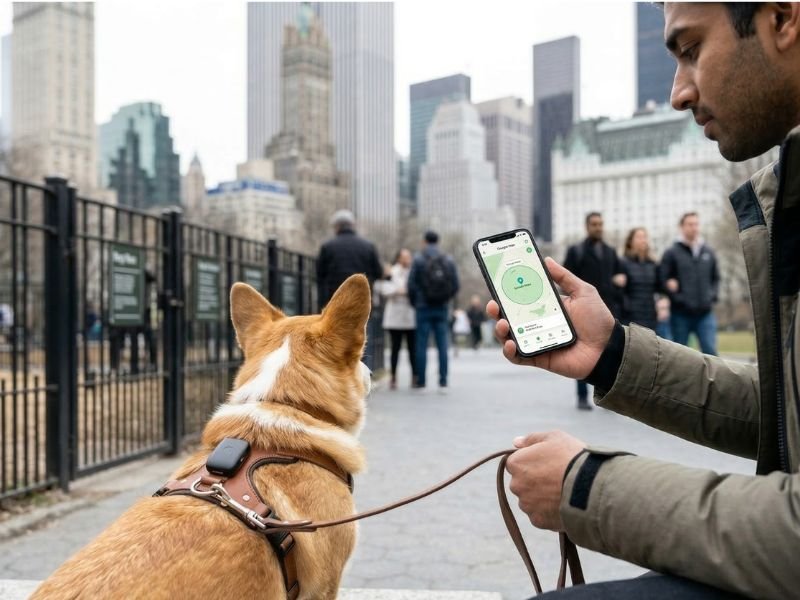
A dog GPS tracker is usually attached to a collar or harness. It uses location technology to estimate where your dog is and sends that information to an app.
Depending on the model, it may include:
- Live tracking when your dog is moving or missing.
- Virtual fences that send an alert if your dog leaves a safe area.
- Location history to see where your dog has been.
- Activity or health-style insights, depending on the brand.
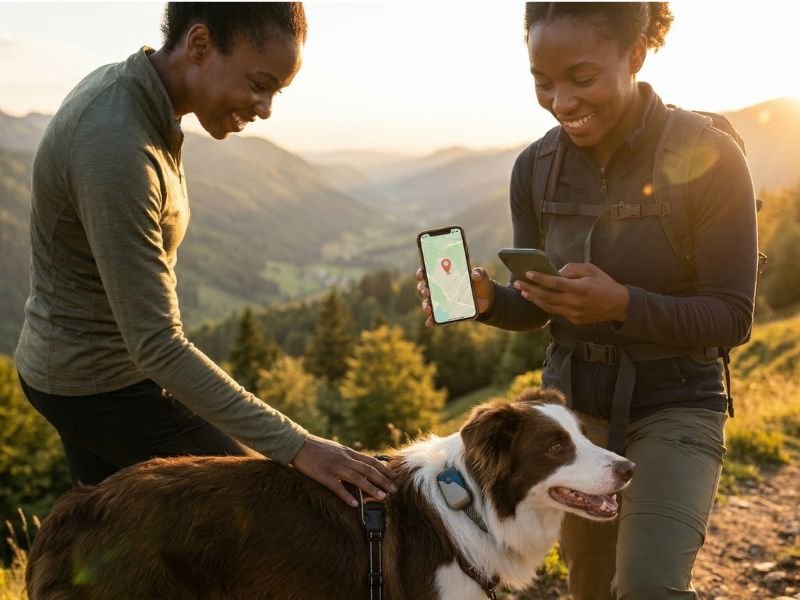
- Family sharing, so more than one person can help track the dog.
Most GPS pet trackers require a subscription because the device needs cellular connectivity or data service to send the location to your phone. Always check the monthly or annual cost before buying.
GPS Tracker, Microchip, and AirTag: What’s the Difference?
A GPS tracker, a microchip, and an item tracker all help in different ways. They are not interchangeable.
GPS Tracker for Dogs
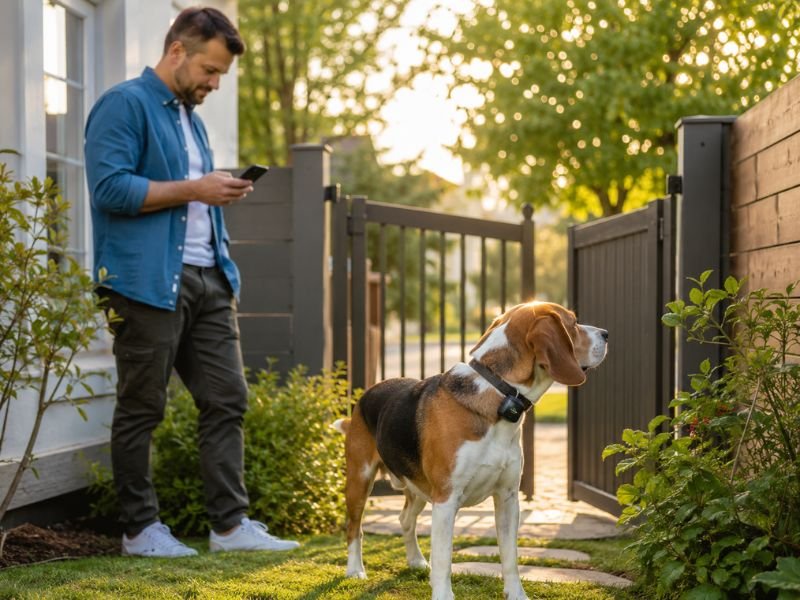
A dog GPS tracker is an active safety tool. It helps you locate your dog from your phone and may send alerts if your dog leaves a defined area.
Best for:
- Escape-prone dogs
- Large yards
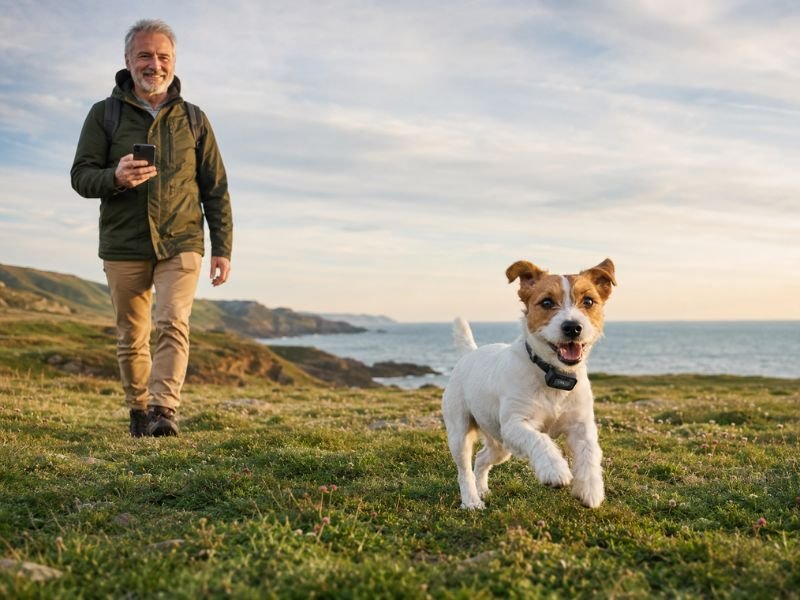
- Hiking or travel
- Dogs staying with sitters
- Fast dogs that can disappear quickly
Microchip
A microchip is essential, but it is not a GPS device. It identifies your dog if someone finds them and scans the chip at a vet clinic, shelter, or animal control facility.
A microchip helps with reunion, but it does not show a moving location on a map. Keep your registration, phone number, and secondary contact updated.
AirTag and Other Item Trackers
AirTag-style trackers are designed to help locate personal items such as keys, bags, or backpacks. They rely on nearby compatible devices and are not built with the same pet-specific logic as GPS dog trackers.
They may help in very limited situations, but they are not the best choice if your goal is real-time tracking, escape alerts, or following a dog in motion.
When It Makes Sense to Use a Dog GPS Tracker
A GPS tracker is most useful when there is a clear reason for it.
Good use cases include:
- Escape-prone dogs that slip out of doors, gates, or harnesses.
- Dogs with access to yards, especially if gates are used often.
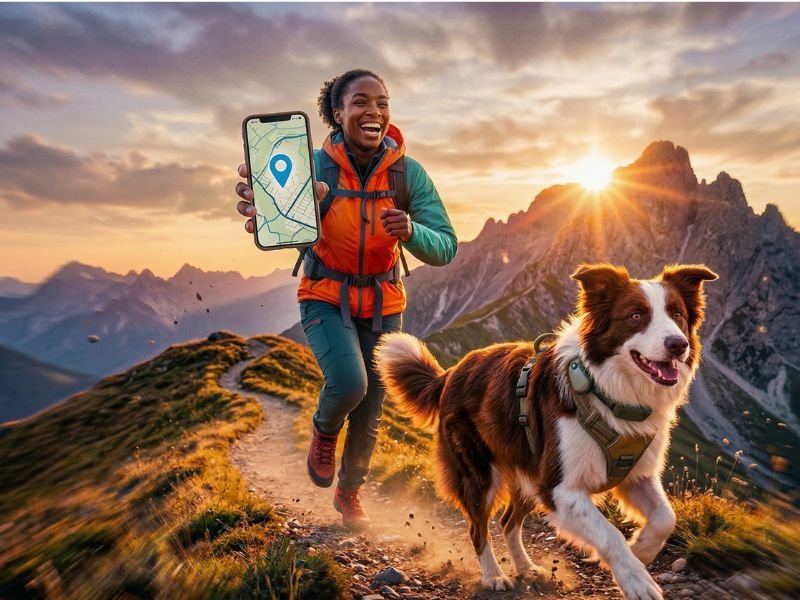
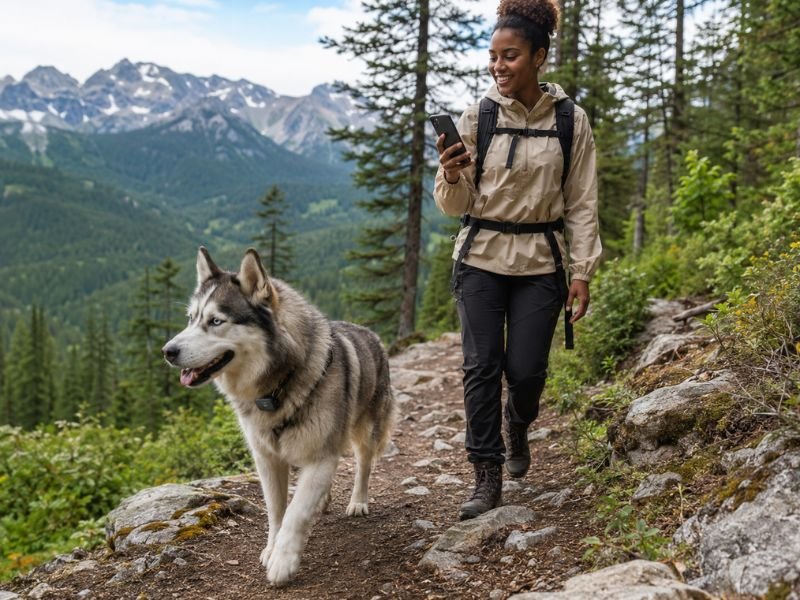
- Hiking, camping, fields, or rural walks where visibility changes quickly.
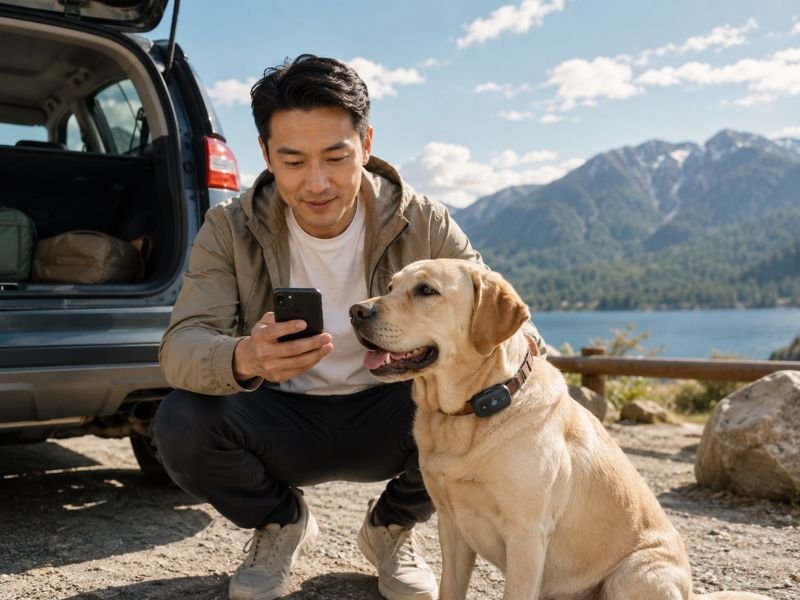
- Travel or vacation homes, where the dog does not know the area.
- Boarding, dog sitters, or family care, where routines may shift.
- Newly adopted dogs during the adjustment period.
It may be less urgent if your dog has a predictable routine, strong recall, secure fencing, and little exposure to open or unfamiliar spaces.
How to Choose and Use a Dog GPS Tracker
1. Define Your Main Risk
Start with the real reason you want the tracker.
Do you need help with escape alerts, hiking safety, travel, yard monitoring, or general peace of mind? A dog that bolts through gates needs different features from a dog that only goes on leashed neighborhood walks.
2. Check Coverage and Connectivity
A tracker is only useful if it works where you need it. Check the brand’s coverage information and whether the device depends on cellular service, Bluetooth, Wi-Fi, or a combination of technologies.
For rural areas or travel, coverage matters more than extra app features.
3. Look at Battery Life Honestly
Battery life depends on use. Live tracking drains more power than standby mode.
Choose a tracker with enough autonomy for your routine, and make charging part of your normal dog-care habits. A GPS tracker that is not charged will not help during an emergency.
4. Set Up Safe Zones Before You Need Them
If your tracker includes a virtual fence, set it up calmly before there is a problem.
Test:
- Home safe zone
- Yard boundary
- Main walking area
- Notifications
- Family access, if available
The first time you test the app should not be during an escape.
5. Use It as Part of a Safety System
A GPS tracker works best when combined with:
- Updated microchip registration
- A readable ID tag
- Secure doors, gates, and fencing
- A well-fitted collar or harness
- Recall training
- Clear instructions for sitters or boarding facilities
The tracker adds visibility. It does not replace prevention.
BELPAW Selection: 2 Dog GPS Trackers to Understand the Main Use Cases
These two examples show two different ways to think about dog GPS tracking in the U.S. market: one more complete for daily routine and health-style insights, and one more focused on location, alerts, and fast reaction.
Affiliate disclosure: Some links in this guide are affiliate links, which means BELPAW 🐾 may earn a commission if you buy through them, at no extra cost to you. As an Amazon Associate I earn from qualifying purchases.
1. Tractive Smart Dog GPS Tracker
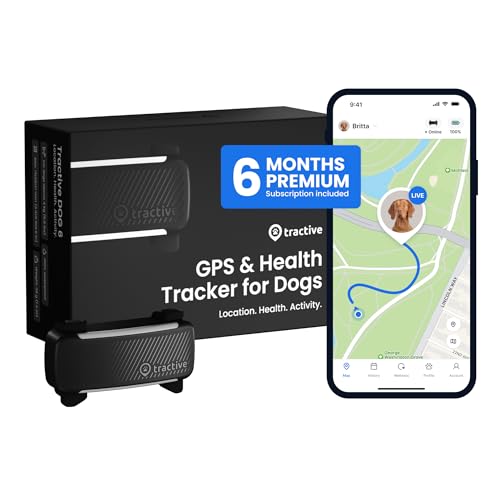
Tractive is a strong fit if you want location tracking plus broader daily insights in one app. It is especially interesting for owners who want GPS, virtual fences, activity data, and health-style monitoring in the same ecosystem.
Real-time GPS tracking with escape alerts, virtual fences, location history, and activity and sleep monitoring from one app. Subscription required.

BELPAW Verdict: Best fit if you want a more complete view of your dog’s routine, not just location.
Why I’d choose it
- Live GPS tracking
- Virtual fence and escape alerts
- Activity and sleep monitoring
- Health-style insights, depending on plan and model
- Stronger fit for daily use and data-focused owners
Keep in mind
A subscription is part of the real cost. Check the plan carefully before buying.
Best for
Dogs with active routines, travel, yards, or owners who want tracking plus wellness-style context.
2. PAJ GPS Dog Tracker 4G
PAJ is a good fit if your main priority is location, safe-zone alerts, and quick reaction. It is more focused on helping you know where your dog is and responding if they leave a defined area.
Lightweight, waterproof dog GPS tracker with live location, safe-zone alerts, shared access, and route history through the FINDER Portal app. Subscription required.

BELPAW Verdict: Best fit if you want a practical tracker centered on location and escape alerts.
Why I’d choose it
- Real-time GPS tracking
- Virtual fence alerts
- Waterproof design
- Collar-friendly attachment
- Route history and app-based tracking
Keep in mind
Battery life varies depending on tracking mode. Live tracking usually uses more battery than power-saving mode.
Best for
Dogs with escape risk, outdoor routines, yard access, travel, or owners who want clear location tracking without overcomplicating the decision.
BELPAW Check 🐾
Signs You Shouldn’t Ignore
A GPS tracker is worth considering if your dog has slipped out before, panics with noises, chases wildlife, disappears from sight quickly, or struggles in unfamiliar places.
Common Mistakes
The biggest mistake is treating GPS as a replacement for prevention. A tracker does not fix weak recall, loose gates, poor harness fit, or outdated microchip data.
Another common mistake is buying based only on price. Coverage, app reliability, battery life, and subscription cost matter more than a low upfront price.
Smart Tips
Test the tracker at home before relying on it outdoors. Add trusted family members to the app if possible. Keep charging consistent. Recheck the attachment point often, especially on active dogs.
FAQ
Do dog GPS trackers work without a subscription?
Some models may offer limited features without a subscription, but many GPS pet trackers require an active plan to send location data to your phone. Always check the full cost before buying.
Is a microchip the same as a GPS tracker?
No. A microchip identifies your dog if they are found and scanned, but it does not show real-time location. A GPS tracker helps you locate your dog from an app.
Is an AirTag good enough for a dog?
An AirTag can help locate personal items, but it is not designed as a dedicated dog GPS tracker. For dogs that move quickly, escape, or spend time outdoors, a pet-specific GPS tracker is usually a better fit.
Final Thoughts
A dog GPS tracker is most useful when it answers a real safety need.
- Choose Tractive if you want location plus broader daily insights.
- Choose PAJ GPS if you want a clear focus on tracking, safe zones, and reaction.
- Keep the microchip updated no matter what tracker you use.
- Treat GPS as an extra safety layer, not a substitute for secure routines.
The best choice is the tracker that fits your dog’s behavior, your environment, and the moments when quick information could genuinely help.
External References
- American Veterinary Medical Association — Microchipping FAQ
- Apple — AirTag
- American Kennel Club — What to Do When Your Dog Is Lost
Related Reads
- Best Orthopedic Dog Beds for Dogs
- Best Elevated Dog Beds
- Best Dog Beds for Large Dogs
- Best Dog Backpack Carriers for Small Dogs
- Portable Dog Water Bottle: What to Look For
- Best Portable Dog Water Bottles for Dogs
- 10 Best Dog Travel Accessories
- Dog Travel Accessories: Arrival Essentials
- Spring Dog Travel Essentials
- Best Interactive Dog Toys for Dogs
BELPAW Transparency 🐾
This article may include affiliate links. If you buy through them, BELPAW may earn a commission at no extra cost to you.