
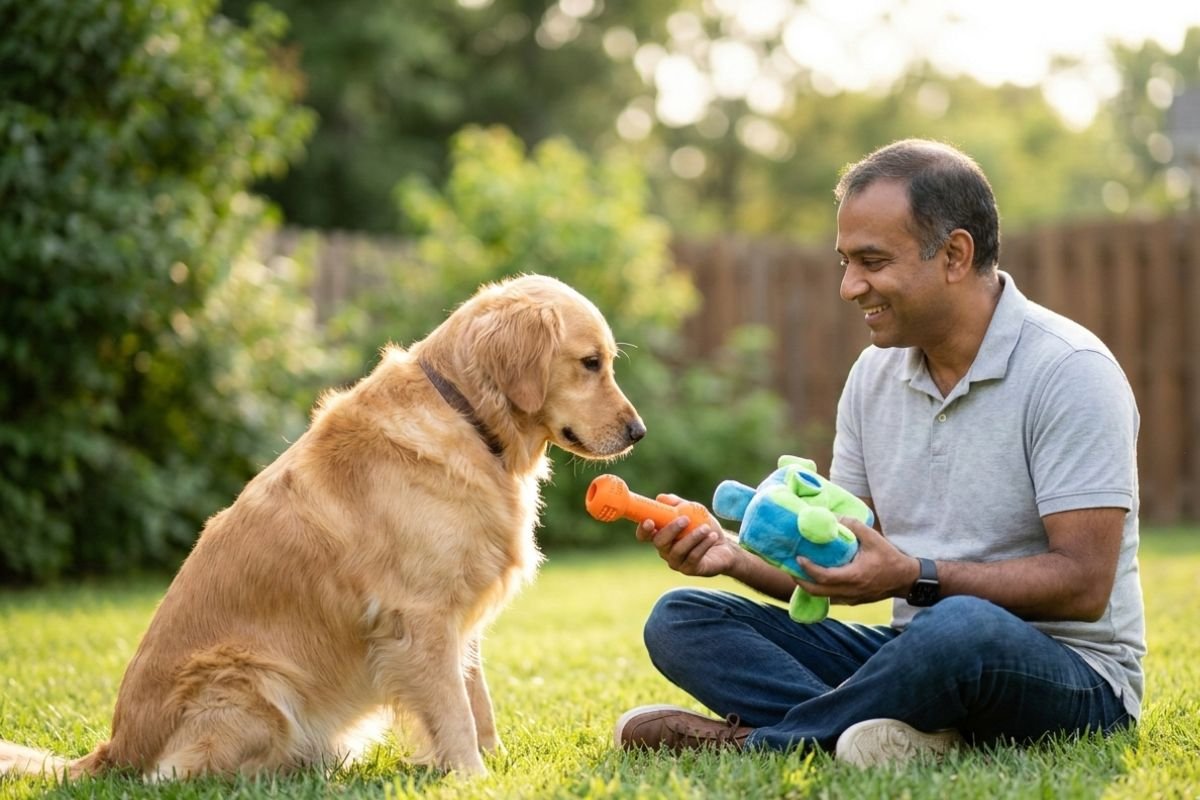
Choosing safe dog toys starts with understanding how your dog actually plays. Age, chewing strength, mouth sensitivity, and play style all shape whether a toy will be helpful, ignored, destroyed too quickly, or become a safety concern.
The right toy can support healthy chewing, reduce frustration, add mental enrichment, and make daily life at home smoother. The smartest choice is rarely based on size alone. A puppy in the teething stage, an adult power chewer, and a senior dog with a softer mouth need very different toy choices.
Quick Take: What to Check Before Choosing a Dog Toy
- Choose toys by age, bite style, and play behavior, not only by your dog’s weight or breed.
- A safe toy should be properly sized, durable, non-toxic, and easy to inspect.
- Very hard toys may last longer, but they can be too harsh on the mouth and teeth.
- Retire any toy with cracks, loose pieces, exposed stuffing, frayed rope, or uneven wear.
Dog Toy Safety Guide: Age, Bite Style, and Best First Choice
| Situation | What it may mean | Best first choice |
|---|---|---|
| Puppy chewing everything | Teething, exploration, and gum discomfort | Flexible rubber, simple shapes, supervised use |
| Adult moderate chewer | Regular chewing, play, and energy release | Durable rubber, treat-dispensing toys, tug toys |
| Power chewer destroying toys fast | Strong bite or intense chewing pattern | Compact designs, tougher materials, frequent checks |
| Senior dog losing interest quickly | Softer mouth or lower play drive | Gentle textures, easy puzzles, lighter toys |
| Toy with glued eyes or decorations | Higher risk of pieces coming loose | Skip decorative parts and choose cleaner designs |
| Toy too small for the mouth | Possible choking or swallowing risk | Size up and choose a solid, easy-to-grip shape |
How to Choose Safe and Durable Dog Toys
1. Start with life stage and mouth comfort
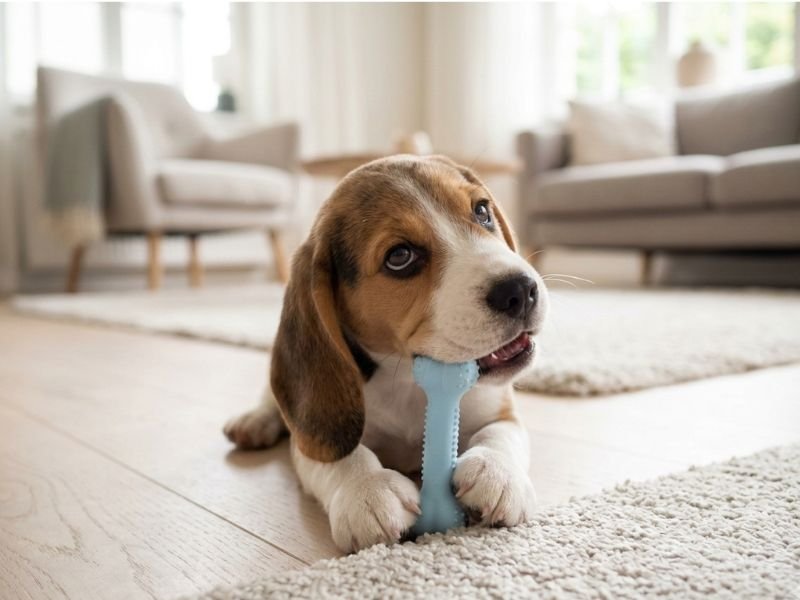
- A puppy’s mouth is still developing, so the safest toys are usually flexible, simple, and gentle on the gums. Look for toys designed for puppies, with a size large enough to prevent swallowing and a texture that encourages chewing without being harsh.
- Adult dogs often need a more balanced toy rotation. One toy may support chewing, another may help with fetch or tug, and another may provide mental enrichment through food dispensing or puzzle play.
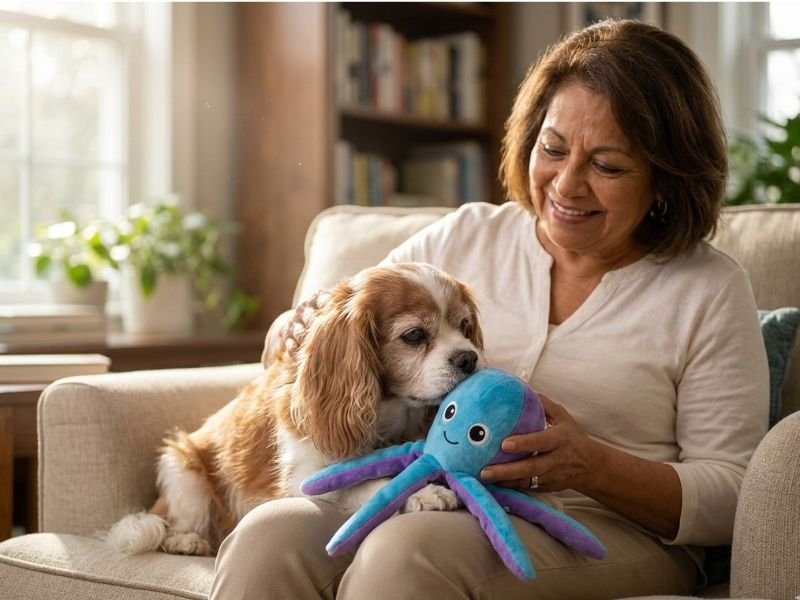
- Senior dogs may prefer softer textures, lighter toys, and easier interactive formats. A toy that worked well at age three may feel too firm or too demanding at age ten. Comfort matters more as the mouth, joints, and energy level change.
2. Match the toy to your dog’s real bite style
- The most useful clue is how your dog behaves with toys.
- A soft chewer may carry, lick, nudge, or gently mouth toys. Plush toys can work well for this type of dog, as long as they have no small detachable parts and are checked regularly.
- A moderate chewer needs stronger construction. Reinforced seams, durable rubber, and washable materials tend to make more sense than delicate plush toys.
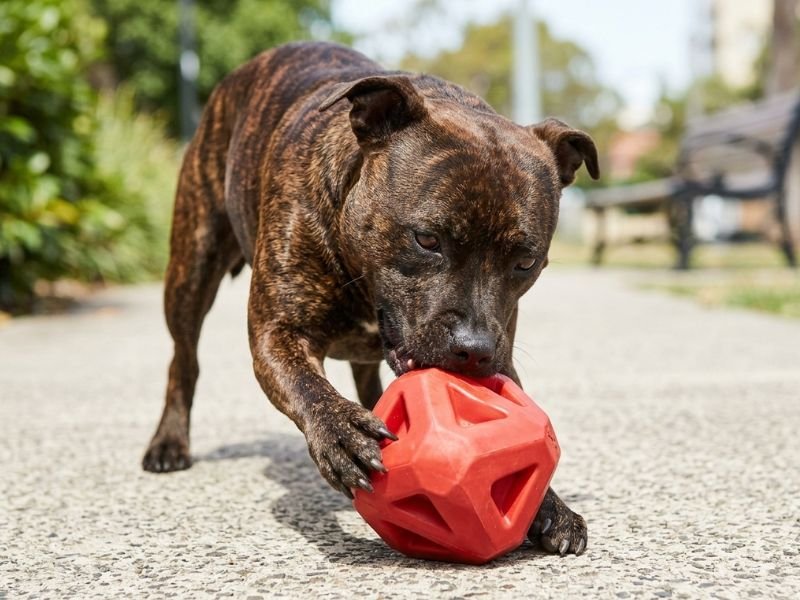
- A power chewer needs compact, sturdy toys with fewer weak points. Avoid thin edges, glued decorations, squeakers that are easy to access, and shapes that encourage the dog to focus pressure on one small area.
- Watch whether your dog carries, chews, shakes, tears, pulls, or tries to open the toy. That behavior tells you more than the label.
3. Choose material, size, and shape with safety first
- Good toy design is usually simple. Prioritize quality rubber, clear sizing, flexible strength, and a shape you can inspect easily.
- Treat-dispensing toys and enrichment toys can be especially useful because they engage both the mouth and the mind. They are helpful for dogs who get bored quickly, need a calmer activity indoors, or benefit from slower, more focused play.
- Avoid toys with:
- Glued eyes, ribbons, bells, beads, or decorative parts.
- Exposed stuffing or weak seams.
- Thin rubber that can be shredded quickly.
- Rope that frays into long strands.
- A size small enough to fit fully inside your dog’s mouth.
- A toy should be large enough to reduce swallowing risk, but still comfortable for your dog to carry and use.
4. Inspect, rotate, and retire toys before they become risky
- Even a good toy has a lifespan. Durability does not mean permanent use.
- Check toys after play sessions, especially if your dog is a strong chewer. Look for cracks, sharp edges, loose chunks, frayed rope, torn seams, exposed stuffing, or areas your dog is obsessively working on.
- Rotation also helps. Instead of leaving every toy out all day, keep a small selection available and rotate options. This keeps toys more interesting and gives you a natural moment to inspect them before they return to use.

BELPAW Check 🐾
Signs You Shouldn’t Ignore
- Your dog breaks a toy within minutes: The toy is too weak for that bite style. Choose a more compact and robust design.
- Your dog loses interest quickly: The toy may not match the way your dog likes to play. Try a treat-dispensing toy, puzzle toy, or different texture.
- Your dog focuses on one exact spot: That area will wear faster and may become risky. Inspect it more often and rotate toys before damage develops.
- Your dog pulls off pieces or tries to swallow them: The toy is no longer safe. Remove it immediately and choose a different size, material, or format.
Common Mistakes
- Choosing the hardest toy because it seems more durable.
- Keeping a damaged toy because it still looks usable.
- Buying only by breed or weight instead of chewing behavior.
- Giving a toy with small decorative parts to a dog that likes to tear.
- Using the same type of toy through every life stage.
Smart Tips
- A great dog toy is often simple, sturdy, and easy to check.
- The right size prevents more problems than most labels suggest.
- Strong chewers usually do better with fewer weak points and cleaner shapes.
- Supervision matters most when introducing a new toy.
- The best toy holds up well without being unnecessarily harsh on the mouth.
FAQ
How do I know if a toy is safe for my dog?
A toy is safer when it is properly sized, durable, made from pet-appropriate materials, and free from loose parts. It should not fit fully inside your dog’s mouth, break into pieces easily, or expose stuffing, rope strands, or sharp edges.
Are very hard toys better for strong chewers?
Not always. Very hard toys may last longer, but they can be too tough on teeth. For strong chewers, look for durability with some safe flexibility rather than a toy that feels rock-hard.
When should I throw away a dog toy?
Throw it away when you see cracks, missing pieces, exposed stuffing, frayed rope, torn seams, sharp edges, or any change in shape that increases the risk of swallowing, choking, or mouth injury.
Final Thoughts
The best dog toy is the one that fits your dog’s age, bite style, mouth comfort, and real play behavior.
Choose toys that are sturdy, well-sized, easy to inspect, and appropriate for how your dog actually uses them. A durable toy should support safe chewing without being unnecessarily hard on the teeth or gums.
A strong toy is useful. A safe, well-matched toy is better.
External References
- ASPCA — Position Statement on Dog Chews/Treats
- AAHA — Don’t Chew On This!
- VCA Animal Hospitals — Fractured Teeth in Dogs
- MSD Veterinary Manual — Gastrointestinal Obstruction in Small Animals
Related Reads
- Best Elevated Dog Bowls for Dogs
- Best Orthopedic Dog Beds for Dogs
- Best Elevated Dog Beds
- Best Dog Beds for Large Dogs
- Best Dog Backpack Carriers for Small Dogs
- Portable Dog Water Bottle: What to Look For
- Best Portable Dog Water Bottles for Dogs
- 10 Best Dog Travel Accessories
- Dog Travel Accessories: Arrival Essentials
- Spring Dog Travel Essentials
- Best Interactive Dog Toys for Dogs
BELPAW Transparency 🐾
This article may include affiliate links. If you buy through them, BELPAW may earn a commission at no extra cost to you.